check

check

check

check
check
check
check
check

check

check
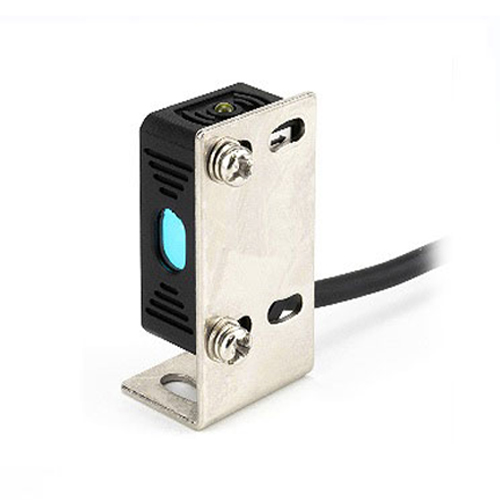
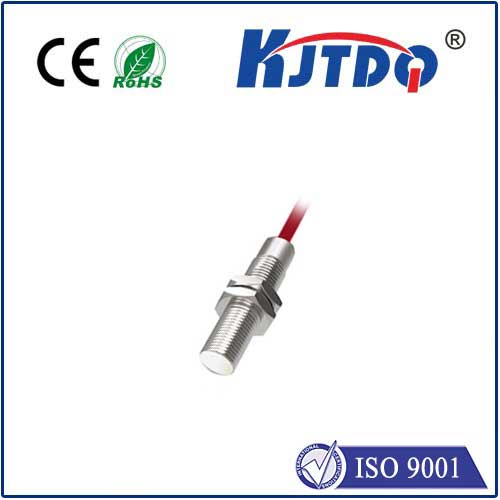
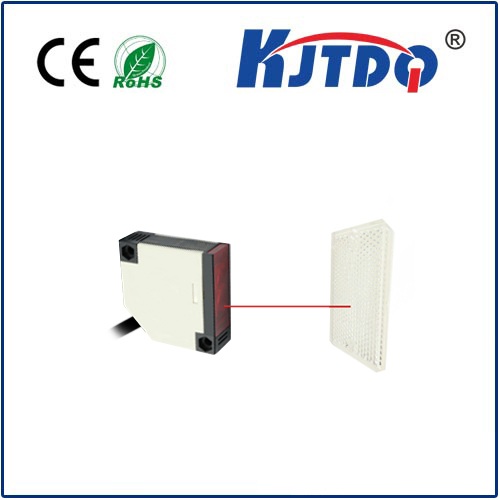
In the world of industrial automation, precision and reliability are non-negotiable. The E3FA-DP12 photoelectric switch stands as a testament to this principle, offering a robust solution for countless sensing applications. This diffuse-reflective sensor is engineered to detect objects without physical contact, ensuring longevity and reducing maintenance costs. Its compact, cylindrical design allows for easy integration into tight spaces, while the built-in amplifier simplifies installation and setup.
The core technology behind the E3FA-DP12 lies in its diffuse reflection method. The device emits a beam of light, typically infrared or visible red, from its built-in LED. When this light hits an object within its sensing range, it scatters in all directions. A portion of this scattered light reflects back to the sensor's receiver. The internal circuitry then processes this signal, triggering a solid-state output. This method is exceptionally effective for detecting objects with non-shiny, matte surfaces at close to medium ranges. A key advantage is that it requires only a single unit for operation, unlike through-beam sensors which need separate emitter and receiver components.
One of the defining features of the E3FA-DP12 is its dependable performance in challenging environments. Housed in a sturdy, IP67-rated enclosure, it is protected against dust ingress and temporary immersion in water. This makes it an ideal choice for washdown areas in food and beverage processing, packaging lines, and material handling systems where exposure to moisture and debris is common. The sensor is also resistant to common ambient light interference, ensuring stable operation even under fluctuating lighting conditions in a factory.
Installation and configuration are remarkably straightforward. The E3FA-DP12 typically offers both light-on and dark-on operation modes, selectable via a simple switch or teaching function. This flexibility allows it to be configured to output a signal either when an object is present (light-on) or absent (dark-on), adapting to various control logic requirements. Many models feature a clear LED indicator that shows both power status and output activation, providing immediate visual feedback for troubleshooting and commissioning.
The applications for this versatile sensor are vast. It is commonly used for object detection on conveyor belts, such as verifying the presence of bottles, boxes, or parts. It can count items as they pass by a specific point, control the positioning of machinery, and act as a safety interlock to prevent jams. In automated assembly, it ensures components are in place before a process cycle begins. Its reliability makes it a cornerstone in building efficient, error-resistant production systems.
When selecting a photoelectric switch like the E3FA-DP12, several factors must be considered. The sensing distance, which for diffuse models is influenced by the object's color, size, and surface texture, is critical. A white, reflective object will be detected at a greater distance than a dark, absorbent one. The response time must be fast enough to keep up with the speed of the application. Furthermore, the electrical specifications, such as the operating voltage (commonly 10-30V DC) and output type (typically NPN or PNP), must be compatible with the existing control system, such as a PLC.
Proper maintenance, though minimal, ensures peak performance. Regularly cleaning the lens with a soft cloth prevents false triggers caused by dust or grime buildup. It is also important to verify the mounting stability and check for any physical damage to the cable or housing. By following these simple steps, the E3FA-DP12 can deliver years of uninterrupted service, maximizing uptime and productivity.
In conclusion, the E3FA-DP12 photoelectric switch represents a perfect blend of simplicity, durability, and advanced sensing technology. Its ability to provide accurate, non-contact detection in harsh industrial settings makes it an indispensable component for engineers and system integrators aiming to enhance automation reliability. By understanding its operating principles and optimal application scenarios, businesses can leverage this device to create smarter, more responsive, and more efficient manufacturing and logistics operations.