check

check

check

check
check
check
check
check

check

check
In the intricate world of industrial automation, precision and reliability are not just preferences; they are absolute necessities. The seamless operation of production lines, packaging systems, and material handling equipment hinges on the flawless performance of its most fundamental components. Among these, photoelectric sensors stand as the silent sentinels, and the KT9-50/25/103/115 photoelectric switch emerges as a paragon of durability and accuracy for demanding applications.
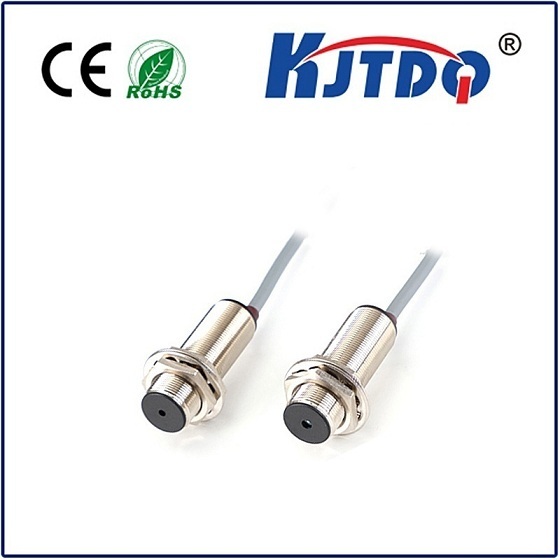
The KT9-50/25/103/115 is engineered to excel in environments where consistent object detection is critical. This robust sensor belongs to a family known for its through-beam sensing principle. This method involves a separate transmitter and receiver unit. The transmitter emits a focused beam of light—typically infrared for immunity to ambient light interference—which is then received by the opposing unit. Any object passing between the two breaks this beam, triggering an immediate and precise output signal. This design offers significant advantages, including a very long sensing range and high immunity to environmental factors like dust, steam, or target surface characteristics such as color, reflectivity, or texture. The object being detected does not need to be directly in contact with the sensor, allowing for non-invasive monitoring.
Key specifications of the KT9-50/25/103/115 model define its application scope. The "50" often denotes a sensing distance of up to 50 meters, making it ideal for large-scale installations like warehouse door monitoring, conveyor belt gap detection over long stretches, or vehicle presence in parking systems. The robust housing, typically indicated by codes like "103/115," is designed to withstand harsh industrial conditions. It commonly features a metal or high-grade plastic casing with an IP67 or higher protection rating, ensuring resistance against dust ingress and water jets. This resilience makes it suitable for outdoor use or in washdown areas within food and beverage or pharmaceutical plants.
Installation and integration of the KT9-50/115 are straightforward, contributing to reduced setup time and maintenance costs. The units are pre-aligned for simplicity, though fine-tuning is possible to achieve the perfect beam path. They usually come with versatile mounting options—bracket or threaded barrel—allowing for flexible placement. The electrical output is typically a solid-state relay or a configurable PNP/NPN transistor, providing compatibility with a wide array of programmable logic controllers (PLCs), relays, and other control systems. LED indicators on both the transmitter and receiver provide clear visual status for power, beam alignment, and output activation, facilitating quick diagnostics and troubleshooting.
Consider a bottling plant where empty glass bottles move at high speed on a conveyor. A KT9-50/25/103/115 sensor pair can be installed at a critical junction to detect missing bottles or jams. Its long range ensures coverage across a wide belt, and its through-beam reliability means it will not be fooled by the transparent or reflective nature of the glass, a common challenge for other sensor types. The immediate signal can halt the line, preventing downstream equipment damage and product waste. Similarly, in automated storage and retrieval systems, these sensors provide precise pallet positioning feedback over several meters, ensuring robotic handlers engage correctly.
When selecting a photoelectric switch, the KT9 series, and specifically the 50/25/103/115 variant, presents a compelling case for applications requiring long-range, fail-safe detection. Its through-beam principle eliminates concerns about target properties, its rugged construction guarantees longevity in tough environments, and its simple interface allows for seamless system integration. For engineers and system integrators tasked with building resilient automation networks, specifying a proven component like the KT9-50/25/103/115 photoelectric switch is a strategic decision that underpins operational efficiency and minimizes unplanned downtime. It represents not just a sensor, but a foundational element for building smarter, more reliable industrial processes.