check

check

check

check
check
check
check
check

check

check
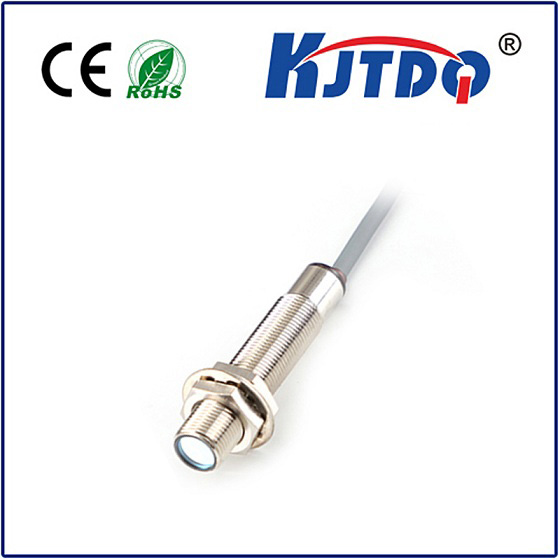
In the world of industrial automation and control, the reliability of a single component can dictate the efficiency of an entire system. Among these critical components, photoelectric switches stand out for their non-contact sensing capabilities. The BGS-30P photoelectric switch emerges as a robust and versatile solution, engineered to deliver precision in diverse and demanding environments. This guide delves into the core features, operational principles, and practical applications of the BGS-30P, providing a comprehensive overview for engineers and system integrators.
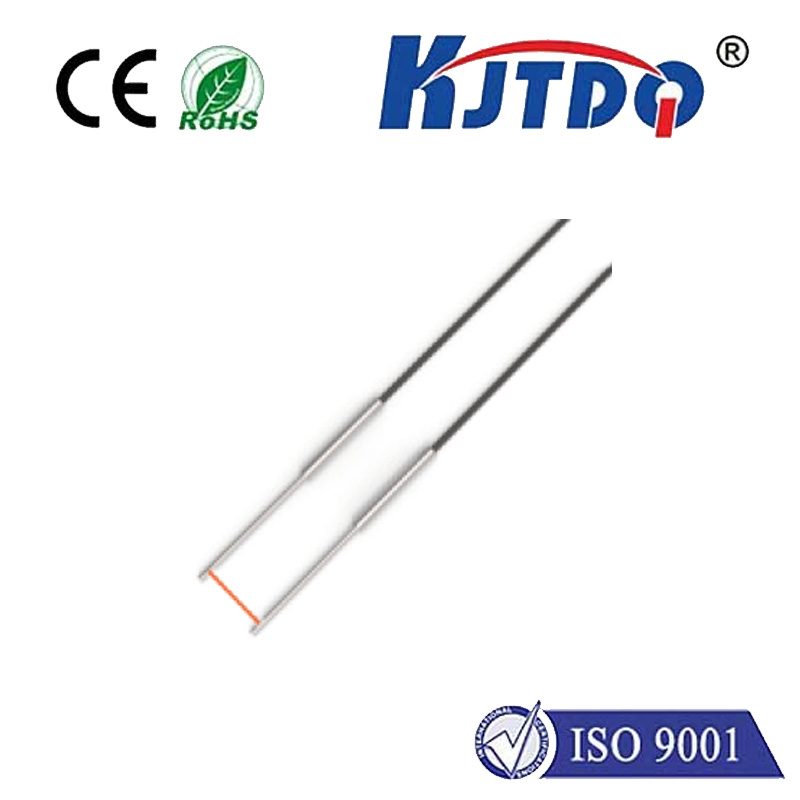
At its heart, the BGS-30P is a through-beam photoelectric sensor. This design consists of two separate units: a transmitter and a receiver. The transmitter projects a focused beam of light—typically infrared or visible red LED—across a defined distance. The receiver, positioned opposite, continuously monitors for this light signal. An object is detected when it physically interrupts this beam, causing the receiver's output state to change. This fundamental principle grants the BGS-30P several inherent advantages. Its sensing range is notably long and well-defined, often reaching up to several meters with the BGS-30P model. It offers high positional accuracy and is generally less sensitive to the color, reflectivity, or surface finish of the target object compared to reflective models. This makes it ideal for detecting transparent materials like glass or plastic films, which can challenge other sensor types.
The construction of the BGS-30P is tailored for industrial resilience. Housed in a rugged, often metal or high-grade polymer casing, it boasts significant protection against environmental factors, commonly rated at IP67 or higher. This means it is dust-tight and can withstand temporary immersion in water, making it suitable for washdown areas in food processing or outdoor applications. The device is designed to operate across a wide temperature range and is shielded against electrical noise common in factory settings. Its output is typically a solid-state NPN or PNP transistor, providing a fast, bounce-free signal compatible with programmable logic controllers (PLCs), counters, and other control systems.
Application scenarios for the BGS-30P are vast. In packaging machinery, it is indispensable for precise object counting, ensuring the correct number of items are boxed. On conveyor lines, it serves as a reliable part presence detector, triggering the next stage in an assembly process or stopping a belt if an object is misaligned. Within automated storage and retrieval systems (AS/RS), these switches provide critical position verification for elevators and shuttles. They are also fundamental in security systems as break-beam detectors for doors and gates, and in the printing industry for monitoring paper jams or sheet counting.
Selecting and installing the BGS-30P requires attention to key parameters. The critical specification is the sensing distance, which must be chosen to span the actual gap where detection occurs. Proper alignment of the transmitter and receiver is paramount; even slight misalignment can cause unreliable operation. Mounting brackets should be secure to prevent vibration from shifting the units. For long-range applications or in environments with ambient light interference, selecting a model with a modulated light source is crucial. This technology pulses the LED at a high frequency, and the receiver is tuned to recognize only this specific frequency, effectively filtering out sunlight or other stray light sources.
Troubleshooting common issues often involves a methodical approach. If the sensor fails to detect, first verify the power supply connections and voltage. Check the alignment of the two units using the manufacturer's recommended procedure, often involving alignment indicators. Ensure the object is fully interrupting the beam and that the beam path is free of obstructions like dust, mist, or debris. Inspect the lens surfaces for cleanliness. Finally, verify the output load and wiring to the control system. Regular maintenance, primarily lens cleaning and checking mounting stability, can prevent most operational failures.
The BGS-30P photoelectric switch represents a blend of simple physics and sophisticated engineering. Its through-beam design offers unmatched reliability for clear-cut detection tasks across numerous industries. By understanding its operating principle, ensuring correct selection based on range and environmental needs, and following best practices for installation and maintenance, this sensor becomes a dependable workhorse. It provides the essential "eyes" for automated systems, enabling precise control, enhancing safety, and driving operational efficiency in modern manufacturing and beyond. For engineers seeking a proven solution for object detection, the BGS-30P stands as a cornerstone of effective system design.