check

check

check

check
check
check
check
check

check

check
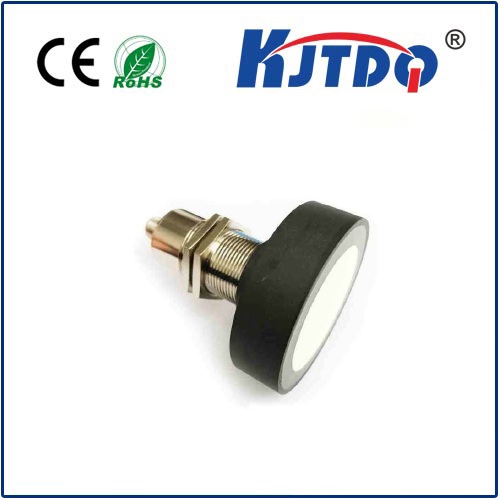
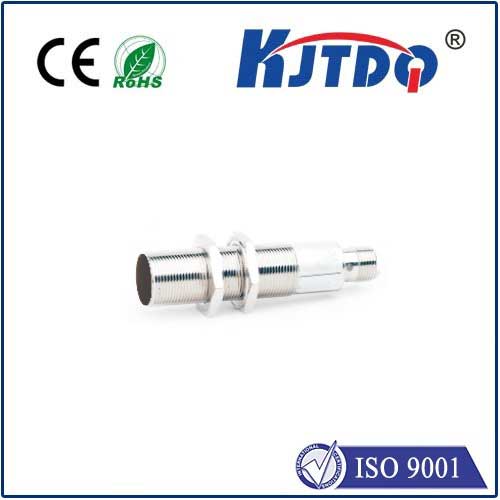
In the world of industrial automation, precision and reliability are non-negotiable. The PR30-TM20DNO photoelectric switch stands as a testament to this principle, offering a robust solution for countless detection applications. This diffuse reflective sensor, with its compact 30mm barrel design, has become a staple in environments demanding consistent performance. Unlike mechanical limit switches, it operates without physical contact, eliminating wear and tear and ensuring a longer operational lifespan.
The core functionality of the PR30-TM20DNO lies in its ability to detect objects by emitting a beam of light and analyzing the reflection. The "DNO" suffix indicates a normally open output configuration, which is a critical specification for control system design. This model typically features a sensing range suitable for mid-distance applications, providing flexibility on the production floor. Its built-in potentiometer allows for easy sensitivity adjustment, enabling technicians to fine-tune the device to detect specific materials, colors, or to ignore background interference—a common challenge in cluttered industrial settings.
Durability is a hallmark of this photoelectric switch. Housed in a rugged casing, it is designed to withstand the harsh conditions prevalent in manufacturing, packaging, and material handling industries. It offers substantial resistance to environmental factors such as dust, moisture, and vibration. This resilience translates directly into reduced downtime and lower maintenance costs, as the sensor continues to function reliably where lesser components might fail. The electrical specifications, including its operating voltage and output current, are engineered for seamless integration with standard programmable logic controllers (PLCs) and other industrial control systems.
Installation and wiring of the PR30-TM20DNO are straightforward, thanks to its standardized form factor and clear connection diagrams. The three-wire system, comprising power, ground, and signal output, is industry-standard. Proper alignment is crucial for optimal performance, and the sensor's visible LED indicators for power and output status provide immediate visual feedback during setup and operation. This simplifies troubleshooting and ensures the system is operational with minimal delay.
When selecting a sensor for an application, understanding the difference between diffuse, retro-reflective, and through-beam types is essential. The PR30-TM20DNO's diffuse mode is ideal for detecting objects at a specific distance from the sensor itself, without the need for a separate reflector. It excels in tasks like counting bottles on a conveyor, verifying the presence of a component in an assembly jig, or triggering a mechanism when a pallet arrives at a specific station. Its performance can be influenced by the object's color, reflectivity, and surface texture, which is why the adjustable sensitivity feature is so valuable.
In practical terms, the implementation of this photoelectric switch enhances system efficiency and safety. By providing a precise, solid-state signal for object presence or absence, it forms the sensory foundation for automated processes. This reliability ensures that machines operate only when necessary, preventing jams, misfeeds, and potential damage to equipment. For engineers and system integrators, the PR30-TM20DNO represents a dependable, off-the-shelf component that delivers consistent results, project after project. Its widespread adoption across various sectors underscores its versatility and proven track record in solving real-world detection challenges.