check

check

check

check
check
check
check
check

check

check
In the intricate world of industrial automation, where precision and reliability are non-negotiable, the choice of sensing technology becomes paramount. Among the myriad of components, the photoelectric switch stands as a silent sentinel, and the RL20-3053NK model has carved out a significant reputation for itself. This comprehensive guide delves into the specifics of this device, exploring its functionality, applications, and the distinct advantages it offers to engineers and system integrators.
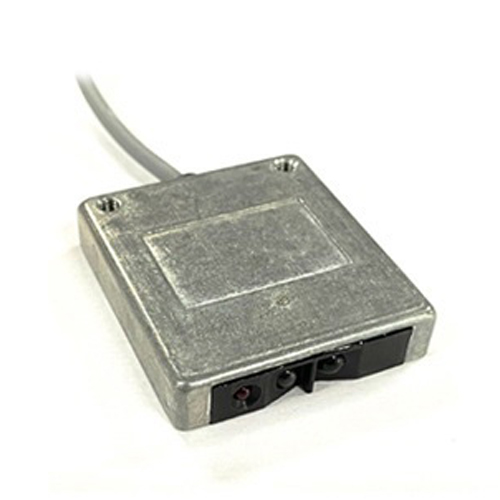
The RL20-3053NK is a robust, self-contained photoelectric sensor designed for demanding industrial environments. Operating on the through-beam principle, it consists of two separate units: a transmitter and a receiver. The transmitter emits a focused beam of light, typically infrared or red visible light, which is then detected by the receiver positioned opposite. An object is sensed when it physically interrupts this light beam. This method is renowned for its long sensing distances and high immunity to environmental interference, such as dust, dirt, or target color and reflectivity. The "NK" suffix often denotes specific housing material or connector type, indicating a design tailored for durability.
What sets the RL20-3053NK apart is its engineering for resilience. Housed in a sturdy, often metallic or high-grade plastic casing, it is built to withstand the rigors of factory floors. It typically features high ingress protection ratings like IP67, making it resistant to dust and capable of withstanding temporary immersion in water. This makes it ideal for washdown areas in food and beverage processing or other wet industrial settings. Furthermore, its design often incorporates resistance to common industrial chemicals and oils, ensuring longevity even in harsh conditions.
The applications for the RL20-3053NK photoelectric switch are vast and varied across multiple sectors. In material handling and packaging, it is indispensable for precise object detection on conveyor belts, ensuring accurate counting, positioning, and jam detection. Within the automotive industry, it plays a critical role in assembly line automation, verifying the presence of components or triggering robotic actions. In warehouse and logistics, these switches are fundamental for pallet detection, door control, and high-bay storage retrieval systems. Their long-range capability also makes them suitable for large-scale applications like vehicle detection in parking garages or on automated guided vehicles (AGVs).
When integrating the RL20-3053NK into a system, several technical specifications demand attention. Key parameters include its sensing range, which can be several meters, allowing for flexible installation. The response time is exceptionally fast, enabling detection of high-speed objects without missing a beat. The output is usually a solid-state relay or transistor configured as normally open (NO) or normally closed (NC), providing a clean signal to programmable logic controllers (PLCs) or other control systems. Its operating voltage range is compatible with standard industrial DC power supplies, such as 10-30V DC, ensuring easy integration into existing control panels.
Choosing the RL20-3053NK over alternative sensing technologies like proximity sensors or ultrasonic sensors offers clear benefits. For detecting non-metallic objects, transparent materials, or items at a significant distance, photoelectric technology is superior. Its through-beam design provides the highest reliability for precise detection, as it is less affected by the surface properties of the target object compared to diffuse-reflective sensors. This translates to fewer false triggers, reduced downtime, and more consistent process control, directly impacting operational efficiency and productivity.
Installation and maintenance are straightforward but crucial for optimal performance. Ensuring perfect alignment between the transmitter and receiver is essential; even a slight misalignment can cause failure. Mounting brackets should be secure to prevent vibration from disrupting the beam. Regular maintenance primarily involves keeping the lenses clean from accumulated grime, which can attenuate the light signal. Most models feature a visible LED indicator for alignment aid and operational status, simplifying setup and troubleshooting.
In conclusion, the RL20-3053NK photoelectric switch represents a cornerstone of modern industrial sensing. Its combination of long-range, high precision, environmental ruggedness, and reliable performance makes it a trusted component for engineers designing automated systems. By understanding its principles, specifications, and ideal applications, professionals can leverage this technology to build more efficient, reliable, and intelligent automation solutions, driving forward the capabilities of manufacturing and logistics in an increasingly automated world.