check

check

check

check
check
check
check
check

check

check
In the realm of industrial automation, the reliability and accuracy of sensor technology are paramount. The ZJ35-3012PK photoelectric switch stands as a critical component in this landscape, designed to deliver consistent performance in diverse and demanding environments. This device exemplifies the integration of advanced optical sensing principles with robust engineering, catering to applications that require non-contact detection of objects, positioning, and counting.
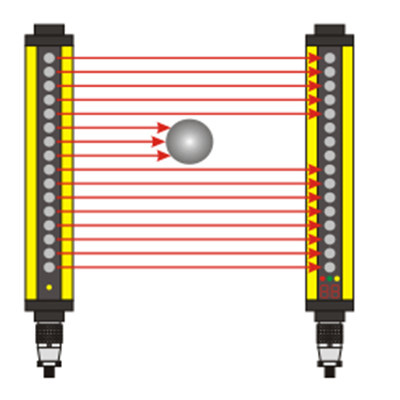
The operational core of the ZJ35-3012PK lies in its through-beam sensing method. It comprises two separate units: a transmitter and a receiver. The transmitter emits a focused beam of light, typically infrared or red visible light, which is then captured by the receiver positioned directly opposite. An object is detected when it interrupts this light beam. This configuration offers significant advantages, including a long sensing range, high positional accuracy, and exceptional reliability. Unlike diffuse or retro-reflective sensors, the through-beam design is less susceptible to interference from the object's color, surface texture, or reflectivity, making the ZJ35-3012PK a versatile choice for detecting a wide array of materials.
Durability is a non-negotiable feature for industrial components. The ZJ35-3012PK is often housed in a rugged casing, rated with a high Ingress Protection (IP) code to withstand dust, moisture, and mechanical impacts. This resilience ensures uninterrupted operation in settings such as packaging lines, material handling systems, automotive assembly plants, and woodworking machinery. Its ability to function reliably amidst vibration, temperature fluctuations, and ambient light noise is a testament to its sophisticated internal circuitry and optical design.
Installation and integration are streamlined for efficiency. The switch typically features standard mounting holes and clear alignment indicators for the transmitter and receiver, simplifying the setup process. Electrical connections are straightforward, often utilizing a pre-wired cable or a quick-disconnect connector compatible with common industrial control systems like PLCs (Programmable Logic Controllers). This plug-and-play philosophy minimizes downtime during deployment or maintenance.
The applications for the ZJ35-3012PK are extensive. On a conveyor belt system, it can precisely detect the presence of boxes, bottles, or parts, triggering subsequent actions like sorting, filling, or robotic pick-and-place. In automated storage and retrieval systems (AS/RS), it provides crucial positioning feedback for pallets and carriers. It also plays a vital role in safety systems, acting as a guard or gate monitor to ensure machinery only operates when a protective barrier is securely closed, thereby protecting personnel.
When selecting a photoelectric switch like the ZJ35-3012PK, engineers consider several technical parameters. The sensing distance, response time, light source type, and output configuration (e.g., NPN or PNP transistor) must align with the specific application's requirements. The ZJ35-3012PK is engineered to offer a balanced profile across these metrics, providing a dependable solution without unnecessary complexity or cost.
Looking forward, the evolution of sensors like the ZJ35-3012PK is intertwined with trends in Industry 4.0. While it is a fundamental discrete sensor, its role in feeding real-time data to networked control systems is invaluable. It contributes to the ecosystem of interconnected devices that enable predictive maintenance, process optimization, and enhanced overall equipment effectiveness (OEE).
In conclusion, the ZJ35-3012PK photoelectric switch is more than just a detection device; it is a foundational element for building efficient, safe, and intelligent automated processes. Its robust through-beam sensing technology, combined with industrial-grade construction, provides a reliable and precise solution for countless automation challenges. For system integrators and plant engineers seeking to enhance line efficiency and reliability, incorporating such a proven component is a strategic step toward achieving operational excellence.