check

check

check

check
check
check
check
check

check

check
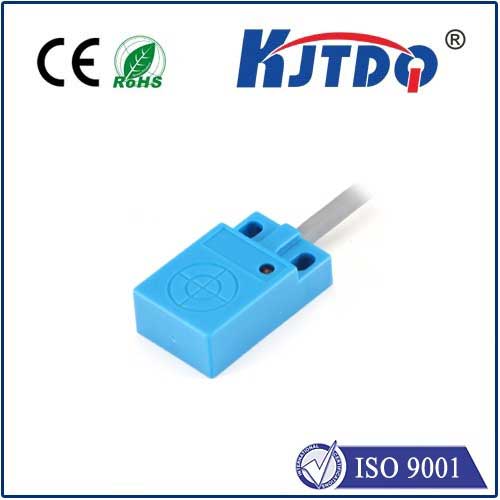
In the world of industrial automation, precision and reliability are non-negotiable. The E3JK-DP11-C photoelectric switch stands as a cornerstone component for countless sensing applications, offering a blend of durability and performance that engineers and system integrators have trusted for years. This comprehensive guide delves into the features, applications, and technical nuances of this versatile sensor, providing essential insights for professionals seeking optimal detection solutions.
At its core, the E3JK-DP11-C is a diffuse-reflective photoelectric sensor. This design allows it to detect objects without the need for a separate reflector. The sensor emits a beam of light; when an object enters its detection range, the light is reflected back to the receiver within the same housing. This self-contained operation simplifies installation and reduces system complexity. A key specification is its sensing distance, which is reliably rated up to 1 meter, making it suitable for a wide array of medium-range detection tasks in packaging, material handling, and assembly lines.
Durability is a hallmark of the E3JK-DP11-C. Housed in a robust, rectangular body, it is built to withstand the rigors of industrial environments. The housing material offers significant resistance to common industrial chemicals, oils, and dust ingress, typically conforming to IP67 standards. This level of protection ensures consistent operation even in challenging conditions where moisture or particulate contamination is a concern. The device operates effectively across a broad voltage range, commonly from 12 to 240 VAC/VDC, providing exceptional flexibility for integration into different control systems, whether they use AC or DC power sources.
The output configuration is another critical aspect. The E3JK-DP11-C typically features a relay output. This type of output is highly valued for its ability to switch a wide range of loads directly, including contactors, solenoids, and indicator lamps, without requiring an intermediary amplifier. The relay contact is often configured as 1 Normally Open (NO) and 1 Normally Closed (NC), offering wiring flexibility to suit various control logic requirements, such as initiating a process upon detection or triggering a safety stop when a beam is broken.
Practical applications for this sensor are extensive. In conveyor systems, it is frequently used for detecting the presence or absence of boxes, bottles, or parts, ensuring smooth material flow and preventing jams. In automated machinery, it can serve as a limit switch to confirm the position of a moving component. It is also effectively employed in security systems for intrusion detection or in automated doors to sense approaching personnel. Its adjustable sensitivity, often via a potentiometer on the unit, allows technicians to fine-tune the sensor to ignore background objects or detect specific materials, minimizing false triggers.
Installation and maintenance are straightforward. The sensor is designed for easy mounting with standard brackets or directly via its built-in holes. A visible LED indicator provides immediate status feedback, showing power-on and output activation states, which is invaluable for quick troubleshooting. When selecting and applying the E3JK-DP11-C, considerations include the target object's size, color, and surface texture, as these factors influence the effective sensing range. For instance, detecting a dark, matte surface may require a shorter set distance compared to a light-colored, reflective one.
In summary, the E3JK-DP11-C photoelectric switch represents a proven and adaptable solution for object detection. Its combination of a practical sensing range, robust environmental protection, versatile power and output options, and user-friendly design makes it a reliable workhorse in factory automation. For system designers and maintenance engineers, understanding its capabilities and proper application is key to building resilient and efficient automated processes. Its continued prevalence in the market is a testament to its design meeting the fundamental needs of industrial sensing with unwavering consistency.