check

check

check

check
check
check
check
check

check

check
In the intricate world of industrial automation, the reliability of a single component can dictate the efficiency of an entire production line. Among these critical components, photoelectric switches stand as silent sentinels, ensuring seamless operation. The OBR6000-R103-2EP-IO photoelectric switch emerges as a premier solution, engineered to meet the rigorous demands of modern manufacturing and logistics. This guide delves into its core functionalities, applications, and the distinct advantages it offers to engineers and system integrators.
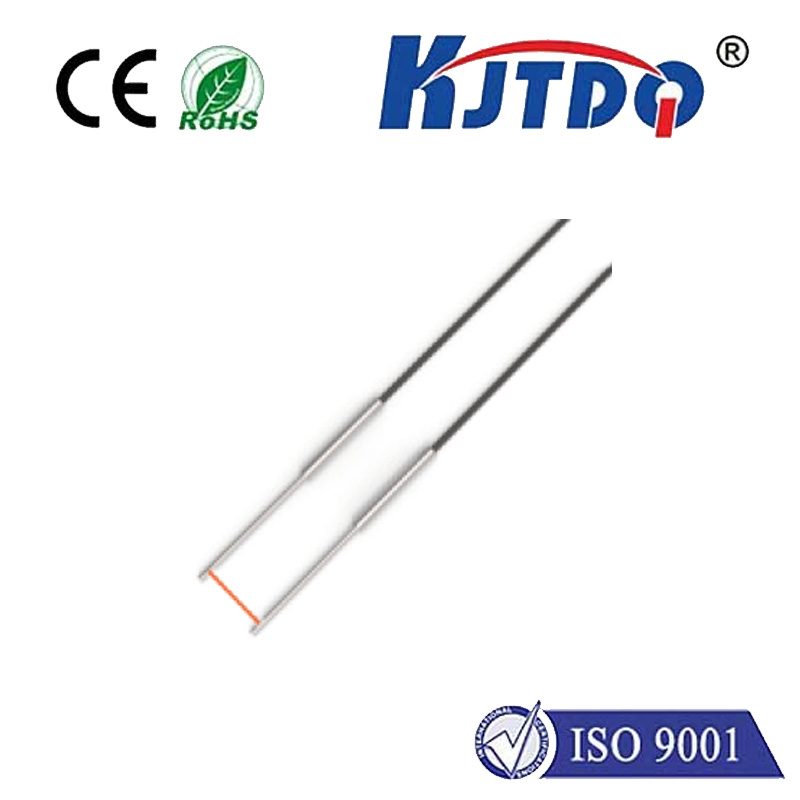
At its heart, the OBR6000-R103-2EP-IO is a sophisticated through-beam sensor. This design features a physically separated transmitter and receiver. The transmitter emits a focused beam of light, typically infrared or laser, which is then captured by the opposing receiver. An object is detected when it interrupts this beam. This principle grants the through-beam method exceptional advantages: very long sensing ranges, high positional accuracy, and remarkable reliability even in challenging environments with dust, steam, or varying light conditions. The "IO" in its designation signifies a key feature: integrated IO-Link capability. IO-Link is a point-to-point serial communication protocol that transforms a simple sensor into an intelligent device. It allows for real-time parameter configuration, remote diagnostics, and the transmission of detailed process data, enabling predictive maintenance and deeper integration into Industry 4.0 frameworks.
The construction of the OBR6000-R103-2EP-IO is tailored for industrial durability. Housed in a robust, typically metallic casing, it boasts high ingress protection ratings (like IP67), making it resistant to water, oil, and particulate matter. Its design ensures stable performance across a wide temperature range, accommodating both freezing cold storage facilities and hot factory floors. The precision optics are protected to maintain consistent beam quality over time, a critical factor for long-term, maintenance-free operation.
The applications for this photoelectric switch are vast and varied. In packaging machinery, it provides precise detection for fill-level control, cap placement, and label positioning. On conveyor systems, it accurately counts products, monitors speed, and detects jams. Within the automotive industry, it ensures robotic arms handle components correctly during assembly. In material handling and warehouse automation, it guides AGVs (Automated Guided Vehicles) and verifies the presence of items on shelves or pallets. Its long-range capability is particularly valuable in large-scale storage and retrieval systems.
Choosing the OBR6000-R103-2EP-IO over standard photoelectric sensors brings several tangible benefits. First is unparalleled reliability; the through-beam principle offers the highest immunity to object color, reflectivity, or surface finish, detecting clear glass or shiny metal as reliably as matte cardboard. Second, its extended sensing range allows for greater flexibility in machine design, enabling detection across wider conveyors or larger work areas. Third, the IO-Link functionality is a gateway to smart factory concepts. It simplifies wiring, reduces downtime through quick device replacement and automatic parameter reconfiguration, and provides valuable data for optimizing processes. Finally, its rugged build translates to a lower total cost of ownership by minimizing failures and maintenance interruptions.
When integrating the OBR6000-R103-2EP-IO, several practical considerations ensure optimal performance. Proper alignment of the transmitter and receiver is paramount; mounting brackets designed for precision adjustment are recommended. The operating environment should be assessed for potential obstructions or sources of intense ambient light that could interfere with the beam. Leveraging the IO-Link interface requires a compatible master module but unlocks the full potential of the device, allowing users to fine-tune parameters like response time or output behavior directly from a control panel.
In conclusion, the OBR6000-R103-2EP-IO photoelectric switch represents a fusion of proven sensing technology with modern digital communication. It is not merely a detection device but a reliable and intelligent node in an automated network. For engineers seeking a robust, accurate, and future-proof solution for object detection across demanding industrial applications, this sensor provides a compelling answer, ensuring precision, efficiency, and connectivity on the factory floor.