check

check

check
check
check
check
check
check

check

check
In the complex world of industrial automation, the reliability of individual components dictates the efficiency of the entire system. Among these critical components, the photoelectric switch stands as a silent sentinel, ensuring seamless operations. The GLV18-8-400-S/25/102/115 photoelectric switch emerges as a prime example of engineering tailored for demanding applications. This device is not merely a sensor; it is a sophisticated tool designed for precision, durability, and consistent performance in challenging environments.
The core function of the GLV18-8-400-S/25/102/115 is based on the through-beam sensing principle. This model features a separate emitter and receiver. The emitter projects a focused beam of light, which is then captured by the receiver unit. Any object passing between these two components interrupts this beam, triggering a clear and immediate output signal. This method is renowned for its long sensing range and high immunity to environmental interference, such as dust, steam, or target surface characteristics. The specified "400" in its model number indicates a substantial sensing distance, making it ideal for applications requiring detection across wider apertures or on large machinery.
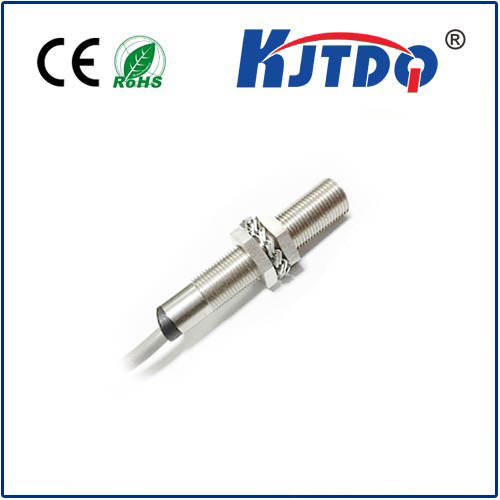
Durability is a non-negotiable requirement in industrial settings, and the GLV18-8-400-S/25/102/115 is built to endure. The housing is typically constructed from robust materials like nickel-plated brass or high-grade stainless steel, offering excellent resistance to corrosion, impacts, and chemical exposure. The "S" designation often relates to a specific housing style or thread size, in this case, an 18mm barrel design, ensuring a secure and standardized mounting process. Its IP67 protection rating guarantees that the switch remains fully operational even when exposed to harsh conditions like washdowns or outdoor weather, preventing downtime due to sensor failure.
Electrical specifications are crucial for integration. This photoelectric switch operates with a DC voltage supply, commonly in the 10-30V DC range, ensuring compatibility with standard industrial control systems like PLCs (Programmable Logic Controllers). The output is typically a solid-state NPN or PNP configuration, providing a fast and reliable switching signal. The inclusion of features like short-circuit protection, reverse polarity protection, and an LED status indicator for power and signal output simplifies installation, troubleshooting, and maintenance, reducing overall system costs.
The application scope for the GLV18-8-400-S/25/102/115 photoelectric switch is vast. It is indispensable in packaging lines for detecting the presence or absence of products on conveyors. In material handling, it ensures precise positioning of pallets or counts items accurately. Automotive manufacturing lines utilize such sensors for robot guidance and part verification. Furthermore, in woodworking or metalworking, it serves as a safety interlock or a tool for measuring object dimensions. Its long-range capability makes it perfect for monitoring large doors, gates, or storage bay entries.
Selecting the right sensor can significantly impact operational efficiency. The GLV18-8-400-S/25/102/115 offers a compelling combination of long-range detection, rugged construction, and reliable electrical performance. When evaluating sensors for a project, engineers consider factors like sensing distance, environmental resistance, response time, and electrical interface. This model checks these boxes effectively, providing a solution that minimizes false triggers and maximizes uptime. Its standardized design also means easy replacement and availability within global supply chains.
Ultimately, the value of a component like the GLV18-8-400-S/25/102/115 photoelectric switch is measured by its contribution to a smooth, uninterrupted production flow. It represents a critical link in the automation chain, where its failure can lead to costly stoppages. By choosing a sensor with proven specifications and robust design, facilities invest in predictability and stability. For system integrators and plant managers seeking a dependable through-beam sensor for long-range object detection, this model stands as a technically sound and operationally proven choice, ensuring that the pulse of automation remains strong and steady.