check

check

check
check
check
check
check
check

check

check
In the world of industrial automation and machinery, precision and reliability are non-negotiable. The E3F-DS30P1 photoelectric switch stands as a cornerstone component for countless applications demanding accurate object detection. This comprehensive guide delves into the features, working principles, and practical applications of this versatile sensor, providing essential knowledge for engineers, technicians, and procurement specialists.
At its core, the E3F-DS30P1 is a diffuse reflective photoelectric sensor. Unlike through-beam sensors that require separate emitter and receiver units, this model integrates both elements into a single, compact housing. It operates by emitting a beam of modulated infrared light from its built-in LED. When an object enters its detection range, the light reflects off the object's surface and returns to the sensor's receiver. The internal circuitry then processes this signal to trigger an output switch. The "P1" suffix typically indicates a specific sensing distance or output configuration, often a 30cm standard sensing range with a PNP (sourcing) output, making it compatible with a wide array of programmable logic controllers (PLCs) and control systems.
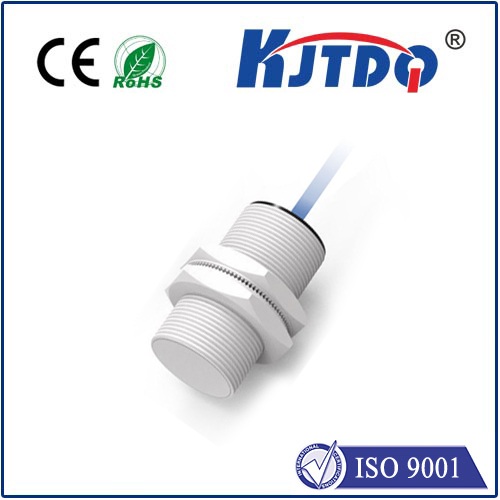
The design of the E3F-DS30P1 prioritizes robustness and ease of use. Housed in a cylindrical barrel, it is commonly built to an IP67 rating, signifying excellent protection against dust ingress and temporary immersion in water. This makes it suitable for challenging environments found in manufacturing plants, packaging lines, and material handling systems. Installation is straightforward, often requiring just a simple bracket, and many models feature a potentiometer for easy sensitivity adjustment, allowing users to fine-tune the sensor to detect specific objects while ignoring background interference.
One of the key strengths of this photoelectric switch is its versatility. It finds application across numerous industries. On conveyor belts, it reliably detects the presence or absence of products for counting, sorting, or positioning. In automated assembly lines, it can verify if a component has been correctly placed. It is also instrumental in liquid level detection within translucent containers, object detection in vending machines, and as a safety interlock to ensure machine guards are in place. Its diffuse reflective nature means it only requires one wiring point and does not need a separate reflector, simplifying system design and reducing installation costs compared to other sensor types.
When selecting and implementing the E3F-DS30P1, several practical considerations are paramount. The sensing distance, typically 30 centimeters, can be influenced by the object's color, surface texture, and size. Light-colored, matte surfaces reflect light well and are easily detected, while dark, shiny, or absorbent surfaces may require closer proximity or sensitivity adjustment. The sensor's response time is another critical factor for high-speed applications. Furthermore, environmental factors like ambient light, dust, steam, or vibrations should be assessed to ensure stable operation. Proper alignment and mounting are essential to avoid false triggers from unintended reflective surfaces.
For optimal performance, regular maintenance is advised. Keeping the lens clean from dirt, oil, or debris ensures consistent light transmission. Periodically verifying the sensing distance and output signal under actual operating conditions can prevent unexpected downtime. It is also crucial to consult the specific manufacturer's datasheet for the exact electrical characteristics, wiring diagrams, and dimensional drawings, as specifications can vary slightly between different producers.
In summary, the E3F-DS30P1 photoelectric switch represents a reliable and efficient solution for non-contact object detection. Its self-contained design, environmental resilience, and adjustable sensitivity make it a preferred choice for engineers designing or maintaining automated systems. By understanding its operational principles and application best practices, users can leverage this sensor to enhance productivity, ensure quality control, and improve the overall reliability of their automated processes. Its enduring popularity in the industrial sector is a testament to its effective design and dependable performance in meeting the fundamental need for precise detection.