check

check

check

check
check
check
check
check

check

check
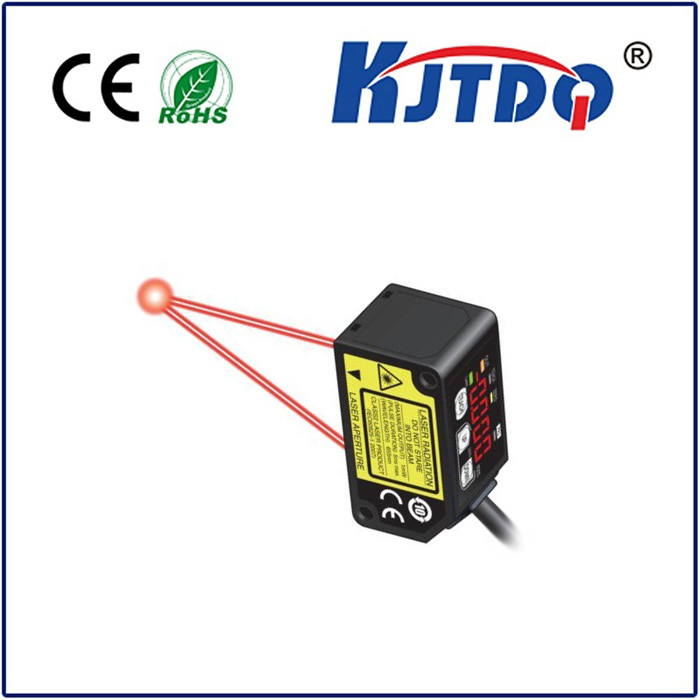
In the rapidly evolving landscape of automation, robotics, and IoT, the demand for reliable, accurate, and cost-effective distance measurement solutions is higher than ever. Enter the TF-Luna laser sensor, a compact LiDAR module that is making waves across various industries by delivering high-performance ranging in a remarkably small form factor. Unlike ultrasonic sensors or traditional infrared methods, the TF-Luna utilizes time-of-flight (ToF) laser technology, providing a significant leap in precision and stability for a wide array of applications.
At its core, the TF-Luna is designed for simplicity and integration. Its small size, typically around 45mm x 20mm x 15mm, allows it to be embedded into devices where space is at a premium. Despite its compact dimensions, it boasts an impressive measurement range, typically from 0.2 meters up to 8 meters, with a high measurement frequency. This makes it an ideal choice for scenarios requiring real-time distance data. The sensor communicates via a simple serial UART or I2C interface, which means developers and engineers can easily interface it with common microcontrollers like Arduino, Raspberry Pi, or STM32 boards, accelerating prototyping and product development cycles.
One of the standout features of the TF-Luna is its robustness against environmental interference. Traditional sensors can struggle with varying light conditions or the color and texture of target objects. The TF-Luna's laser-based system minimizes these issues, offering consistent readings whether indoors or outdoors, and on different surface materials. This reliability is crucial for applications such as drone altitude hold, where stable ground distance feedback is essential for safe landing and hovering. Similarly, in robotics, it serves as a perfect tool for obstacle avoidance, allowing autonomous robots to navigate complex environments by accurately detecting objects in their path.
Beyond robotics and drones, the TF-Luna finds utility in a multitude of sectors. In industrial automation, it can be used for precise object positioning on conveyor belts, liquid level detection in tanks, or as a safety curtain to protect personnel near machinery. For smart devices and consumer electronics, it enables touchless gesture control or presence detection, enhancing user interaction. Its low power consumption also makes it suitable for battery-operated portable devices, extending operational life without compromising on performance.
Setting up and using the TF-Luna is straightforward, which is a significant advantage for both hobbyists and professional engineers. With readily available libraries and example code for popular platforms, users can get accurate distance readings within minutes of connecting the sensor. Furthermore, parameters like the measurement frequency and output format can be configured via simple commands, allowing for customization based on specific project needs. This plug-and-play nature, combined with its affordability, lowers the barrier to entry for integrating advanced laser ranging into projects.
However, like any technology, understanding its operational limits ensures optimal use. The TF-Luna performs best with solid, opaque surfaces. Highly reflective or transparent materials like glass or mirrors may cause inaccurate readings or require specific calibration. For long-range stability, ensuring a stable power supply and minimizing electrical noise in the system is recommended. These considerations are part of standard engineering practice and do not detract from the sensor's overall value proposition.
The future for compact laser sensing looks bright, and the TF-Luna is at the forefront of this trend. As the Internet of Things continues to expand and smarter automation becomes the norm, the need for precise, miniature sensors will only grow. The TF-Luna laser sensor, with its blend of accuracy, compact size, and ease of use, is perfectly positioned to be a key enabler in this next wave of technological innovation. It empowers creators and engineers to bring sophisticated spatial awareness to their designs without the complexity and cost traditionally associated with laser ranging systems.