check

check

check

check
check
check
check
check

check

check
In the demanding world of industrial automation and quality control, achieving micron-level accuracy is not just a goal; it's a necessity. The OMD8000-R300-UEP-V1-L laser sensor emerges as a pivotal solution, engineered to meet the rigorous standards of modern manufacturing and R&D environments. This comprehensive guide delves into the core features, operational principles, and diverse applications of this advanced measurement tool, providing essential insights for engineers and decision-makers.
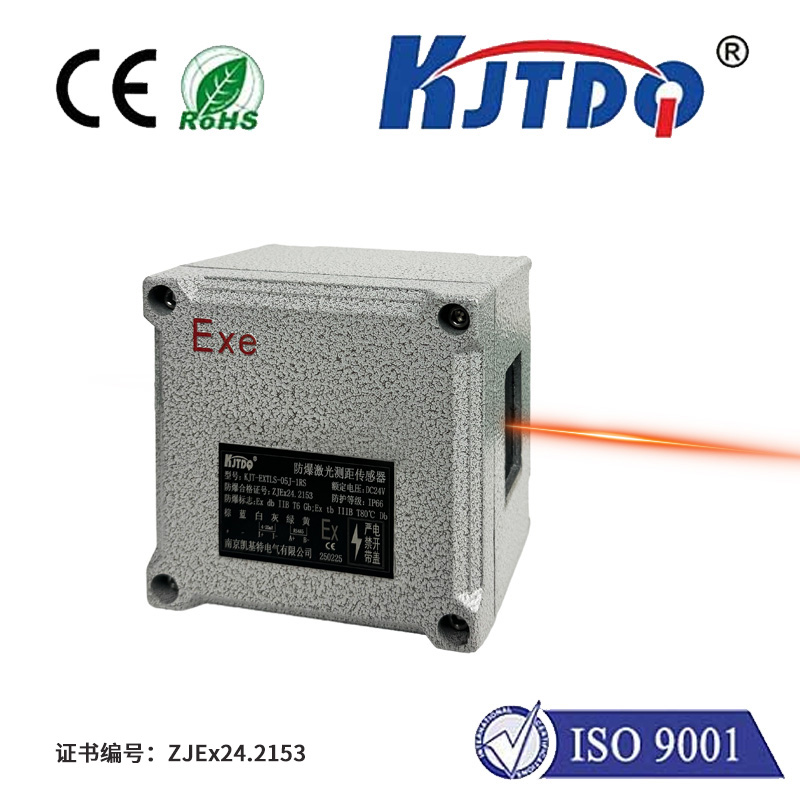
At its heart, the OMD8000-R300-UEP-V1-L is a state-of-the-art triangulation laser sensor. It operates on a fundamental yet highly refined principle: a focused laser beam is projected onto the target surface. The diffuse reflection from this point is captured by a high-resolution CMOS array at a precise angle. Any minute variation in the target's distance causes a proportional shift of the light spot on the receiver. Sophisticated onboard algorithms then process this shift with exceptional speed, converting it into an exact distance or position measurement. This non-contact methodology is crucial for inspecting delicate, hot, moving, or otherwise inaccessible surfaces without risk of damage or wear.
The designation "OMD8000-R300-UEP-V1-L" itself reveals key specifications. The 'R300' typically indicates a reference measuring distance, often 300mm, providing an optimal working range. The 'UEP' suffix suggests a specific housing or connector type designed for robust industrial use, often featuring an M12 connector for reliable connectivity. The 'V1' may denote a particular version or variant with enhanced firmware, while the 'L' commonly specifies a laser light source. This sensor is renowned for its high repeatability, often in the single-digit micron range, and a fast sampling rate that can reach into the kilohertz, enabling real-time monitoring of dynamic processes.
What truly sets the OMD8000-R300-UEP-V1-L apart are its integrated features designed for seamless integration and reliable performance. It often includes programmable switching outputs (PNP/NPN) for direct control of machinery, and analog outputs (0-10V or 4-20mA) for continuous data streaming to PLCs or data acquisition systems. Advanced models may offer digital interfaces like RS-422 or Ethernet for networked systems. Built-in temperature compensation ensures stability across fluctuating environmental conditions, while a robust IP67-rated housing protects against dust and water ingress, guaranteeing longevity on the factory floor.
The applications for this sensor are vast and critical. In automotive assembly, it verifies the precise gap and flushness between body panels. In electronics manufacturing, it measures the coplanarity of BGA solder balls or the thickness of wafer substrates. Within the pharmaceutical sector, it controls the fill level in vials or the thickness of coated tablets. Robotics heavily relies on such sensors for accurate bin-picking guidance and assembly verification. Furthermore, in roll diameter monitoring, vibration analysis, and profile scanning, the OMD8000-R300-UEP-V1-L provides the reliable data needed for process optimization and preventive maintenance.
Implementing this laser sensor effectively requires attention to several factors. The surface properties of the target—its color, material, and texture—can influence the reflected signal strength. While advanced models handle a variety of surfaces, highly reflective or absorbent materials may require specific settings or optional filters. Proper mounting, alignment, and environmental shielding from intense ambient light are essential for optimal performance. Users must also configure the evaluation windows, thresholds, and output signals via teach-in buttons or dedicated software to tailor the sensor to the specific task.
When compared to other measurement technologies like ultrasonic sensors or confocal chromatic sensors, the OMD8000-R300-UEP-V1-L laser sensor offers a compelling balance of speed, accuracy, and cost-effectiveness for medium-range applications. Its primary advantage lies in its spot size, which allows for precise measurement of small features, and its exceptional response time. Selecting the correct sensor variant depends entirely on the specific application parameters: required resolution, stand-off distance, target characteristics, and the necessary output interface.
In conclusion, the OMD8000-R300-UEP-V1-L laser sensor represents a cornerstone technology for precision measurement. Its blend of high accuracy, robust construction, and versatile programmability makes it an indispensable tool for enhancing quality, increasing throughput, and enabling automation across countless industries. For engineers seeking to push the boundaries of measurement capability, understanding and utilizing this sensor is a definitive step toward achieving superior operational excellence and product integrity.