check
check
check

check
check
check
check
check

check

check
In the demanding world of industrial automation and precision measurement, the reliability and accuracy of sensors are non-negotiable. The CD33-250NV/PV laser sensor emerges as a cornerstone technology, engineered to meet the rigorous requirements of modern manufacturing, logistics, and quality control environments. This comprehensive guide delves into the core functionalities, technical specifications, and diverse applications of this advanced photoelectric sensor, providing essential insights for engineers and system integrators.
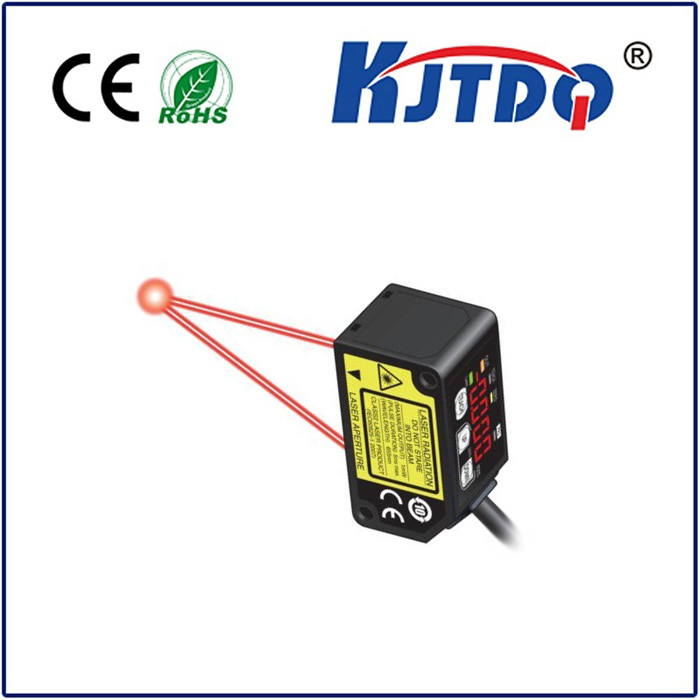
At its heart, the CD33-250NV/PV is a high-performance diffuse-reflective laser sensor. Unlike through-beam sensors that require separate emitter and receiver units, this model integrates both components into a single, compact housing. It operates by emitting a focused, visible red laser beam towards a target. The sensor's receiver then detects the light diffusely reflected back from the object's surface. This principle allows for flexible installation and is particularly effective for detecting objects at a defined, adjustable range without the need for a reflector opposite the sensor.
The designation "CD33-250NV/PV" reveals key aspects of its capability. The "250" typically indicates a substantial sensing range, often up to 250mm, making it suitable for applications requiring detection at a distance. The "NV" and "PV" suffixes are critical, denoting the output configurations. The NV version commonly features a digital switch output (NPN or PNP), providing a straightforward ON/OFF signal when an object is detected within the set threshold. The PV variant, however, often incorporates an analog output (e.g., 0-10V or 4-20mA), enabling it to provide a continuous signal proportional to the distance to the target. This analog capability allows for precise distance measurement, contour profiling, and thickness monitoring, elevating its utility beyond simple presence detection.
Technical excellence defines the CD33-250NV/PV. It boasts a highly visible, concentrated laser spot, enabling precise targeting even on small components. A key feature is its exceptional background suppression capability. Advanced optics and circuitry allow the sensor to ignore objects beyond the preset sensing distance, effectively eliminating interference from machinery parts or conveyor belts in the background. This ensures stable detection of only the intended target. Furthermore, models are available with high switching frequencies, allowing them to reliably detect rapidly moving objects on high-speed production lines. Robust housing ratings, such as IP67, ensure protection against dust and water jets, guaranteeing longevity in harsh industrial settings.
The applications for the CD33-250NV/PV laser sensor are vast and varied across industries. In automotive assembly, it verifies the presence of tiny but critical parts like springs or clips. On packaging lines, it ensures cartons are correctly positioned for labeling or case packing. The analog PV version is indispensable in semiconductor manufacturing for wafer positioning, in metalworking for monitoring material warp or thickness, and in robotic guidance systems for precise distance feedback. Its reliability makes it a preferred choice for tasks where other sensor types, like ultrasonic or standard photoelectric, may struggle with precision, color variation, or surface reflectivity.
Selecting and implementing the CD33-250NV/PV requires careful consideration. Engineers must first determine the primary need: simple object detection (NV output) or precise distance measurement (PV analog output). The material, color, and surface finish of the target object must be evaluated, as these affect reflectivity. While the visible laser spot aids alignment, proper mounting to avoid vibration and environmental factors like ambient light or airborne contaminants must be accounted for. Most models feature intuitive teach-in functions or potentiometers for easy setup, allowing quick configuration of the sensing window or output range.
In conclusion, the CD33-250NV/PV laser sensor represents a fusion of precision, versatility, and robustness. Its dual output options cater to a broad spectrum of industrial automation challenges, from basic part verification to complex dimensional analysis. By offering reliable performance in challenging conditions, it minimizes downtime and enhances quality control processes. For any operation seeking to improve accuracy, efficiency, and reliability in material handling, assembly, or inspection, integrating the CD33-250NV/PV laser sensor is a strategic step towards achieving smarter, more responsive manufacturing ecosystems.