check
check
check
check
check
check
In the realm of industrial automation and precision measurement, the demand for reliable, accurate, and robust sensing solutions is paramount. The OL1S/OL1E-R1010A13 laser sensor stands as a testament to engineering excellence, designed to meet the rigorous challenges of modern manufacturing, logistics, and quality control environments. This comprehensive guide delves into the core features, applications, and technical advantages of this advanced sensing device.
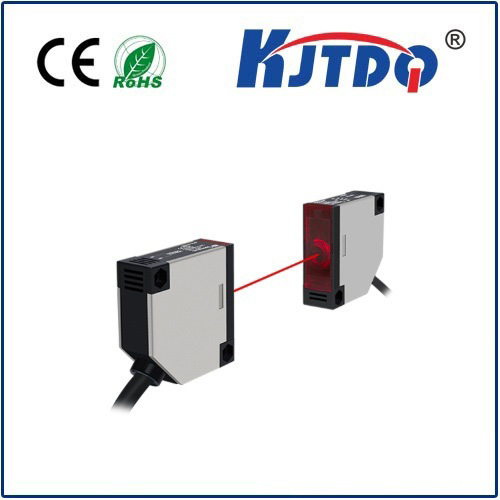
At its heart, the OL1S/OL1E-R1010A13 is a high-performance laser sensor utilizing a through-beam detection method. This principle involves a separate transmitter (OL1S) and receiver (OL1E) unit. The transmitter emits a concentrated, coherent laser beam, which is captured by the receiver positioned directly opposite. Any object passing through this beam interrupts the signal, triggering a precise detection event. This method is renowned for its exceptional stability, long sensing distance, and high immunity to environmental interference such as ambient light or target surface characteristics like color, texture, or material.
The designation "R1010A13" provides insight into its key specifications. It typically indicates a specific sensing range, output configuration, and housing design optimized for industrial use. These sensors often boast a long detection range, capable of stable operation over several meters, making them ideal for applications requiring non-contact detection over distances where other sensor types might falter. The output is usually a clean, switch-like signal (e.g., NPN or PNP transistor output) easily integrated into Programmable Logic Controllers (PLCs), relays, or other control systems.
One of the standout features of the OL1S/OL1E-R1010A13 laser sensor is its remarkable precision and response speed. The fine, focused laser beam allows for the detection of extremely small objects or precise edges, crucial in applications like part counting, width measurement, or breakage detection in fast-moving production lines. Its high-speed response ensures no missed detections even in high-throughput scenarios, directly contributing to enhanced production efficiency and reduced waste.
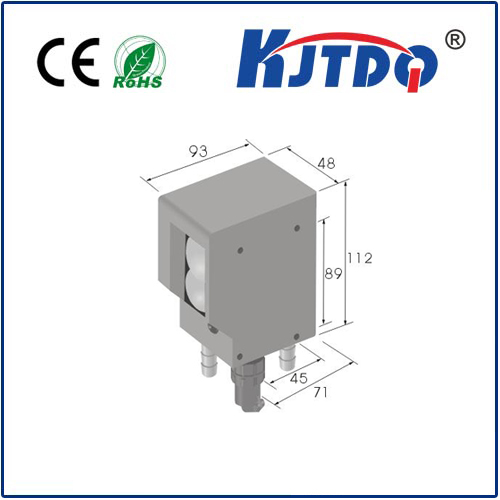
Durability is a non-negotiable requirement in industrial settings. The OL1S/OL1E-R1010A13 is typically housed in a rugged metal or high-grade plastic casing, offering significant resistance to vibration, shock, and incidental impacts. Many models are built to comply with international protection standards such as IP67, meaning they are dust-tight and can withstand temporary immersion in water. This robust construction ensures reliable performance in harsh conditions, from machine shops and assembly lines to outdoor logistics hubs.
The versatility of this laser sensor pair is vast. Common industrial applications include:
* Object Presence Detection: Verifying the presence or absence of components on conveyor belts, in packaging machines, or during robotic pick-and-place operations.
* Positioning and Alignment: Ensuring precise positioning of materials in printing, cutting, or CNC machining processes.
* Web Break Detection: Monitoring continuous materials like paper, film, or textiles for breaks or tears in manufacturing rolls.
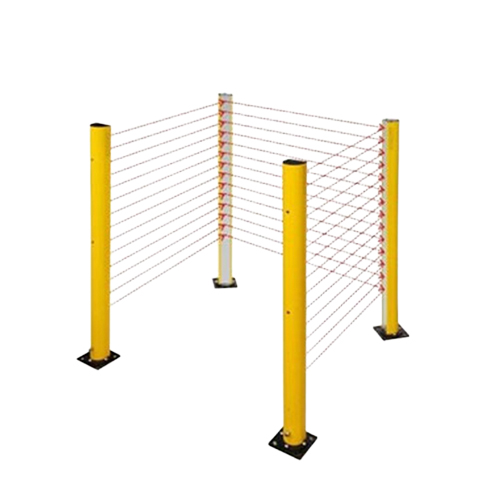
* Safety Light Curtains (as a component): Contributing to safety systems where multiple beams create a protective curtain around hazardous machinery.
* Height and Dimension Control: Used in tandem with other systems to control product height or check dimensional tolerances.
Installation and alignment, while straightforward due to the through-beam design, are critical for optimal performance. Manufacturers often incorporate visual aids like alignment indicators or bright visible laser spots (in models with a visible red laser) to simplify the setup process. Proper mounting ensures the beam is perfectly orthogonal to the target path, maximizing signal strength and detection reliability.
When selecting a sensor like the OL1S/OL1E-R1010A13, engineers consider factors beyond basic range. The required beam spot size, response time, environmental temperature range, power supply voltage, and output type are all crucial decision points. Its ability to perform consistently regardless of target color or reflectivity eliminates a common variable that affects diffuse-reflective sensors, providing a more stable and maintenance-free solution.
In conclusion, the OL1S/OL1E-R1010A13 laser sensor represents a robust, precise, and highly reliable choice for through-beam sensing needs. Its design prioritizes accuracy, speed, and industrial toughness, addressing the core requirements of automation and control systems. By providing a dependable means of non-contact detection over long distances, it enhances process reliability, improves quality assurance, and supports the seamless operation of complex industrial machinery. For system integrators and plant engineers seeking a proven solution for challenging detection tasks, this laser sensor pair offers a compelling blend of performance and durability.