check
check
check
check
check
check
In the world of industrial automation and precision measurement, the demand for reliable, accurate, and robust sensors is paramount. Among the myriad of options available, the OMT100-R100-2EP-IO laser sensor stands out as a sophisticated solution engineered for challenging applications. This guide delves into the core features, operational principles, and practical benefits of this advanced sensing device, providing a comprehensive overview for engineers, system integrators, and procurement specialists.
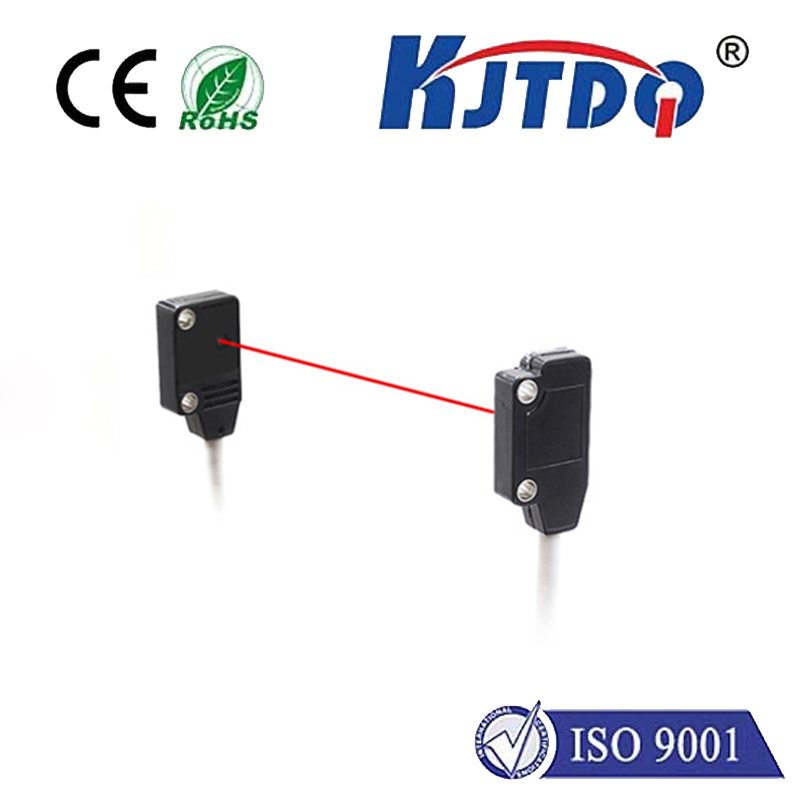
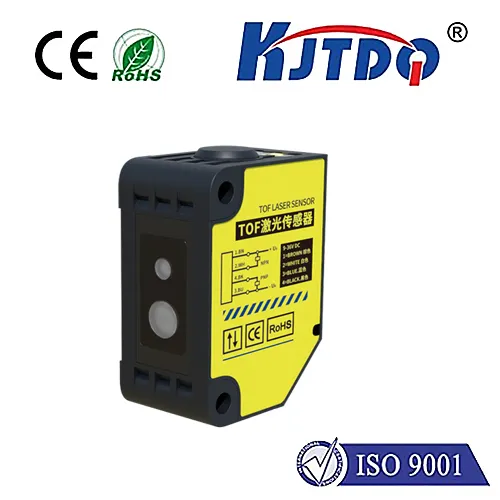
The OMT100-R100-2EP-IO is a high-performance laser sensor designed for precise distance measurement and object detection. Its core technology is based on the time-of-flight principle, where a laser diode emits a pulsed light beam towards a target. The sensor's sensitive receiver then detects the reflected light. By precisely calculating the time difference between the emission and reception of the laser pulse, the sensor determines the exact distance to the object with exceptional accuracy. This method ensures reliable performance even on objects with varying surface properties, colors, or textures, a common challenge with other optical sensors.
A key specification highlighted in its model name is the R100, indicating a measuring range of up to 100 millimeters. This range makes it ideal for applications requiring fine-tolerance measurements, such as checking part dimensions, monitoring fill levels in small containers, or controlling robot positioning in assembly tasks. The "2EP" designation typically refers to its dual digital switching outputs (e.g., PNP). These configurable outputs allow the sensor to trigger actions—like activating a reject mechanism or signaling a PLC—when an object is detected within a user-defined window. The "IO" suffix often signifies an integrated IO-Link communication interface. This modern, point-to-point serial communication protocol is a game-changer, enabling seamless integration into Industry 4.0 and smart factory environments. Through IO-Link, users can remotely configure parameters, read real-time process data, and receive detailed diagnostic information, significantly simplifying setup and maintenance.
The construction of the OMT100-R100-2EP-IO is built for industrial durability. It typically features a robust metal housing with an IP67 protection rating, making it resistant to dust ingress and capable of withstanding temporary immersion in water. This allows for reliable operation in harsh factory conditions, including areas with coolants, oils, or frequent washdowns. The integrated M8 connector ensures quick and secure cabling, reducing installation time.
Practical applications for this sensor are vast across multiple sectors. In automotive manufacturing, it can be used for gap and flush measurement on vehicle body panels. In electronics assembly, it ensures precise placement of components on circuit boards. In packaging machinery, it verifies the presence and correct height of products on a conveyor. Its high resolution and repeatability make it indispensable for quality control stations where micrometer-level deviations are critical. The IO-Link functionality further enhances these applications by enabling predictive maintenance. The sensor can monitor its own operating temperature or signal strength, alerting operators to potential issues like lens contamination before they cause production downtime.
Selecting and implementing the OMT100-R100-2EP-IO requires consideration of several factors. The target material and surface finish can influence the sensor's performance; highly reflective or absorbent surfaces may require parameter adjustment, which is easily done via the IO-Link interface. The required measuring accuracy, response time, and environmental conditions (temperature, ambient light) must also align with the sensor's specifications. Proper mounting and alignment are crucial for optimal results, and the sensor's compact design facilitates integration into space-constrained locations.
Compared to ultrasonic or inductive sensors, laser sensors like the OMT100-R100-2EP-IO offer superior precision and a much smaller spot size, allowing for the detection of very small objects or edges. The inclusion of IO-Link sets it apart from standard models, offering a future-proof investment with enhanced data capabilities. This digital connectivity transforms the sensor from a simple switching device into an intelligent data point within a networked production system.
In conclusion, the OMT100-R100-2EP-IO laser sensor represents a convergence of precision metrology, robust design, and digital intelligence. It addresses the core needs of modern automation: accuracy, reliability, and data accessibility. For professionals seeking to enhance process control, improve product quality, and streamline operations with actionable data, this sensor provides a powerful and versatile tool. Its ability to deliver consistent, high-accuracy measurements in demanding environments makes it a valuable asset for any precision-oriented industrial application.