check

check

check

check

check

check
In the demanding world of industrial automation and precision engineering, the quest for reliable, accurate, and robust measurement solutions is never-ending. Among the array of technologies available, laser sensors have carved out a critical niche, offering non-contact measurement with exceptional speed and precision. The DME4000-117 laser sensor stands as a prominent example of this technological advancement, engineered to meet the rigorous challenges of modern manufacturing, logistics, and quality control environments. This guide delves into the core features, operational principles, and diverse applications of this powerful sensor, providing a comprehensive overview for engineers and decision-makers.
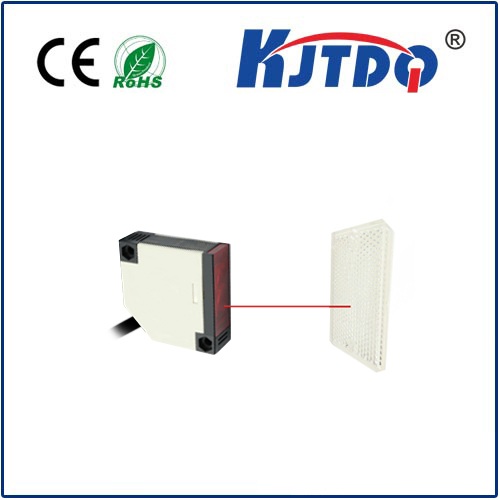
At its heart, the DME4000-117 is a time-of-flight (ToF) laser distance sensor. It operates by emitting a focused pulse of laser light towards a target object. The sensor's sophisticated internal circuitry precisely measures the time it takes for the reflected light to return. Since the speed of light is a constant, the sensor can calculate the distance to the object with remarkable accuracy. This non-contact method is a key advantage, eliminating wear and tear associated with physical probes and allowing for the measurement of delicate, hot, moving, or otherwise inaccessible surfaces without any risk of damage or contamination.
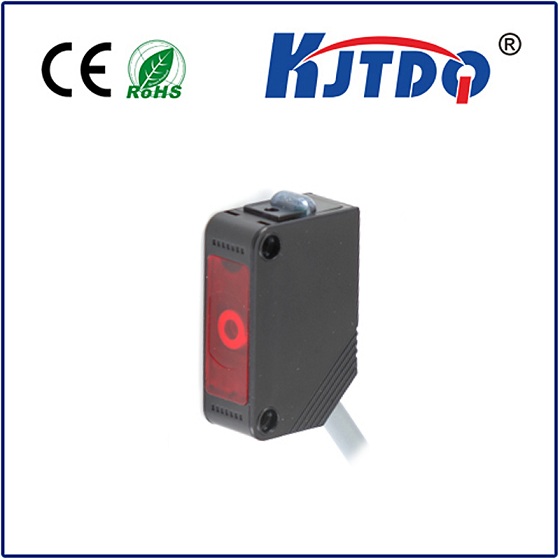
The performance specifications of the DME4000-117 are what set it apart. It typically offers a high measuring rate, capable of taking thousands of measurements per second, making it ideal for dynamic processes on fast-moving production lines. Its measurement range is substantial, allowing for flexible installation in various machine setups. Furthermore, it boasts excellent repeatability and linearity, ensuring that measurements are not only precise but also consistently reliable over time and across different conditions. The sensor is often housed in a rugged, industrial-grade casing with a high IP rating, providing robust protection against dust, moisture, and mechanical shocks commonly found in factory settings. This durability translates to reduced downtime and lower maintenance costs.
Integration is a seamless process with the DME4000-117. It commonly features multiple output options, such as analog voltage or current signals (e.g., 0-10V, 4-20mA), digital interfaces like RS-422, or industrial Ethernet protocols. This flexibility allows it to communicate effortlessly with Programmable Logic Controllers (PLCs), human-machine interfaces (HMIs), and data acquisition systems. The setup is typically straightforward, often facilitated by intuitive configuration software that enables users to fine-tune parameters like response time, output scaling, and filtering to match specific application needs.
The applications for the DME4000-117 laser sensor are vast and varied. In automotive assembly, it is used for precise gap and flush measurement between body panels, ensuring perfect fit and finish. In the packaging industry, it monitors the fill level of containers or the height of stacked boxes on a conveyor. In robotics, it provides critical feedback for positioning and bin-picking operations, guiding robotic arms with high accuracy. In lumber and sawmill operations, it measures board thickness and width for optimal cutting. It also plays a vital role in warehouse automation, controlling the height of automated storage and retrieval systems (AS/RS) and ensuring safe pallet handling.
When selecting a sensor like the DME4000-117, several factors must be considered. The required measurement range, the reflectivity and color of the target surface, the environmental conditions (presence of dust, steam, or vibration), and the necessary response speed are all critical. For instance, measuring a dark, matte surface may require different settings or a sensor with a more powerful laser compared to a bright, reflective surface. Understanding these variables ensures optimal sensor performance and longevity.
In conclusion, the DME4000-117 laser sensor represents a fusion of precision optics, advanced electronics, and rugged design. It is more than just a measuring device; it is an enabler of efficiency, quality, and automation. By providing fast, accurate, and reliable distance data without physical contact, it helps industries optimize their processes, reduce waste, improve product quality, and enhance overall operational safety. For any operation where precise spatial awareness is paramount, the DME4000-117 offers a proven and powerful solution, solidifying its place as a trusted component in the toolkit of modern industrial engineering.