check

check

check

check

check

check
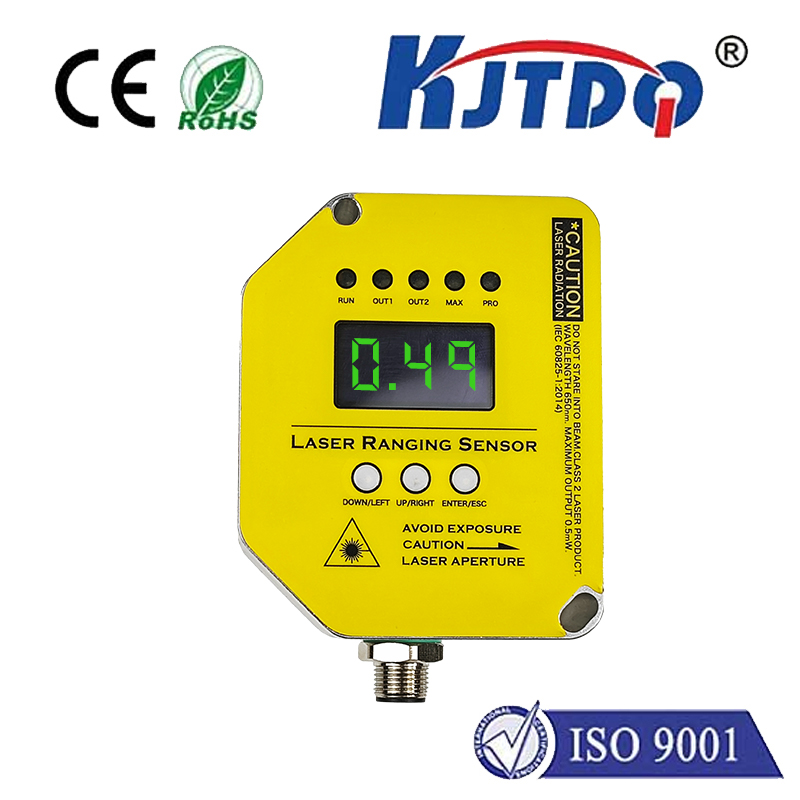
In the demanding world of industrial automation and quality control, achieving micron-level precision is not just a goal; it's a fundamental requirement. This is where the DME5000-312 laser sensor emerges as a pivotal tool, engineered to deliver exceptional accuracy and reliability in the most challenging environments. Unlike conventional measurement devices, this sensor leverages advanced laser triangulation technology to provide non-contact, high-speed measurements, making it indispensable for a wide range of applications.
The core strength of the DME5000-312 lies in its sophisticated design and robust performance metrics. It operates on the principle of laser triangulation, where a laser diode projects a visible red spot onto the target surface. The reflected light is then captured by a high-resolution CMOS array at a precise angle. By calculating the position of the light spot on the receiver, the sensor determines the exact distance to the target with remarkable resolution. This method allows for measurements that are immune to the inconsistencies and potential damage associated with physical contact probes.
One of the most compelling features of the DME5000-312 is its exceptional measurement range and repeatability. It offers a finely tuned balance, capable of detecting minute variations in distance, thickness, or height with consistent precision. Whether monitoring the thickness of paper on a high-speed production line, verifying the precise placement of electronic components on a PCB, or controlling the gap in automotive assembly, this sensor performs with unwavering accuracy. Its high sampling rate ensures that even rapidly moving objects can be measured without loss of data fidelity, which is critical for real-time process control.
Durability and adaptability are built into the DME5000-312's design. Housed in a rugged, industrial-grade casing, it is resistant to dust, moisture, and typical shop-floor vibrations. This robust construction ensures long-term stability and minimizes downtime, a key consideration for continuous operations. Furthermore, its integration is remarkably straightforward. With standard industrial communication interfaces, it seamlessly connects to PLCs, data acquisition systems, and control units. The intuitive setup software allows engineers to quickly configure measurement windows, thresholds, and output signals, tailoring the sensor to specific task requirements without extensive programming knowledge.
The application spectrum for the DME5000-312 is vast. In the automotive sector, it is used for weld seam inspection, brake disc thickness measurement, and robot guidance. In electronics manufacturing, it ensures the coplanarity of BGA chips and the precise height of components. The packaging industry relies on it to control fill levels and check seal integrity. Its versatility extends to lumber milling for thickness profiling and in metallurgy for monitoring material deformation. Each application benefits from the sensor's core attributes: non-contact measurement, high speed, and sub-micron precision.
Implementing the DME5000-312 into an existing system translates directly into enhanced quality assurance and operational efficiency. By providing accurate, real-time data, it enables proactive adjustments to manufacturing processes, drastically reducing the rate of defective products and material waste. This proactive quality control loop not only saves costs associated with rework and scrap but also strengthens brand reputation by ensuring consistently high product standards. The return on investment is realized through improved yield, reduced maintenance needs of contact-based systems, and the automation of previously manual inspection stations.
Selecting the right measurement sensor is a critical decision. The DME5000-312 stands out for scenarios demanding the highest levels of precision where contact is impractical or where the target material is delicate. Its performance is particularly notable in environments with variable surface colors or textures, thanks to advanced algorithms that compensate for light absorption differences. When compared to ultrasonic or inductive sensors, the laser-based DME5000-312 provides superior resolution and a much smaller, more focused measurement spot, allowing for inspection of very small features.
In conclusion, the DME5000-312 laser sensor represents a significant advancement in precision measurement technology. It is more than just a component; it is a foundational element for building smarter, more reliable, and more efficient industrial systems. By delivering trustworthy data at the point of need, it empowers manufacturers to push the boundaries of quality and productivity. For engineers and system integrators seeking a robust, accurate, and versatile solution for non-contact dimensional analysis, the DME5000-312 establishes a formidable benchmark, driving innovation and excellence across countless industries.