check

check

check

check

check

check
In the rapidly evolving landscape of industrial automation, precision measurement is not just a requirement; it's the cornerstone of efficiency, quality control, and operational safety. The DS500-P411 laser sensor emerges as a pivotal solution, engineered to meet the rigorous demands of modern manufacturing and process control environments. This device represents a significant leap in sensing technology, offering unparalleled accuracy and reliability where it matters most.
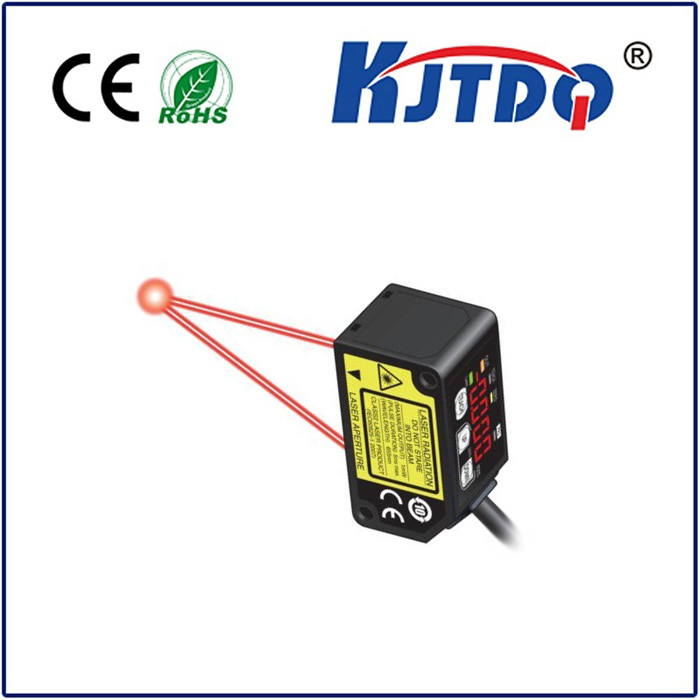
The core of the DS500-P411's capability lies in its advanced laser triangulation principle. Unlike conventional sensors, it projects a focused, visible red laser dot onto the target surface. The reflected light is then captured by a high-resolution CMOS array at a precise angle. By calculating the displacement of the reflected light spot, the sensor can determine the distance to the target with exceptional accuracy. This method allows for non-contact measurement, which is crucial for inspecting delicate, hot, or moving objects without causing any wear or damage. The DS500-P411 typically offers measuring ranges suitable for various applications, such as 50mm, 100mm, or 200mm, with resolutions down to the micrometer level, ensuring that even the most minute variations are detected.
One of the standout features of the DS500-P411 is its robust design tailored for industrial settings. Housed in a sturdy metal casing, it boasts an IP67 protection rating, making it resistant to dust ingress and capable of withstanding temporary immersion in water. This durability ensures consistent performance in challenging environments, whether on a dusty factory floor, in a washdown area, or exposed to oil mist and vibrations. Its integrated temperature compensation circuitry further stabilizes measurements against ambient temperature fluctuations, a common cause of drift in less sophisticated sensors.
The application spectrum for the DS500-P411 laser sensor is remarkably broad. In automotive assembly lines, it is indispensable for gap and flush measurement between body panels, ensuring perfect fit and finish. In electronics manufacturing, it precisely controls the height of components during placement on PCBs. Within the packaging industry, it monitors fill levels, checks seal integrity, and controls the thickness of materials. Furthermore, it plays a critical role in robotics for precise positioning and guidance, and in lumber processing for exact thickness profiling. Its ability to output data via analog signals (4-20mA or 0-10V) and digital interfaces like RS-485 or IO-Link allows for seamless integration into existing PLC (Programmable Logic Controller) systems and industrial networks.
Ease of integration and operation is another key advantage. Many models feature intuitive teach-in functions, allowing operators to quickly set measurement windows and thresholds directly on the device or via dedicated software. The visible laser spot simplifies alignment and targeting, reducing setup time significantly. For complex tasks, advanced models may offer programmable logic functions, multiple switching outputs, and data logging capabilities, turning the sensor into a smart edge device.
When selecting a laser sensor like the DS500-P411, engineers consider several technical parameters beyond just range and resolution. The spot size is critical for measuring small or structured surfaces. A smaller, sharper laser point enables higher precision on edges or tiny components. The response time, often in the millisecond range, determines how fast the sensor can update its measurement, which is vital for high-speed production lines. Environmental light immunity is also crucial, as the sensor must perform reliably under strong ambient lighting conditions without interference.
Compared to other technologies such as ultrasonic or inductive sensors, laser sensors provide superior accuracy and a much smaller spot size, enabling measurements on very specific points. While ultrasonic sensors are excellent for longer ranges and detecting various materials, and inductive sensors are perfect for metal detection at close range, the laser sensor fills the niche for high-precision, non-contact distance and profile measurement.
In conclusion, the DS500-P411 laser sensor is more than just a component; it is an enabler of smarter, more precise, and more reliable industrial automation. By delivering micron-level accuracy in a rugged, easy-to-use package, it empowers manufacturers to enhance product quality, optimize processes, and reduce waste. As industries continue to push the boundaries of what's possible in automation and Industry 4.0, precision measurement tools like the DS500-P411 will remain at the forefront, driving innovation and operational excellence. For system integrators and plant engineers seeking a dependable solution for challenging measurement tasks, this sensor stands as a proven and capable choice.