check

check

check

check

check

check
In the rapidly evolving landscape of industrial automation, the demand for sensors that deliver unwavering accuracy, durability, and seamless integration has never been higher. Among the myriad of solutions available, the CP70QXVT80 laser sensor stands out as a cornerstone technology for engineers and system integrators seeking to enhance operational efficiency and quality control. This device represents a significant leap forward in non-contact measurement and detection, engineered to perform in the most demanding environments.
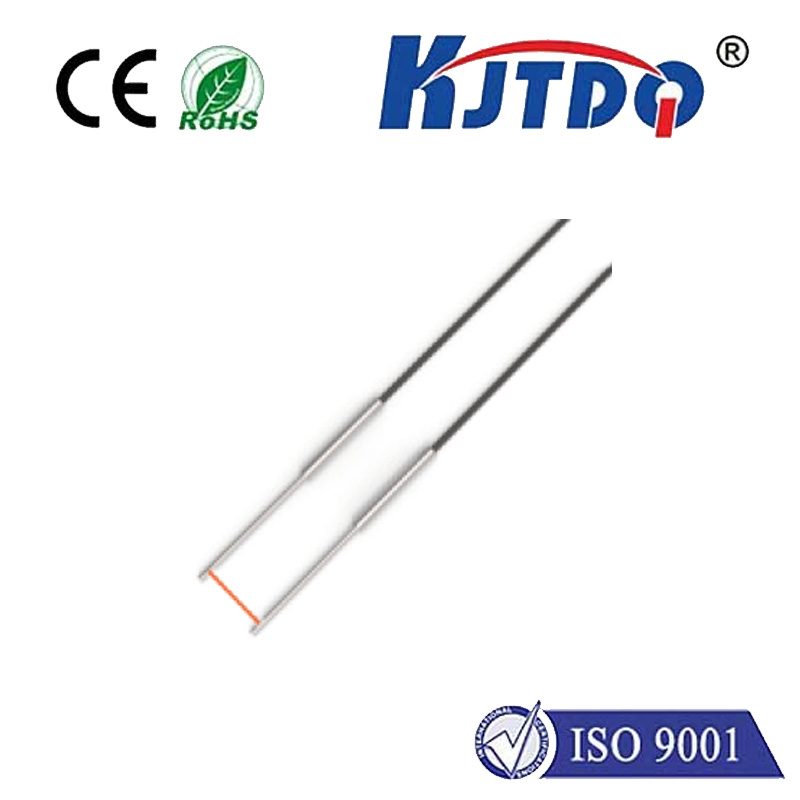
The core of the CP70QXVT80's capability lies in its advanced laser triangulation principle. It emits a focused beam of visible red laser light onto a target object. The reflected light is then captured by a high-resolution CMOS array at a precise angle. By calculating the displacement of the light spot on the sensor, the unit determines the exact distance or presence of the object with micron-level precision. This method allows for reliable measurements regardless of surface color, texture, or material, a common challenge with other optical sensors.
Durability is a non-negotiable feature in industrial settings, and the CP70QXVT80 is built to endure. Housed in a robust, IP67-rated enclosure, it is fully protected against dust ingress and temporary immersion in water. This makes it an ideal candidate for washdown areas in food and beverage production, machining lines with coolants, and outdoor applications exposed to the elements. The sensor's components are selected for their ability to withstand constant vibration, shock, and wide temperature fluctuations, ensuring a long service life and minimal downtime.
Integration into existing control systems is remarkably straightforward. The CP70QXVT80 typically offers multiple output options, including analog (4-20mA or 0-10V) for continuous distance measurement and discrete (PNP/NPN) for simple on/off detection tasks. This flexibility allows it to communicate directly with PLCs (Programmable Logic Controllers), HMIs (Human-Machine Interfaces), and data acquisition systems without the need for complex intermediary devices. Its compact form factor and versatile mounting brackets facilitate easy installation in space-constrained locations.
The practical applications for this laser sensor are vast and varied. In automotive assembly, it is used for precise gap and flush measurement between body panels. In electronics manufacturing, it ensures components are placed correctly on circuit boards. Within the packaging industry, it monitors fill levels, checks cap placement, and verifies label position. Furthermore, its high-speed response capability makes it perfect for sorting and inspection on high-throughput production lines, where every millisecond counts.
Beyond basic detection, the CP70QXVT80 often incorporates intelligent features that simplify setup and troubleshooting. Teach-in functions allow operators to quickly set measurement windows or thresholds by simply positioning the target object. Stable indicators, often via LED signals, provide immediate visual confirmation of the sensor's status and reading stability. These user-centric designs reduce commissioning time and empower maintenance personnel to quickly diagnose any issues.
Selecting the right sensor is critical for project success. When evaluating the CP70QXVT80, key specifications to consider include its measuring range, resolution, repeatability, and response time. It is also essential to factor in the environmental conditions of the application, such as ambient light interference or the presence of highly reflective surfaces, to ensure optimal performance. Consulting with technical specialists or referring to detailed datasheets can provide the necessary guidance for a perfect fit.
In conclusion, the CP70QXVT80 laser sensor embodies the technological excellence required for modern industrial automation. Its combination of precision, ruggedness, and ease of use addresses the core challenges faced in manufacturing and logistics. By providing reliable, non-contact measurement data, it becomes an indispensable tool for improving product quality, optimizing processes, and maintaining a competitive edge. For engineers looking to build more resilient and intelligent systems, integrating such a proven sensor technology is a strategic step toward future-proofing their operations.