check

check

check

check

check

check
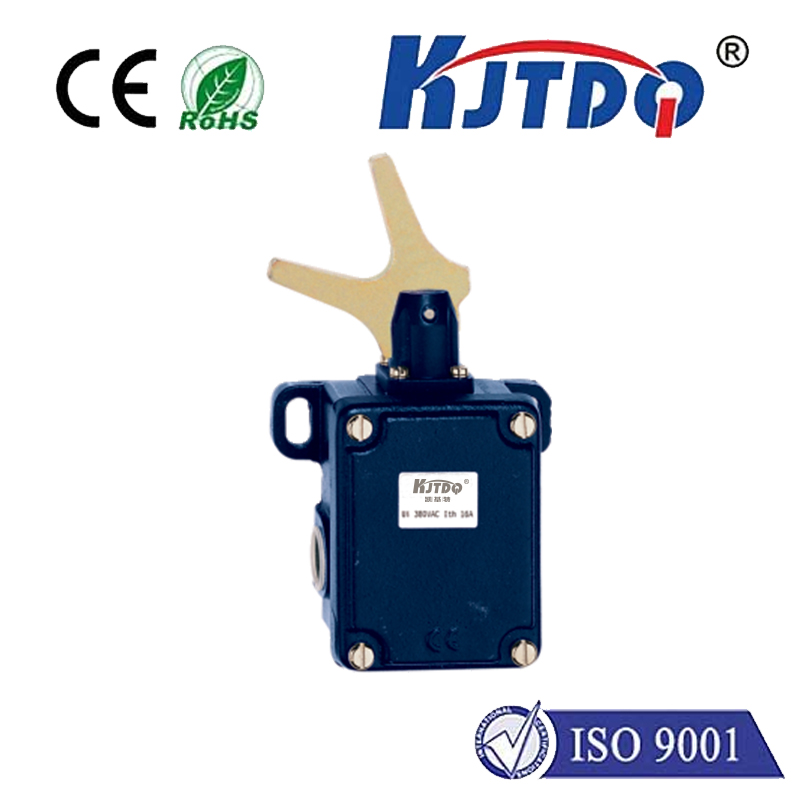
In industrial settings where conveyor belts are the lifelines of material handling, operational safety is not just a priority—it is an absolute mandate. Among the myriad of safety components engineered to protect personnel and equipment, the pull cord switch stands as a critical, often legally required, emergency stop device. The Z-15GD-B model represents a specific, robust iteration of this vital technology, designed for reliability in harsh environments.
A pull cord switch, like the Z-15GD-B, is a manually activated safety switch installed along the length of a conveyor belt. Its primary function is straightforward: to provide an immediate and accessible means to stop the conveyor in case of an emergency, such as a worker becoming entangled, a material spill, or a mechanical failure. The "pull cord" is a cable or rope that runs parallel to the conveyor, typically within easy reach of operators. When the cord is pulled from any point along its run, it actuates the switch mechanism, sending a stop signal directly to the conveyor's motor control circuit, halting motion instantly.
The designation "Z-15GD-B" is not arbitrary; it encodes specific features and standards. While exact specifications can vary by manufacturer, such a model often indicates a particular design ethos. The 'Z' may denote a specific series or a corrosion-resistant housing. The 'GD' frequently points to a gold-plated contact system, which is crucial for maintaining a reliable electrical connection by resisting oxidation and pitting, especially in damp or dusty conditions. This ensures a low-contact resistance and a high degree of switching reliability over thousands of cycles. The 'B' variant might indicate specific mounting configurations, cable entry points, or auxiliary contact options. This model is typically built with a heavy-duty industrial enclosure, often meeting IP65 or higher ratings for protection against dust and water jets, making it suitable for mining, quarrying, grain handling, and manufacturing plants.
The operational principle is elegantly simple yet failsafe. The switch is normally in a closed or "on" state during regular conveyor operation. Pulling the cord mechanically trips the internal mechanism, opening the contacts and breaking the safety circuit. This circuit is usually monitored by the conveyor's safety relay or PLC (Programmable Logic Controller). A broken circuit is interpreted as an emergency stop command. After activation, the switch must be manually reset by an operator, often by rotating a knob or lever back to its original position. This manual reset is a key safety feature, preventing the conveyor from automatically restarting after an emergency, which could lead to further danger.
Why is a device like the Z-15GD-B so indispensable? The reasons are multifaceted. First and foremost is personnel safety. It provides a last line of defense, allowing anyone along the conveyor line to initiate an emergency stop, potentially preventing serious injury or saving a life. Secondly, it protects expensive machinery from catastrophic damage caused by blockages, misalignment, or bearing failures. By enabling a rapid shutdown, it can limit the scope and cost of mechanical repairs. Furthermore, compliance with stringent international and regional safety standards, such as ISO 13850 (Safety of machinery — Emergency stop function — Principles for design) or various MSHA (Mine Safety and Health Administration) and OSHA (Occupational Safety and Health Administration) regulations, often mandates the installation of such devices. Non-compliance can result in heavy fines and legal liability.
Installation and maintenance are critical to its effectiveness. The pull cord should be installed at a consistent height, typically between 0.8 to 1.2 meters from the walkway, ensuring it is easily accessible but not prone to accidental activation. The tension on the cord must be correctly adjusted; too loose, and it may not actuate properly, too tight, and it may cause excessive wear. Regular testing, as part of a scheduled safety protocol, is non-negotiable. This involves pulling the cord at various stations to verify it stops the conveyor and checking that the reset function works correctly. The contacts and mechanical parts of the Z-15GD-B should be inspected periodically for signs of wear, corrosion, or damage.
In comparison to other emergency stop methods like push-button stations placed at intervals, the pull cord switch offers continuous, linear accessibility. An operator does not need to run to a fixed button; they can activate the stop from their immediate location. Modern versions may also integrate with broader safety systems, providing diagnostic feedback or dual-channel outputs for connection to safety-rated controllers, enhancing the overall safety integrity level (SIL) of the system.
In conclusion, the Z-15GD-B pull cord switch is far more than a simple mechanical switch. It is a engineered safety solution, a compliance necessity, and a fundamental component of a responsible industrial safety culture. Its design, focusing on durability, reliable electrical performance, and fail-safe operation, makes it a trusted choice for safeguarding both human operators and capital-intensive conveyor systems across numerous industries. Selecting, installing, and maintaining such a device correctly is a direct investment in operational continuity and, most importantly, workplace safety.