check

check

check

check

check

check
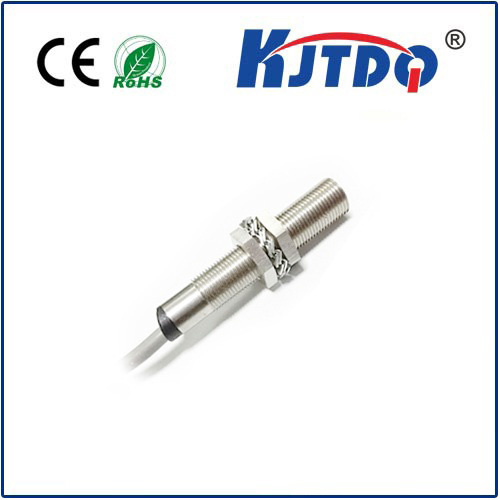
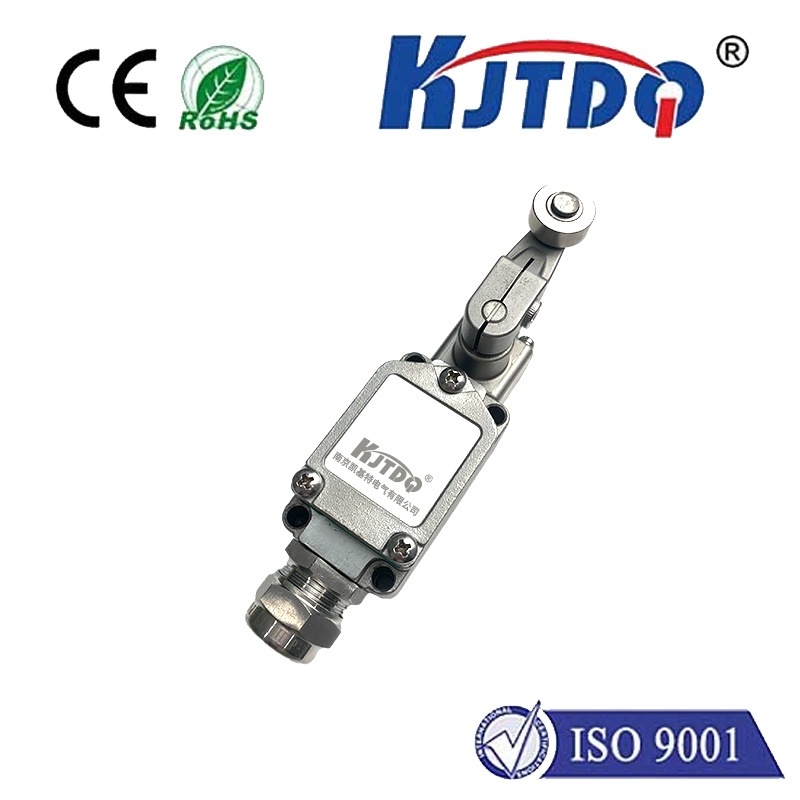
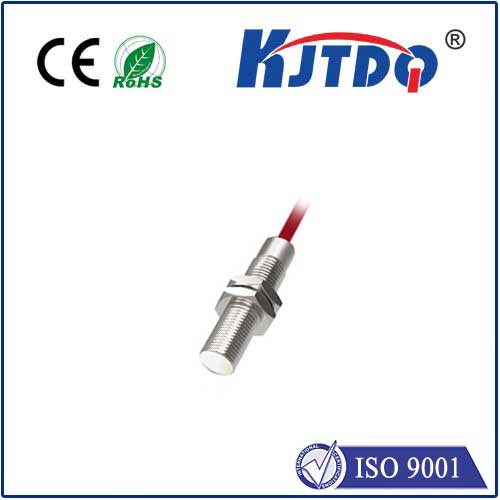
In the intricate world of industrial automation, where precision and reliability are non-negotiable, the reed limit switch stands as a fundamental yet powerful component. Often designated by model identifiers like KJTDQ, these switches play a crucial role in controlling machinery, ensuring safety, and providing accurate positional feedback. Unlike their mechanical lever-arm counterparts, reed switches operate on a magnetically actuated principle, offering distinct advantages in various demanding environments.
A reed limit switch, at its core, consists of two ferromagnetic reed contacts sealed within a glass tube filled with an inert gas. This hermetic sealing is key to its durability. When an external magnetic field, typically from a permanent magnet actuator, approaches, the reeds magnetize, attract each other, and make contact, closing the electrical circuit. When the magnet moves away, the reeds spring back to their original position, breaking the circuit. This simple, contact-based operation is the foundation of its function as a limit switch—a device that detects the presence or absence of an object or monitors its positional limits.
The integration of a model like KJTDQ into a system signifies a focus on specific performance criteria. These switches are renowned for their exceptional longevity, capable of millions of reliable switching cycles due to the protected contacts. The sealed construction makes them inherently resistant to dust, moisture, and corrosion, allowing them to perform consistently in harsh conditions where contaminants would quickly degrade a standard mechanical switch. Furthermore, their fast response time and low contact bounce contribute to precise control signaling, which is vital in high-speed automation sequences.
The applications for reed limit switches are vast and varied. In the packaging industry, they are used to detect product presence on conveyor belts or to confirm the open/closed status of gates and doors. Within elevator systems, they provide critical position verification for cabin leveling and door safety. Automotive manufacturing lines utilize them for robotic arm positioning and fixture confirmation. In medical equipment, their reliability ensures accurate dosing and component positioning. The KJTDQ series, like many specialized lines, is often engineered for particular mounting configurations, voltage/current ratings, and actuator types, making selection for a specific task more efficient.
Choosing the right reed limit switch involves several considerations. The operating environment is paramount; factors like temperature extremes, potential chemical exposure, and washdown requirements will dictate the needed ingress protection (IP) rating. Electrical load characteristics, including voltage, current (both in-rush and continuous), and the nature of the load (inductive or resistive), must match the switch's specifications to prevent premature contact failure. The type of actuator—whether it's a simple plunger, a rotary cam, or a magnetic wand—must be compatible with the machine's motion. The physical size and mounting style are also critical for seamless integration into existing designs.
While non-contact sensors like inductive or capacitive proximity switches offer alternatives, the reed switch maintains a strong position. It provides a physical, galvanic isolation in the circuit, which can be simpler and more cost-effective for basic ON/OFF detection than requiring separate sensor amplifiers. Its compatibility with DC circuits is typically excellent. The key is to match the technology to the need: for detecting a magnetic actuator directly, or in environments filled with metallic dust (which can interfere with inductive sensors), a reed switch like the KJTDQ is often the optimal, robust solution.
Installation and maintenance, though straightforward, require attention to detail. Ensuring proper alignment between the switch body and its actuator magnet is essential for consistent operation. The mounting must be secure to prevent vibration from causing false signals. Although maintenance is minimal due to the sealed design, periodic functional checks are recommended as part of a preventative maintenance schedule to verify signal integrity and actuator alignment.
In conclusion, the reed limit switch, exemplified by specialized models such as KJTDQ, remains an indispensable workhorse in automation. Its blend of simplicity, ruggedness, and reliable magnetic actuation solves countless positional sensing challenges. By understanding its operating principle, advantages, and proper application guidelines, engineers and technicians can effectively leverage this technology to enhance system precision, improve safety interlocks, and ensure the smooth, dependable operation of automated machinery across countless industries.