check

check

check

check

check

check
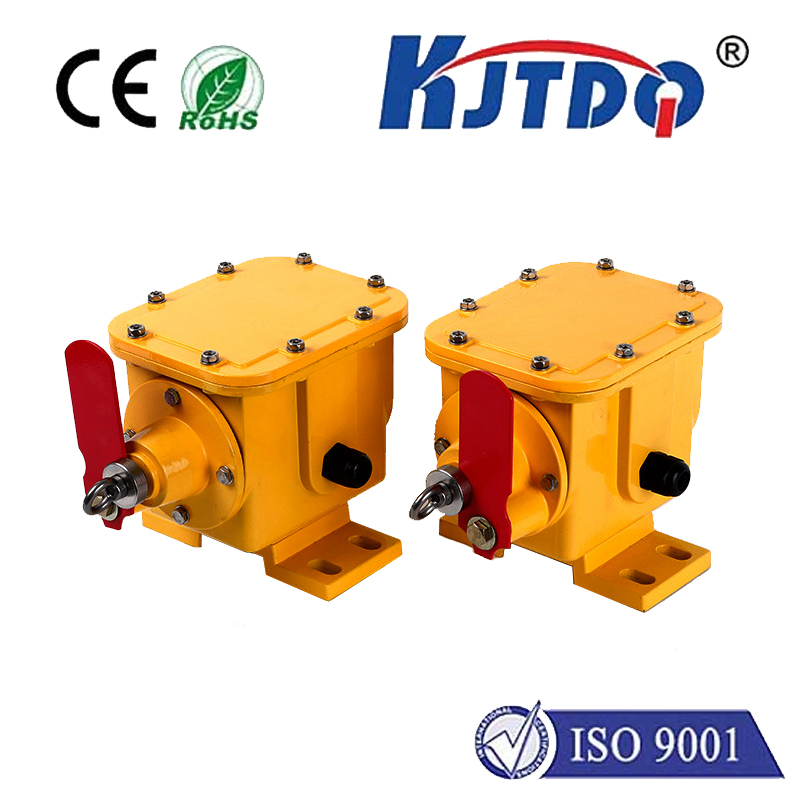
In the intricate world of industrial automation, precision and reliability are non-negotiable. Among the myriad components that ensure seamless operation, the rotating limit switch stands out as a critical device for motion control and safety. This electromechanical component is designed to monitor and control the rotational position or angular movement of a shaft, machine part, or revolving equipment. Its primary function is to trigger an action—such as stopping, starting, or changing the direction of a motor—once a preset rotational limit is reached.
The fundamental operation of a rotating limit switch is elegantly straightforward. Typically, it consists of a rotating shaft connected to the machinery being monitored. As the shaft turns, it drives an internal mechanism, often a set of cams or gears. These cams are carefully adjusted to activate one or more electrical switches at precise angular positions. When the machinery rotates to a predetermined point, the cam pushes against the switch actuator, opening or closing the electrical contacts. This change in the circuit state sends a signal to the control system, which then executes the commanded function, such as halting a conveyor belt, reversing a hoist, or indexing a turntable.
The applications for rotating limit switches are vast and varied, underscoring their versatility. They are indispensable in material handling systems, where they control the travel limits of cranes and hoists, preventing over-travel and potential collisions. In packaging machinery, they ensure precise positioning for filling, capping, and labeling operations. Within the realm of renewable energy, they are used in wind turbines to monitor blade pitch and yaw position. They also play a vital role in dam gate control, valve positioning in process industries, and even in theatrical stage machinery for controlling fly systems. Their robust design allows them to perform reliably in harsh environments involving dust, moisture, vibration, and extreme temperatures.
When selecting a rotating limit switch for an application, several key specifications must be considered. The number of switching points or cams is crucial, as it determines how many control actions can be programmed within one full revolution. The switch's resolution, or the smallest angular increment it can detect, defines its precision. The mechanical life, rated in millions of cycles, indicates its durability under continuous operation. Environmental protection ratings, such as IP (Ingress Protection) codes, are essential for ensuring performance in specific conditions. Additionally, the electrical rating of the contacts must match the load they will control. Modern variants often include options for absolute or incremental encoders, providing direct feedback to programmable logic controllers (PLCs) for more sophisticated control schemes.
The advantages of using a well-chosen rotating limit switch are significant. They provide a simple, cost-effective, and highly reliable solution for end-of-travel and intermediate positioning control. Unlike purely electronic sensors, their electromechanical nature often makes them less susceptible to electrical noise interference. Their operation is easily visualized and set up mechanically, which can simplify troubleshooting for maintenance personnel. By providing a physical, hard-wired safety interlock, they add a vital layer of machine safety, protecting both equipment and personnel from the dangers of unintended movement.
However, like all components, they have limitations. Being mechanical devices, they are subject to wear over time, necessitating periodic inspection and maintenance. Their precision, while excellent for many tasks, may not match that of high-end optical or magnetic encoders for ultra-precise servo applications. Setting and adjusting the cam positions can require downtime, although many modern units offer tools for easier adjustment.
In conclusion, the rotating limit switch remains a cornerstone of industrial motion control. Its proven design offers a perfect blend of mechanical simplicity and electrical control, delivering dependable performance where it matters most. From managing the simple stop-start of a rotating arm to orchestrating complex sequences in automated assembly lines, this device continues to be a trusted sentinel, ensuring machines operate within their safe and intended parameters. As automation evolves, the rotating limit switch adapts, integrating with digital systems while retaining the fundamental reliability that engineers have depended on for decades.