check

check

check

check

check

check
In the realm of industrial automation and machinery, the precise control of motor movement is paramount. This is where the critical interplay between limit switches and motor control systems comes into focus, forming a cornerstone of operational safety, accuracy, and efficiency. A limit switch is a fundamental electromechanical device designed to detect the presence or absence of an object, or to monitor the position of a machine component. When integrated with motor control circuits, it acts as a vigilant sentinel, dictating when a motor should start, stop, or reverse direction based on physical limits.
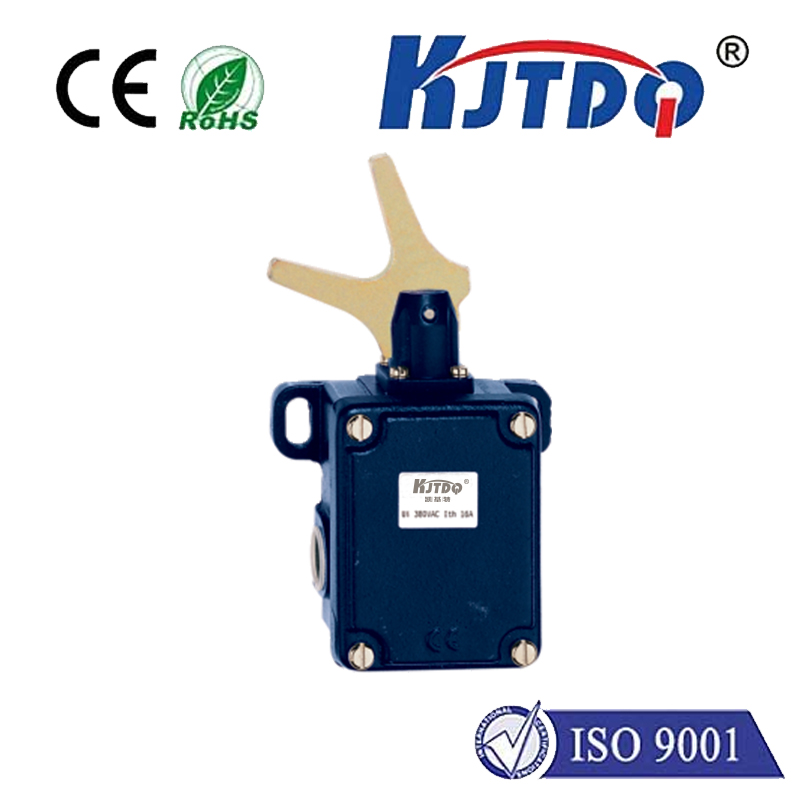
The core principle is elegantly straightforward. A limit switch is strategically positioned at the desired endpoints of a mechanical travel path—for instance, at the fully extended and fully retracted positions of a linear actuator, or the open and closed positions of a gate. As the moving part contacts the switch's actuator arm, lever, or plunger, it triggers an internal mechanism that changes the state of its electrical contacts. This signal is then fed directly into the motor controller or a programmable logic controller (PLC). Upon receiving this signal, the control system executes a pre-programmed command, such as cutting power to the motor to halt movement or engaging a reverse circuit. This prevents the motor from driving the mechanism beyond its intended physical boundaries, thereby avoiding potential damage to the machine, the product being manufactured, or the system itself.
The applications for limit switch motor control are vast and varied. In manufacturing assembly lines, they ensure robotic arms stop precisely at the correct points for picking and placing components. In elevator systems, limit switches are indispensable for halting the cabin exactly level with each floor. Material handling equipment, such as conveyor belts and overhead cranes, rely on them to define loading and unloading zones. Packaging machinery uses them to confirm the position of products before sealing or labeling. Beyond simple stop/start functions, sophisticated setups use multiple limit switches in sequence to trigger different stages of a complex motion profile, enabling highly repeatable multi-position operations.
The benefits of implementing a robust limit switch motor control strategy are multifaceted. Primarily, it enhances safety by providing a hardware-based, often fail-safe, method to prevent over-travel and mechanical collisions. This physical layer of protection complements software limits within controllers. Secondly, it drastically improves positioning repeatability. While modern servo systems offer high precision, limit switches provide a consistent physical reference point, eliminating cumulative errors that might arise from sensor drift or software glitches over time. This leads to higher product quality and reduced waste. Furthermore, by preventing motors from straining against mechanical stops, it reduces wear and tear on drives, gearboxes, and other mechanical components, extending the overall lifespan of the equipment and minimizing unplanned downtime.
When designing or selecting a system for limit switch motor control, several factors must be considered. The choice of limit switch itself is crucial—options include rugged heavy-duty models for harsh environments with dust, moisture, or oil, or precision miniature switches for compact spaces. The type of actuator (roller lever, rod, or spring) must match the motion and force of the application. Integration with the motor control system is key; wiring can be configured for normally open or normally closed circuits, with the latter often preferred for safety as a broken wire simulates an "activated" switch state, prompting a shutdown. In advanced architectures, limit switch signals are integrated into PLC programs, allowing for complex logic, diagnostic reporting, and seamless coordination with other sensors and variable frequency drives (VFDs).
In conclusion, the synergy between limit switches and motor control is a timeless and essential engineering practice. It represents a perfect marriage of simple mechanical sensing and intelligent electrical control. While the industry continues to advance with vision systems, proximity sensors, and absolute encoders, the limit switch remains a reliable, cost-effective, and fundamentally safe solution for defining critical physical boundaries. For any system involving automated linear or rotary motion, incorporating a well-designed limit switch motor control scheme is not merely an optional add-on but a fundamental requirement for achieving reliable, precise, and safe operation. It ensures that machines operate within their designed parameters, protecting both capital investment and personnel, and forming the reliable backbone of countless automated processes worldwide.