check

check

check

check

check

check
In the world of industrial automation and machinery control, precision and reliability are non-negotiable. This is where a critical component, often overlooked but fundamentally essential, comes into play: the rotary limit switch. Far from being a simple on/off device, it serves as the guardian of mechanical motion, ensuring equipment operates safely within its designed parameters.
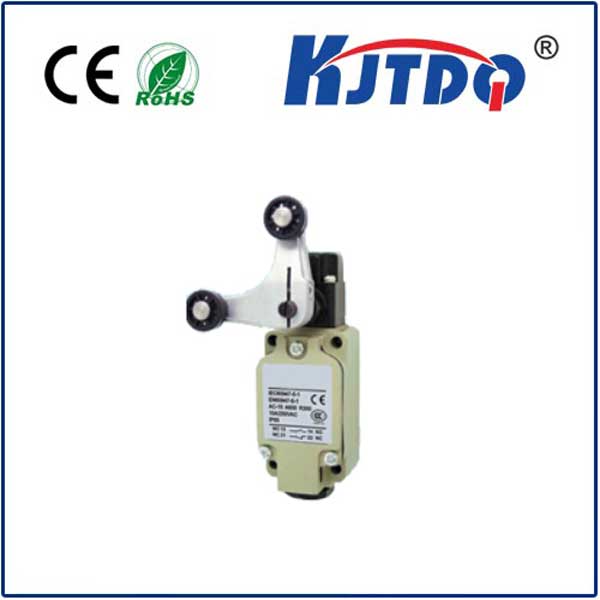
At its core, a rotary limit switch is an electromechanical device used to detect the angular position or rotation of a shaft. It is typically mounted on the rotating part of a machine, such as a crane, conveyor, valve actuator, or hoist. Its primary function is to establish predefined limits for rotation. When the shaft rotates and reaches a set position, the switch is actuated. This action can send a signal to a control system to stop the motor, change direction, trigger an alarm, or initiate a subsequent sequence of operations. This prevents over-travel, which could lead to mechanical damage, product loss, or even catastrophic failure.
The operational principle is elegantly straightforward. Inside the switch housing, a cam mechanism is connected to the input shaft. As the shaft rotates, the cams turn accordingly. These cams are physically adjusted to open or close electrical contacts at specific angular positions. The beauty lies in its tangible, physical actuation. Unlike purely electronic sensors, the mechanical action provides a definitive, hard-wired signal that is highly resistant to electrical noise and offers a clear, fail-safe indication of position. This robustness makes it a preferred choice in harsh environments where dust, moisture, vibration, and temperature extremes are common.
Modern rotary limit switches offer significant advantages. They provide unparalleled repeatability and accuracy for positional control. Their settings are mechanically fixed, meaning once calibrated, they remain consistent without drift over time. Maintenance is relatively simple, often involving just a visual inspection and occasional adjustment of the cam positions. Furthermore, many models feature multiple cam tracks and contact blocks, allowing a single switch to control several different functions at various rotation points, simplifying system design and reducing the need for multiple sensors.
When selecting a rotary limit switch for an application, several key factors must be considered. The required number of switching points, the electrical rating of the contacts (voltage and current), the speed of rotation, the environmental protection rating (such as IP65 or NEMA 4X for dust and water resistance), and the mechanical mounting style are all crucial. For instance, a switch on a slow-moving damper actuator has different needs than one on a high-speed packaging machine indexing arm.
The applications are vast and varied. In material handling, they prevent cranes from over-traveling at the ends of a runway. In manufacturing, they ensure robotic arms stop at precise points. In process industries, they control the open/close status of large valves, providing critical feedback for system monitoring. Their role in safety interlocking is paramount, often being part of a safety circuit that must be satisfied before a machine can operate.
While newer technologies like absolute encoders and proximity sensors offer high-resolution feedback, the rotary limit switch holds its ground due to its simplicity, durability, and direct control capability. It doesn't just sense; it acts as a control point. For engineers and maintenance personnel, its operation is transparent and easy to troubleshoot—a significant advantage in minimizing downtime.
In conclusion, the rotary limit switch remains an indispensable workhorse in industrial control systems. It is a testament to the enduring value of robust, mechanical-electrical solutions in an increasingly digital age. By providing reliable, repeatable, and safe control over rotational movement, it protects valuable assets, ensures operational continuity, and upholds the highest standards of industrial safety. Understanding its function and proper application is key to designing and maintaining efficient, fail-safe automated machinery.