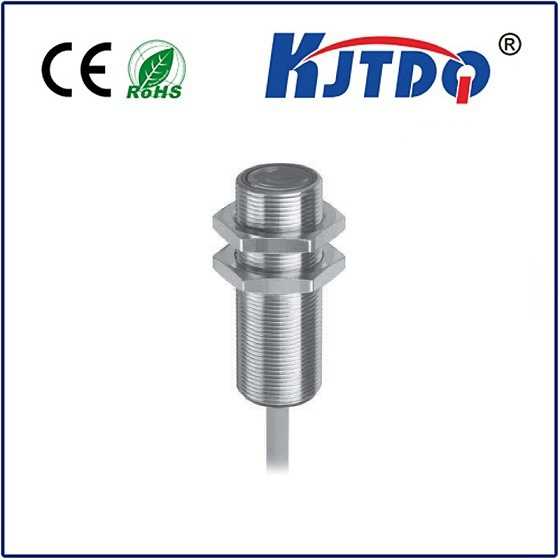
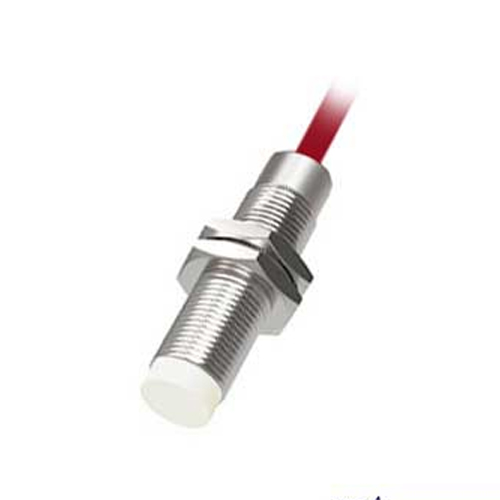
reflective infrared optical sensor
- time:2025-08-16 00:51:41
- Click:0
Unveiling the Power of Reflective Infrared Optical Sensors: Your Invisible Detection Ally
We navigate our tech-filled world constantly interacting with unseen sentinels. Ever wonder what detects your hand near an automatic faucet, senses a smartphone held to your ear, or counts products speeding down a factory line? Often, the silent hero is the versatile reflective infrared optical sensor. This ingenious device, operating invisibly beyond human sight, is fundamental to countless modern applications, offering simple, reliable, and non-contact detection. Understanding its principles reveals why it’s such a pervasive solution.
At its core, a reflective infrared optical sensor is a self-contained unit housing two key components: an infrared emitter (usually an Infrared Emitting Diode, or IRED) and a detector (often a phototransistor or photodiode). The IRED generates a beam of infrared light, typically in the near-infrared spectrum (around 850-950 nanometers), which is invisible to the human eye. This emitted light travels outwards until it encounters a surface within its path. Here’s where the “reflective” principle comes into play:
- Reflection is Key: If an object is present within the sensor’s effective range, the emitted IR light strikes its surface.
- Detecting the Bounce: Some portion of this infrared radiation is reflected back towards the sensor unit.
- The Detector’s Role: The photodetector within the sensor is specifically tuned to be sensitive to the same wavelength of IR light emitted by the IRED. Its job is to detect the intensity of the reflected light returning to it.
The fundamental operation hinges on measuring this change in reflected light intensity. When no object is present, very little (ideally none) of the emitted IR light finds its way back to the detector. As an object moves into the sensor’s field of view and detection range, the amount of reflected IR light hitting the detector increases significantly. The sensor’s internal circuitry monitors this signal from the detector.
- Analog Sensors: Output a signal (usually voltage) proportional to the amount of reflected light received. This allows for tasks like distance estimation (within limits) or line following (detecting contrast changes).
- Digital Sensors: Incorporate threshold circuitry. They provide a simple ON/OFF signal – typically a low logic level when no reflection is detected (no object present) and a high logic level when reflected light above a set threshold is detected (object present).
This elegant mechanism – emit infrared light, detect its reflection – provides distinct advantages:
- Non-Contact Operation: Objects are detected without physical touch, eliminating wear and tear on both the sensor and the object. Ideal for delicate items or fast-moving production lines.
- Simplicity & Reliability: The lack of moving parts makes these sensors inherently robust, reliable over long lifetimes, and relatively inexpensive to manufacture.
- Compact Design: Combining emitter and detector into a single, often small, housing facilitates integration into space-constrained devices.
- Versatility: Suitable for detecting a wide range of materials, particularly non-metallic objects that might challenge other sensing methods. Can be tuned for proximity detection or sensing surface characteristics.
The practical applications of reflective infrared optical sensors are incredibly diverse:
- Proximity Sensing: The quintessential use. Found in automatic faucets, soap dispensers, hand dryers to trigger activation. Smartphones use them to turn off the display during calls. Robotics for obstacle avoidance.
- Object Detection: Counting objects on conveyors, detecting the presence of paper in printers, confirming item placement in vending machines and appliances (like detecting laundry in a dryer).
- Positioning & Alignment: Used in printers to detect the paper tray position or carriage position. In assembly lines to ensure parts are correctly oriented or present before the next step.
- Contrast & Line Detection: Crucial for line-following robots and automated guided vehicles (AGVs), detecting contrasting lines or markers on a floor or surface.
- Gesture Recognition (Basic): While more complex systems exist, simple gesture control (like a hand wave) can sometimes be implemented using arrays of reflective sensors.
- Safety & Security: Beam interruption sensors used in security gates (though often transmissive type), and safety curtains on machinery often leverage IR principles.
Selecting the right reflective infrared sensor involves considering several factors:
- Sensing Distance: How far away does the object need to be reliably detected? Ranges can vary from a few millimeters to several meters.
- Object Properties: The material, color, and surface finish significantly impact reflectivity. Dark, matte, or absorbent surfaces reflect less IR light than light, shiny surfaces.
- Environmental Conditions: Ambient light (especially direct sunlight containing IR) can interfere. Dust, fog, or steam can scatter the IR beam. Some sensors offer modulation techniques to mitigate ambient light issues.
- Output Type Needed: Simple digital presence detection or analog distance/reflectivity feedback?
- Form Factor & Power: Physical size constraints and available power supply.
Advancements continue to enhance these workhorse sensors. Improved modulation techniques significantly boost immunity to ambient light interference. Smarter integrated circuits provide digital outputs with configurable sensitivity thresholds via I2C or UART interfaces, simplifying integration and calibration.
From the mundane convenience of a touchless soap dispenser to the sophisticated automation of a high-speed production line, reflective infrared optical sensors are the invisible force enabling simple, reliable detection. Their non-contact nature, inherent reliability, and cost-effectiveness ensure they remain a foundational sensing technology. Understanding the principle of emitting IR light and detecting its reflection unlocks the vast potential these sensors hold across countless industries and everyday devices. As integration deepens and intelligence grows, their role in our automated world will only become more pervasive.