led optical sensor
- time:2025-08-15 04:56:57
- Click:0
LED Optical Sensors: Powering Precision Detection in the Modern World
Remember clunky mechanical switches or unreliable photoelectric eyes? The evolution of sensing technology has been remarkable, and at the forefront of many modern, reliable, and efficient solutions lie LED Optical Sensors. This potent combination of light emission and reception, packaged into increasingly sophisticated devices, is fundamentally changing how machines perceive and interact with their environment. From the smartphone in your pocket to complex industrial robots, these sensors illuminate the path to smarter automation, enhanced safety, and intuitive user experiences. Let’s delve into how they work, why they dominate, and where they’re making the most significant impact.
At its core, an LED optical sensor integrates two key components: an emitter and a detector. The emitter is typically a Light Emitting Diode (LED) – efficient, long-lasting, and available in various wavelengths (visible light like red or green, or invisible infrared (IR) being most common). This LED projects a controlled beam of light. The detector, often a phototransistor, photodiode, or specialized light sensor (like an ambient light sensor), sits ready to measure the interaction of this emitted light with the target or environment. The critical function – the sensing – happens based on how the emitted light is altered: reflected back, interrupted, diminished, or changed in color before reaching the detector. By precisely analyzing this received light signal, the sensor outputs data, triggering actions or providing measurements.
This elegant principle manifests in several distinct configurations, each suited for specific tasks:
- Reflective Sensors: Here, the LED and detector are mounted side-by-side. The sensor detects an object when the emitted light reflects off its surface and returns to the detector. Think: Object detection on conveyor belts (detecting presence/absence), paper detection in printers, or proximity sensing in devices like automatic faucets or soap dispensers. Key sub-types include:
- Diffuse Reflective: Relies on the object itself reflecting light back. Simple, compact, but performance varies with object color and surface.
- Retroreflective: Uses a separate reflector. The sensor detects an object when it breaks the light beam between the sensor head and the reflector. Offers longer ranges and is less sensitive to object characteristics.
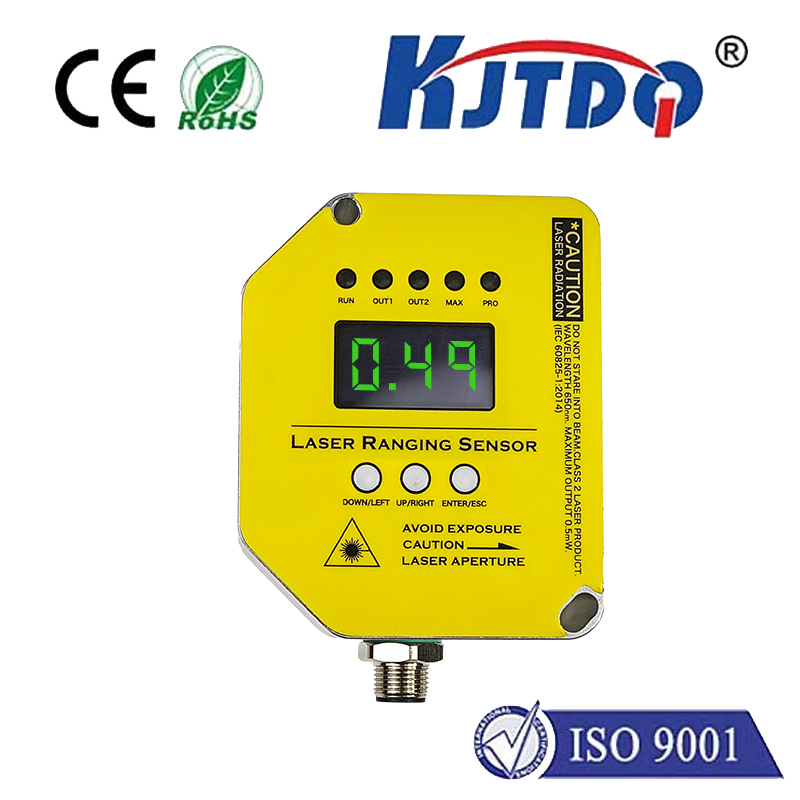
- *Distance Measuring* Sensors: Utilize specialized techniques like Time-of-Flight (ToF) or triangulation to measure the exact distance to a reflecting object based on the time delay or angle of the returning light. Crucial for robotics and automation positioning.
Thru-Beam (or Opposed) Sensors: These feature physically separate emitter and detector units facing each other. Detection occurs when an object passes between them, interrupting the light beam. This method provides high reliability, long sensing ranges, and is generally immune to target surface properties like color or reflectivity. It’s the go-to choice for high-speed counting, precise position verification, and safety curtains.
Color Sensors: Incorporate multiple LEDs (typically red, green, blue - RGB) and sophisticated detectors capable of analyzing the spectrum of reflected light. They identify colors based on the relative intensities of the reflected RGB components. Essential for quality control (e.g., verifying product labels, sorting by color), display color management, and medical diagnostics.
The dominance of LED optical sensors stems from a compelling combination of inherent advantages:
- Compact Size & Integration: Modern designs pack powerful sensing capabilities into extremely small footprints. This miniaturization is vital for consumer electronics, wearables, and dense industrial machinery.
- Energy Efficiency: LEDs are remarkably power-efficient light sources. Paired with low-power detection circuits and the ability to pulse the LED rapidly, they enable long battery life in portable devices and reduce operational costs.
- High Speed & Responsiveness: Detection happens at the speed of light. These sensors can react incredibly quickly to changes, making them perfect for high-speed counting, precise timing in automation, and responsive user interfaces.
- Non-Contact Sensing: Unlike mechanical switches, they detect objects without physical touch. This eliminates wear and tear, reduces maintenance, allows detection of fragile objects, and enables hygienic applications (touchless controls).
- Reliability & Longevity: With no moving parts and LEDs boasting lifespans often exceeding 100,000 hours, these sensors offer exceptional operational reliability and durability in demanding environments.
- Versatility & Cost-Effectiveness: Available in numerous configurations (reflective, thru-beam, color, distance), wavelengths (visible, IR), and output types, they solve a vast array of sensing challenges. Mass production makes them incredibly cost-effective.
This versatility translates into ubiquitous applications across industries:
- Industrial Automation: Object detection, precise positioning, part counting, edge guiding, bin level sensing, quality control (color verification, presence/absence), safety interlocks. Critical for optimizing production lines and ensuring worker safety.
- Consumer Electronics: Proximity sensing to turn off smartphone screens during calls, ambient light sensors for automatic display brightness adjustment, gesture recognition, touchless controls.
- Automotive: Rain/light sensors for automatic wipers/headlights, occupancy detection, obstacle detection for parking assistance, gesture controls within the cabin.
- Robotics: Navigation (obstacle avoidance, cliff detection), object handling (gripper positioning, part presence), line following. Proximity sensors are fundamental for safe human-robot interaction.
- Medical Devices: Pulse oximetry (using specific wavelengths to measure blood oxygen), fluid level detection in IV systems, diagnostic equipment using color sensing.
- Building Automation / Smart Homes: Automatic door sensors, occupancy detection for lighting/HVAC control, touchless light switches/taps.
- Security Systems: Intrusion detection (broken beams in windows/doors), proximity alarms.
Selecting the right LED optical sensor requires careful consideration of the application demands:
- Sensing Mode: Reflective, Thru-beam, or Color/Distance?
- Detection Range: How far away does the object need to be sensed?
- Target Characteristics: What is the object’s size, color, material (shiny, matte, transparent)?
- Environment: Ambient light conditions (sunlight interference?), dust, moisture, temperature extremes?
- Output Requirement: Digital (on/off) or Analog (distance, intensity)? Interface type?
- Size & Mounting Constraints: Physical space limitations?
As technology marches forward, LED optical sensors continue to evolve. We see integration of more advanced signal processing on-chip (System-on-Chip solutions), enhanced ambient light immunity, ever smaller form factors, and the adoption of new wavelengths (like VCSELs in some high-precision applications). Their fundamental combination of LED illumination and sophisticated light detection remains a cornerstone of modern sensing, proving that sometimes, the best way to understand the world is simply to shine a light on it. Their ability to deliver reliable, non-contact, and energy-efficient detection ensures they will remain indispensable tools for engineers and designers pushing the boundaries of automation and interaction.