optical matrix sensor
- time:2025-08-14 17:31:15
- Click:0
Illuminating Innovation: The Revolution of Optical Matrix Sensors
Imagine a world where machines perceive their surroundings with near-human nuance, capturing not just isolated points of light but an entire scene’s intricate details instantaneously. This is the transformative power promised by optical matrix sensors, moving far beyond the limitations of single-element photodetectors and reshaping capabilities across countless industries. At their core, these sensors represent a paradigm shift in light detection and imaging.
So, what exactly is an optical matrix sensor? Fundamentally, it’s a sophisticated integrated circuit featuring a dense, two-dimensional grid (or matrix) of individual light-sensitive elements, known as pixels. Think of it as a high-tech digital retina. Each pixel functions as a tiny photodetector, typically converting incoming photons (light particles) into an electrical signal. The magic lies in the parallel operation: this entire array captures a spatial distribution of light intensity across its surface simultaneously. Unlike scanning single-point sensors, an optical matrix sensor acquires a complete “image” or light field snapshot in one go, frame by frame. This structure is commonly manufactured using mature CMOS (Complementary Metal-Oxide-Semiconductor) technology, similar to digital camera sensors, enabling high integration, low power consumption, and cost-effectiveness.

The core operational principle revolves around spatial resolution. Each pixel within the matrix corresponds to a specific, defined location within the sensor’s field of view. When light falls onto the sensor surface:
- Photoconversion: Individual pixels absorb photons and generate corresponding electrical charges proportional to the light intensity at that precise point.
- Signal Readout: Sophisticated circuitry integrated onto the chip (often employing Active Pixel Sensor - APS - architecture) reads out the charge or voltage signal from each pixel, or entire rows/columns, in a controlled sequence.
- Data Assembly: The collected signals from all pixels are processed, typically digitized, and assembled to form a complete two-dimensional data set or image. This dataset accurately represents the pattern and intensity of light that illuminated the sensor.
This inherent parallel capture capability unlocks significant advantages over traditional sensing methods:
- Speed & Real-time Analysis: Capturing an entire scene simultaneously is inherently faster than mechanical or electronic scanning point-by-point. This enables real-time processing of complex optical information, critical for applications like autonomous navigation or high-speed industrial inspection.
- High Spatial Resolution & Detail: The dense pixel grid provides exceptional spatial resolution, revealing intricate details within an illuminated scene that single-point sensors simply cannot resolve. This is paramount for precision measurement and detailed imaging.
- Robustness & Stability: With no moving parts required for spatial scanning (in most configurations), matrix sensors offer inherent mechanical robustness and stability, reducing wear and tear and improving long-term reliability.
- Rich Information Content: A single frame contains vastly more data points than a single sensor reading. This richness enables advanced algorithms to extract complex information like shape, size, distance (through techniques like structured light or time-of-flight), texture, and even spectral properties in multi-spectral variants.
The versatility of optical matrix sensors fuels innovation across a breathtaking spectrum of applications:
- Imaging & Photography: This is the most visible application. Digital cameras in smartphones, DSLRs, mirrorless systems, webcams, and security systems all rely fundamentally on CMOS or CCD image sensors, which are specific types of optical matrix sensors.
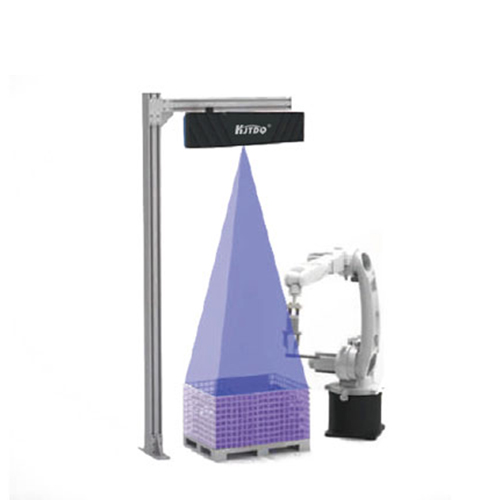
- Industrial Automation & Machine Vision: Revolutionizing quality control on production lines. Matrix sensors enable high-speed inspection of parts for defects (size, shape, surface flaws), precise robot guidance and pick-and-place operations, and accurate barcode/QR code reading even on fast-moving conveyors.
- Biometrics & Security: Facial recognition systems, fingerprint scanners, and iris recognition technologies leverage the detailed spatial information captured by optical matrix sensors for secure identification and access control.
- Scientific Research & Instrumentation: Used in microscopes, telescopes, spectrometers, and particle detectors to capture high-resolution spatial and spectral data for analysis.
- Automotive & Autonomous Systems: LiDAR (Light Detection and Ranging) systems for self-driving cars often use optical matrix sensors (specifically SPAD arrays or ToF sensors) to generate detailed 3D point clouds of the vehicle’s surroundings in real-time. Advanced driver-assistance systems (ADAS) also depend heavily on camera-based sensors.
- Consumer Electronics & Gesture Recognition: Beyond cameras, they enable touchscreens (optical under-display variants), ambient light sensing for display brightness control, and contactless gesture control interfaces.
- Medical & Biotechnological Devices: Found in endoscopes for minimally invasive surgery, optical coherence tomography (OCT) for eye and tissue imaging, and various diagnostic analyzers requiring precise optical measurements.
- Virtual & Augmented Reality (VR/AR): Crucial for inside-out tracking (determining headset position without external sensors) and hand/controller tracking within virtual environments, relying on cameras using optical matrix sensors.
As technology relentlessly advances, the capabilities of optical matrix sensors continue to expand. Emerging trends include the development of sensors with global shutters (eliminating motion distortion), backside illumination (BSI) for improved low-light sensitivity, stacked sensor designs for enhanced processing capabilities, and specialized variants like SPAD (Single-Photon Avalanche Diode) arrays for ultra-high sensitivity applications like quantum imaging and advanced LiDAR. The integration of processing power directly onto the sensor chip (edge computing) is paving the way for faster, smarter devices capable of on-sensor decision-making.
From capturing cherished memories to enabling machines to navigate complex worlds autonomously, the optical matrix sensor stands as a silent yet indispensable cornerstone of modern technological progress. Its ability to convert the spatial distribution of light into rich, actionable data streams continues to illuminate the path towards smarter automation, richer visual experiences, and deeper scientific understanding, solidifying its role as a key enabler of the digital and robotic age.