check

check

check

check
check
check
check
check

check
check
The Magic of Reflection: How Reflective Proximity Sensors Power Modern Automation
Picture a bustling manufacturing line where robotic arms move with uncanny precision, assembling delicate components. Or imagine the smartphone in your pocket, its screen dimming automatically as it nears your ear during a call. Behind these seemingly effortless interactions often lies a small, unassuming hero: the Reflective Proximity Sensor. This ingenious device silently shapes our interactions with technology and industrial processes, enabling non-contact detection through a simple yet effective principle of light reflection. Understanding how these sensors work and where they excel reveals their fundamental role in countless applications demanding reliable, cost-effective proximity sensing.
How Reflective Proximity Sensors Work: Light as the Messenger
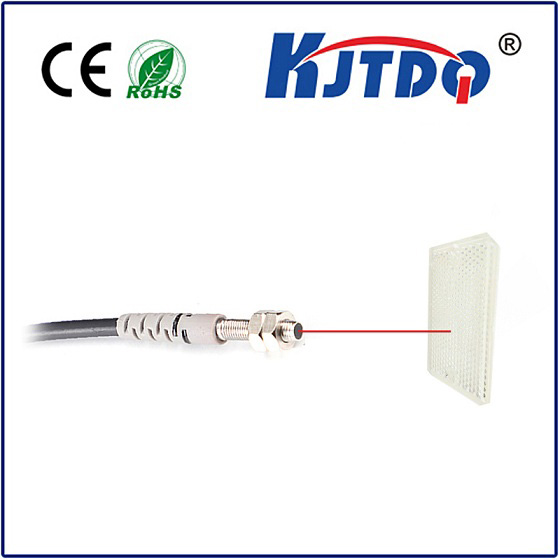
At its core, a reflective proximity sensor operates on the principle of optical triangulation or light intensity measurement. It combines an infrared (IR) light emitter and a photodiode or phototransistor receiver within a single compact housing. The emitter constantly projects an invisible beam of infrared light outward. When an object enters the sensor’s designated detection zone, this light beam strikes the object’s surface. Crucially, a portion of this emitted light reflects back towards the sensor. The built-in receiver detects this returned light signal. The sensor’s internal circuitry then analyzes the intensity of this reflected light. If the intensity surpasses a pre-set threshold, the sensor triggers its output signal (typically switching digital output like PNP/NPN or analog output), indicating the presence of an object within its effective range. This entire process happens rapidly and continuously.
Key Types: Tailoring the Reflection

Reflective proximity sensors primarily fall into two categories, distinguished by their target properties:
Where Reflection Makes a Difference: Diverse Applications
The versatility and robustness of reflective proximity sensors fuel their adoption across numerous sectors:
Why Choose Reflective Proximity Sensors? Core Benefits
Several inherent advantages propel their widespread use:
Choosing the Right Reflective Sensor: Key Considerations
Selecting the optimal reflective proximity sensor requires careful evaluation of your specific application’s demands:
The Evolving Landscape: Smarter Sensing
Reflective proximity sensor technology continues to advance. Modern sensors increasingly incorporate features like background suppression, which uses triangulation to focus detection on a specific distance zone, minimizing false triggers from objects beyond that zone. Integration with communication protocols like IO-Link is growing, enabling smart sensors to provide detailed diagnostics, parameterization data, and process values beyond simple on/off signals, paving the way for Industry 4.0 predictive maintenance setups.
From the mundane to the mission-critical, reflective proximity sensors provide a fundamental layer of environmental awareness for machines and devices. Their elegant simplicity, based on the reliable principle of light reflection, combined with ruggedness, speed, and affordability, ensures their continued indispensability in shaping the automated and interactive world around us. Understanding their principles, types, benefits, and selection criteria empowers engineers and designers to leverage their capabilities effectively across a remarkable spectrum of challenges.