check

check

check
check
check
check
check
check

check

check
Ever wondered how an elevator door senses you’re there and safely stays open? Or how a packaging line knows precisely when a box is in position for labeling? Often, the unsung hero behind these everyday marvels is the reflective photoelectric sensor. This ingenious technology, harnessing the simple principle of light reflection for object detection, forms a critical backbone of modern automation, offering reliability and versatility where it counts.
Understanding the Core Principle: Light Bounce as Information
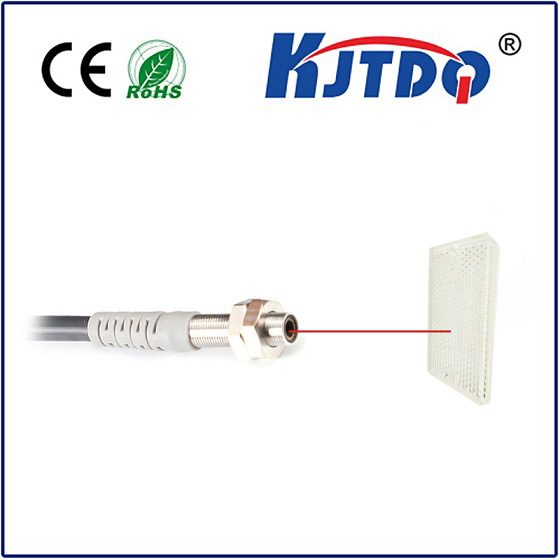
At its heart, a reflective photoelectric sensor operates on a beautifully straightforward concept. It combines a light emitter (usually an LED generating infrared, red, or laser light) and a photoelectric receiver (like a phototransistor or photodiode) within a single housing. The emitter projects a focused beam of light outward. When this light strikes a target object within its designated sensing range, a portion reflects back towards the sensor. The receiver detects this reflected light. The sensor’s internal electronics then interpret this change – the presence or absence of sufficient reflected light intensity – as a signal indicating the detection or non-detection of an object.
This fundamental reliance on a light beam reflecting off the target is what defines the reflective photoelectric sensor and differentiates it from other photoelectric modes (like through-beam or diffuse).
Why Choose Reflective? Key Advantages in Detection
Reflective photoelectric sensors hold distinct advantages that make them exceptionally suitable for numerous industrial applications:
The Retro-Reflective Variant: Boosting Range and Signal Strength
A particularly powerful subtype is the retroreflective photoelectric sensor. Instead of relying on light bouncing off a generic surface, it uses a special retroreflector (often a prismatic tape or corner-cube reflector) mounted opposite the sensor. This reflector is designed to bounce the light beam directly back along the exact path it came from, regardless of slight angular misalignments. This results in:
Where Reflective Photoelectric Sensors Truly Shine: Industrial Applications
Their blend of range, reliability, and ease of use makes reflective photoelectric sensors indispensable across countless sectors:
Selecting the Right Reflective Sensor: Key Considerations
Choosing the optimal reflective photoelectric sensor requires evaluating several factors:
The Unseen Engine of Automation Efficiency
From the precise choreography of high-speed bottling plants to the mundane safety of an office elevator, reflective photoelectric sensors work silently in the background. Their ability to leverage the simple physics of light reflection – packaged into robust, easy-to-install units – provides reliable, cost-effective object detection that fuels efficiency and safety across the industrial landscape. Understanding their working principle, key variants like the powerful retroreflective photoelectric sensor, and selection criteria empowers engineers to deploy the right sensing solution, ensuring smooth operation and maximizing productivity in an increasingly automated world.