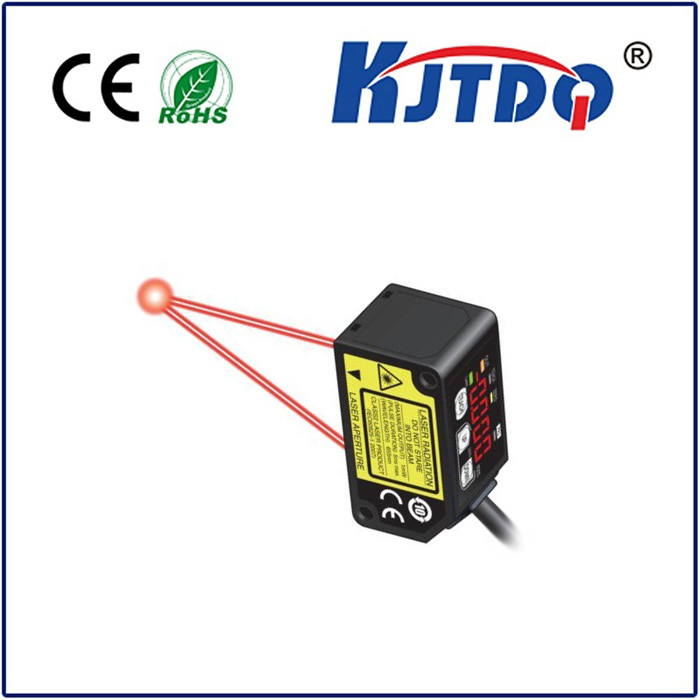
laser doppler velocity sensor
- time:2025-03-18 10:28:31
- Click:0
Laser Doppler Velocity Sensors: Precision Measurement for Modern Applications
Imagine tracking the speed of a hummingbird’s wings or monitoring microscopic fluid flows—all without physical contact. This is the power of laser Doppler velocity sensors (LDVS), a cutting-edge technology revolutionizing how we measure motion in industries ranging from aerospace to biomedical engineering. By harnessing the Doppler effect with laser precision, these sensors deliver unmatched accuracy, making them indispensable in research and industrial applications. Let’s explore how LDVS works, its key advantages, and where it’s transforming measurement practices today.
How Laser Doppler Velocity Sensors Work: The Science Behind the Precision
At the core of LDVS lies the Doppler effect—the same phenomenon that causes a siren’s pitch to change as it passes by. When a laser beam strikes a moving object, the reflected light shifts in frequency. This shift, proportional to the object’s velocity, is captured and analyzed by the sensor. Unlike traditional contact-based methods, LDVS operates non-invasively, eliminating mechanical interference and enabling measurements in challenging environments.
Modern LDVS systems use interferometry to detect minute frequency changes. A laser splits into two beams: one serves as a reference, while the other interacts with the target. When recombined, they create an interference pattern, which is processed to calculate velocity. This method achieves resolutions down to micrometers per second, even for ultrafast or vibrating targets.
Key Applications of Laser Doppler Velocity Sensors
The versatility of LDVS has unlocked breakthroughs across sectors:
- Aerodynamics and Automotive Testing
From wind tunnel experiments to optimizing vehicle designs, LDVS provides real-time data on airflow turbulence and surface vibrations. For instance, Formula 1 teams rely on these sensors to refine aerodynamics, reducing drag and enhancing performance.
- Biomedical and Life Sciences
In blood flow analysis, LDVS non-invasively measures microcirculation, aiding in diagnosing cardiovascular diseases. Researchers also use it to study cellular motion or track nanoparticle delivery in targeted therapies.
- Industrial Automation and Quality Control
Manufacturers deploy LDVS to monitor conveyor belt speeds, detect machinery vibrations, or inspect semiconductor wafer alignment. Its contact-free operation prevents product damage, ensuring high-throughput precision.
- Environmental and Geophysical Studies
LDVS helps track sediment transport in rivers or monitor glacier movements, offering insights into climate change impacts.
Why Choose Laser Doppler Velocity Sensors?
Compared to traditional velocimetry tools like pitot tubes or encoder-based systems, LDVS offers unique benefits:
- Non-Contact Measurement: Ideal for delicate, high-speed, or hazardous targets (e.g., molten metals or rotating machinery).
- High Spatial and Temporal Resolution: Captures rapid velocity changes with micron-level accuracy.
- Material Independence: Works on liquids, gases, solids, or even semi-transparent surfaces.
- Minimal Calibration: Unlike mechanical sensors, LDVS requires little maintenance, reducing downtime.
However, challenges like signal noise in turbulent flows or alignment sensitivity persist. Advances in fiber-optic LDVS and adaptive algorithms are mitigating these limitations, broadening applicability.
Integrating LDVS into Smart Systems
The rise of Industry 4.0 and IoT has amplified demand for LDVS in autonomous systems. For example:
- Autonomous Vehicles: LDVS monitors tire-road friction or detects obstacles by analyzing scattered laser light.
- Robotics: Collaborative robots use LDVS for precise motion control and collision avoidance.
- Smart Manufacturing: Integrated with AI, LDVS predicts equipment failures by analyzing vibration patterns.
Emerging trends include miniaturized LDVS for portable devices and multi-point sensors for 3D velocity mapping.
Selecting the Right Laser Doppler Sensor
When choosing an LDVS, consider:
- Measurement Range: Ensure it aligns with target speeds (e.g., nanoscale vs. supersonic).
- Laser Wavelength: Infrared lasers penetrate smoke/dust, while visible wavelengths suit lab environments.
- Data Acquisition Speed: Critical for dynamic processes like combustion or fluid mixing.
- Environmental Robustness: Opt for ruggedized designs for outdoor or industrial use.
Leading brands like Polytec and TSI offer customizable solutions, but always validate specifications against your use case.
From unlocking secrets in fluid dynamics to safeguarding industrial processes, laser Doppler velocity sensors exemplify how light-based technologies are reshaping measurement science. As industries push for greater precision and automation, LDVS will remain at the forefront—bridging the gap between theoretical innovation and real-world impact.