check

check

check

check

check

check
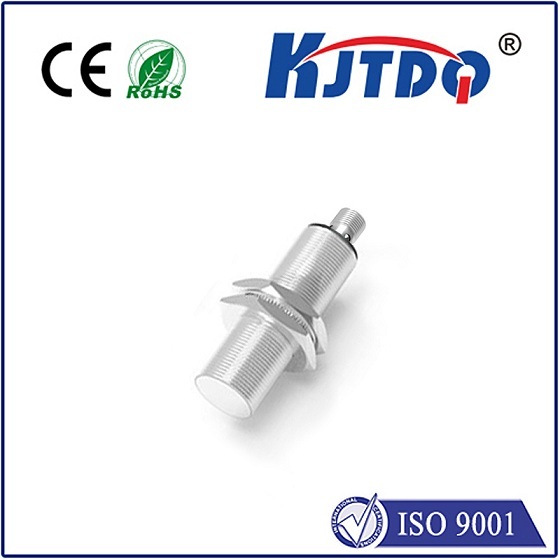
In the world of industrial automation and process control, reliability is non-negotiable. Equipment must perform flawlessly under extreme conditions, from punishing pressures to corrosive environments. This is where the BID2-G180 High Pressure Proximity Sensor steps in, not just as a component, but as a critical guardian of operational integrity. Engineered for resilience, this sensor represents a significant leap forward in detection technology, specifically designed to thrive where others fail.
The core challenge in high-pressure applications is maintaining consistent and accurate sensing performance. Traditional sensors can suffer from signal drift, physical deformation of sensing faces, or complete failure when subjected to sustained high pressure. The BID2-G180 is built from the ground up to conquer these challenges. Its robust housing is constructed from high-grade stainless steel, capable of withstanding pressures that would compromise lesser devices. This isn't merely about survival; it's about maintaining micron-level precision in measurement regardless of the external force exerted on the system. The hermetically sealed design ensures that internal electronics are completely isolated from the process medium, protecting against ingress of fluids, oils, and particulate matter that are common in hydraulic systems, heavy machinery, and offshore applications.
What truly sets the BID2-G180 apart is its advanced sensing technology. Utilizing a high-frequency oscillation principle, it can detect the presence or absence of metallic targets with exceptional repeatability. This means that whether it's monitoring the position of a piston in a hydraulic cylinder, confirming the closure of a high-pressure valve, or ensuring proper alignment in a press, the sensor delivers the same accurate signal every single time. This repeatability eliminates false triggers and downtime, directly contributing to increased production efficiency and reduced waste. The sensor's design minimizes the effects of temperature fluctuations and electrical noise, which are prevalent in industrial settings, ensuring a stable output signal that control systems can depend on.
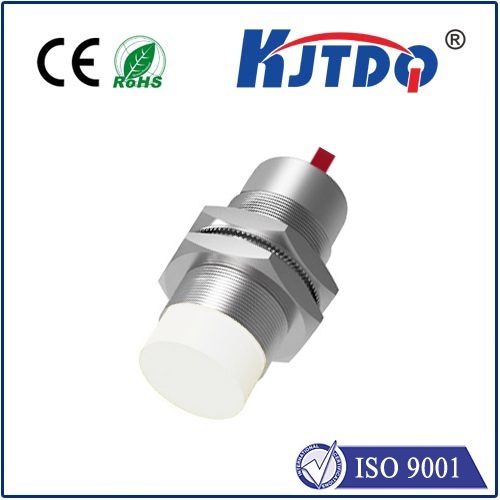
Installation and integration are streamlined for efficiency. The BID2-G180 features a compact, cylindrical form factor that allows for easy mounting in space-constrained locations. Its versatile mounting options, including flush or non-flush installation, provide flexibility for engineers designing new systems or retrofitting existing equipment. The electrical connection is simplified with a durable, integrated cable or connector variants, designed for quick connection and long-term reliability even in high-vibration environments. This plug-and-play philosophy reduces installation time and minimizes the potential for wiring errors.
The applications for this robust sensor are vast and critical. In the oil and gas industry, it monitors blowout preventers and subsea valve arrays, where failure is not an option. In metal forming and stamping presses, it ensures tooling is in the correct position before a multi-ton press cycles, preventing catastrophic damage. Within chemical processing plants, it provides reliable feedback for automated dosing and mixing systems operating under high pressure. Each of these scenarios demands a sensor that doesn't just function but excels under duress, making the BID2-G180 the preferred choice for engineers who prioritize system uptime and safety.
Beyond its immediate technical specifications, the value proposition of the BID2-G180 lies in its total cost of ownership. By preventing unplanned stoppages, reducing maintenance intervals, and enhancing overall system safety, this sensor pays for itself many times over. It transforms a potential point of failure into a pillar of reliability. For facility managers and automation engineers, specifying the BID2-G180 is a strategic decision to build more resilient, productive, and safe industrial operations. It is the definitive answer for applications where pressure is a constant, and precision is paramount.