check

check

check

check

check

check
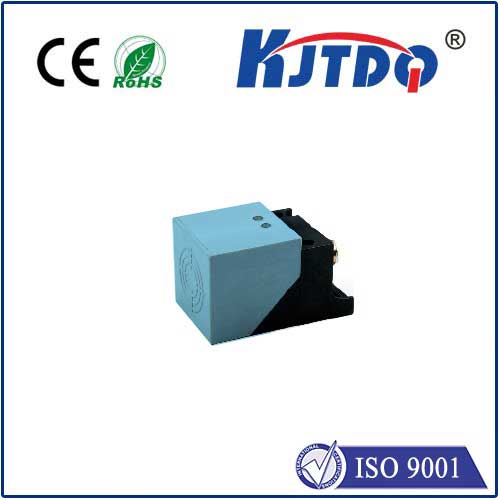
In the world of industrial automation and process control, the ability to detect objects or monitor positions reliably under extreme conditions is not just a convenience—it's a critical necessity for safety, efficiency, and productivity. This is where specialized components like the DW-AD-501-P12-625 High Pressure proximity sensor come into play, engineered to deliver unwavering performance where standard sensors would fail.
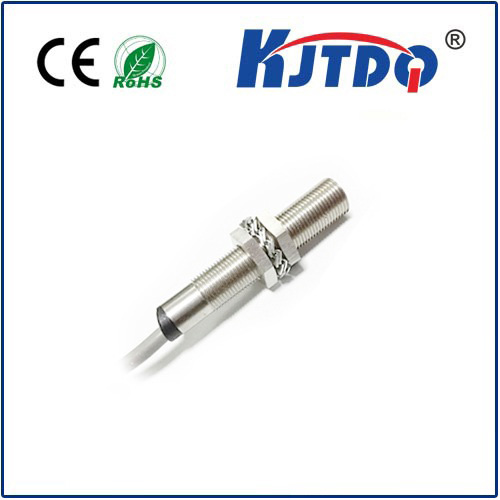
The core challenge in high-pressure environments, such as those found in hydraulic systems, heavy machinery, injection molding, or offshore applications, is the immense physical stress exerted on equipment. Fluctuating pressures, potential fluid ingress, and mechanical vibrations can quickly compromise the integrity and functionality of ordinary sensors. The DW-AD-501-P12-625 is specifically designed to conquer these challenges. Its designation hints at its robust capabilities: built to withstand significant pressure while maintaining precise inductive proximity sensing.
What sets this sensor apart is its construction and design philosophy. The housing is typically crafted from high-grade stainless steel, offering exceptional resistance to corrosion and physical impact. The P12 in its name often refers to a particular thread size, ensuring a secure and sealed installation directly into pressurized lines or chambers. This robust mechanical design is the first line of defense, preventing leaks and protecting the internal electronics from harsh external elements.
Internally, the sensor utilizes a ruggedized sensing element. Unlike basic models, the components are potted or encapsulated to resist shock and vibration, common byproducts of high-pressure systems. This ensures that the electrical signal output—whether it's a standard NPN or PNP switching signal—remains stable and accurate, even when the surrounding environment is in flux. Reliability in signal transmission is paramount; a false or missed detection in a high-pressure circuit can lead to process downtime, product defects, or even safety incidents.
The operational principle remains that of a standard inductive proximity sensor: it generates an electromagnetic field and detects the eddy current losses caused by a metallic target entering its range. However, for the DW-AD-501-P12-625, every aspect of this technology is reinforced. The sensing face is designed to handle direct exposure to pressures that would deform or rupture lesser units. Its 625 specification likely denotes a particular sensing distance or voltage rating, tailored for specific integration needs. This allows for the non-contact detection of piston positions, valve closures, or the presence of metal components inside pressurized zones without any physical wear.
Application scenarios for this sensor are diverse and demanding. In plastic injection molding machines, it monitors the position of the screw or the mold clamp under high injection pressure. Within hydraulic presses, it provides critical feedback on cylinder rod position, enabling precise control of force and movement. In the energy sector, such sensors are indispensable for monitoring equipment on oil rigs or within pipeline systems where pressure ratings are extreme. Their role is to provide the control system with a definitive, binary signal: target present or target not present. This simple data point is the foundation for complex automated sequences.
Installation and maintenance, while straightforward, require attention to detail. Ensuring the correct thread sealant is used and that the sensor is torqued to specification is crucial for maintaining its pressure rating. Users should always refer to the manufacturer's datasheet for exact parameters like pressure rating, temperature range, output type, and supply voltage. Proper electrical connection with shielded cables is also recommended to minimize electromagnetic interference, which is common in industrial settings with large motors and drives.
Selecting a sensor like the DW-AD-501-P12-625 is an investment in system resilience. It moves beyond mere functionality to provide assurance. It answers the need for a component that won't be the weak link in a chain of powerful machinery. For engineers and maintenance professionals, specifying this level of sensor translates to reduced unplanned downtime, lower long-term maintenance costs, and enhanced operational safety. It represents a proactive approach to design, acknowledging that the operating environment itself is a key factor in component selection.
In conclusion, the DW-AD-501-P12-625 is more than just a part number; it is a solution engineered for boundary-pushing applications. It embodies the principle that detection technology must adapt to its environment. For systems where pressure is a constant and formidable factor, this high-pressure proximity sensor stands as a reliable sentinel, ensuring that automation processes proceed smoothly, safely, and efficiently, regardless of the forces at play.