check

check

check

check

check

check
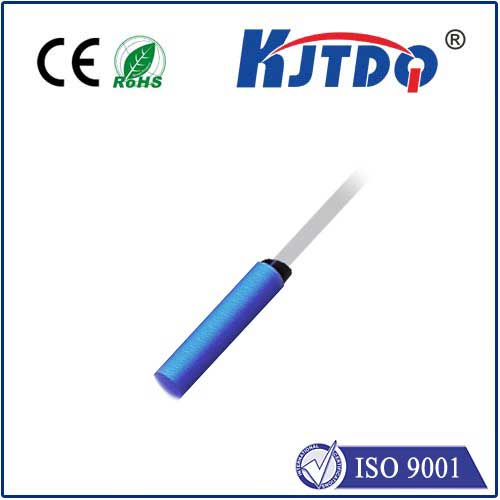
In the demanding world of industrial automation and process control, the reliability of every component is paramount. Among the critical elements ensuring seamless operation, proximity sensors stand out for their role in non-contact detection. When the application involves high-pressure environments, the stakes are even higher. This is where specialized sensors like the BHS B400V-PSD25-BP00,2-S04-003, also known by its part number BHS0064, become indispensable. This high-pressure proximity sensor is engineered to deliver unwavering performance where others might fail.
The core function of the BHS B400V-PSD25-BP00 model is to detect the presence or absence of a target object without any physical contact, even under extreme pressure conditions. It operates on a robust inductive sensing principle. The sensor generates an electromagnetic field. When a metallic target enters this field, it causes a change in the oscillation amplitude within the sensor's circuit. This change is detected and converted into a clear, binary output signal—switching the state of its PNP or NPN transistor. The "2-S04-003" designation typically refers to its specific electrical connection and output configuration, ensuring compatibility with standard control systems. The "BP00" suffix often indicates particular housing or sealing characteristics crucial for its rated environment.
What truly sets the BHS0064 apart is its construction and certification for high-pressure resilience. Standard sensors can malfunction or suffer catastrophic failure when subjected to the intense forces found in hydraulic systems, die-casting machines, plastic injection molding equipment, or high-pressure testing rigs. The BHS B400V-PSD25 is built with a reinforced housing, often from high-grade stainless steel, and employs specialized sealing technologies. This robust design shields the sensitive internal electronics from pressure surges, mechanical stress, and potential fluid ingress. It is commonly rated for pressures significantly exceeding those of conventional inductive sensors, sometimes capable of withstanding hundreds of bars, making it a reliable sentinel in the most punishing industrial settings.
The applications for this sensor are vast and critical. In hydraulic power units, it monitors piston position within cylinders under extreme fluid pressure. Within injection molding machines, it provides precise detection of the mold clamp position, a process step involving tremendous force. It is also vital in heavy press automation, valve position feedback in high-pressure pipelines, and custom machinery where pressure and reliability cannot be compromised. Its use prevents mechanical damage, ensures cycle accuracy, and enhances overall system safety by providing fail-safe positional data.
Selecting and installing the BHS high-pressure proximity sensor requires attention to detail. Key specifications to verify include its operating pressure rating, sensing distance (likely short-range, e.g., 1.5mm, as indicated by "PSD25"), supply voltage range (commonly 10-30V DC), output type, and environmental protection class (IP rating). Correct installation is non-negotiable; the sensor must be mounted securely using appropriate fittings to handle the pressure load without leakage. The sensing face must be positioned at the precise nominal distance from the target, accounting for any potential target material variation (steel, aluminum, etc.), which affects the effective sensing range. Proper shielding and routing of the connection cable away from high-power lines minimize electrical interference.
For maintenance personnel and system designers, understanding the failure modes is crucial. While built for durability, potential issues include signal drift due to physical damage to the sensing face, degradation of seals over time under thermal cycling, or output failure from electrical overload. Regular checks for physical integrity, seal condition, and signal consistency during system calibration cycles can preempt downtime. Troubleshooting typically involves verifying power supply, checking the output with a multimeter or PLC input, and inspecting for physical obstructions or damage.
In conclusion, the BHS B400V-PSD25-BP00,2-S04-003 (BHS0064) represents a specialized solution for a challenging niche. It transcends the capabilities of a standard proximity sensor by integrating mechanical fortitude to withstand high-pressure environments. For engineers designing systems involving hydraulics, heavy pressing, or high-force automation, specifying a sensor of this caliber is not an option but a necessity for ensuring longevity, precision, and safety. Its value lies in its ability to perform a simple task—detection—reliably under conditions that would render ordinary components useless, thereby safeguarding both the machinery and the production process it supports.