check

check

check

check

check

check
In industrial automation, process control, and heavy machinery, the ability to accurately detect the presence or position of an object under extreme conditions is not just a convenience—it's a critical requirement for safety, efficiency, and operational continuity. This is where specialized components like the KGG08P3KPC High Pressure Proximity Sensor prove their indispensable value. Engineered to perform reliably in environments where standard sensors would fail, this device represents a significant advancement in sensing technology for high-pressure applications.
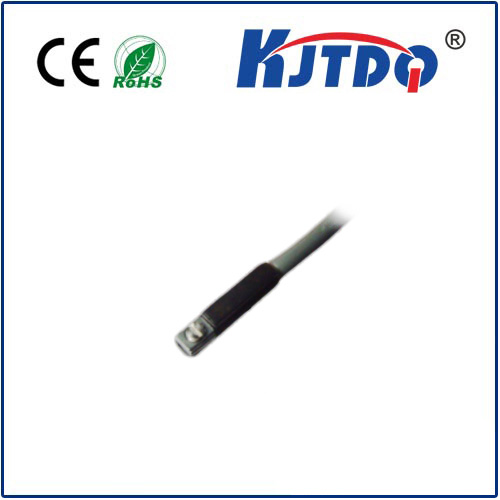
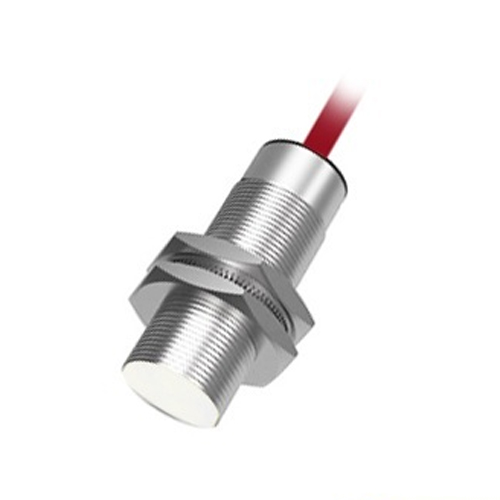
The core challenge in high-pressure environments, such as those found in hydraulic systems, injection molding machines, die-casting, and offshore equipment, is the immense force exerted on all components. A standard inductive or capacitive proximity sensor might function initially, but prolonged exposure to pressures exceeding several hundred bar can compromise its housing integrity, seal effectiveness, and ultimately, its sensing accuracy and lifespan. The KGG08P3KPC is specifically designed to withstand these forces. Its robust construction typically features a stainless steel housing with reinforced seals, capable of resisting pressure spikes and continuous high-pressure exposure without deformation or leakage. This inherent durability ensures that the sensor maintains its precise switching characteristics, providing consistent and reliable feedback to the control system.
Beyond mere pressure resistance, the KGG08P3KPC excels in its fundamental sensing performance. As a non-contact device, it detects metallic targets without physical interaction, eliminating wear and tear. Its sensing range is optimized for close-proximity detection, offering high repeat accuracy. This means that every time a target, such as a piston rod or valve position indicator, enters its detection field, the sensor triggers at exactly the same point. This precision is vital for controlling cycle times, ensuring proper sequencing, and preventing collisions or malfunctions in complex machinery. The "KPC" variant often indicates specific electrical characteristics, such as a PNP normally open (NO) configuration with a pre-wired connector, simplifying installation and integration into existing control cabinets.
The operational benefits of integrating the KGG08P3KPC are substantial. First and foremost is enhanced system reliability. Unexpected downtime in industrial settings is extraordinarily costly. By utilizing a sensor built for the rigors of high-pressure duty, maintenance intervals can be extended, and the risk of sensor-induced failures is dramatically reduced. This translates directly to higher overall equipment effectiveness (OEE). Secondly, it contributes to safety. Accurate position sensing of hydraulic cylinders or press rams is often a key part of safety interlock systems. A sensor that fails under pressure could create a hazardous situation; the KGG08P3KPC's robustness helps mitigate this risk.
Installation and compatibility are also straightforward considerations. Designed to meet international protection standards (typically IP67 or higher), it is resistant to not only pressure but also oil, coolant, and other industrial fluids. Its compact cylindrical form factor allows it to be mounted in space-constrained locations near moving parts. The output signal seamlessly interfaces with programmable logic controllers (PLCs), ensuring smooth communication within the automation network.
In conclusion, the KGG08P3KPC High Pressure Proximity Sensor is far more than just a component; it is a strategic investment in operational integrity. For engineers and system designers working with hydraulic presses, plastic molding machines, test stands, or any application involving high-pressure fluid power, selecting a sensor like the KGG08P3KPC is a decision that prioritizes long-term performance over short-term cost. It delivers the precision required for optimal process control and the ruggedness demanded by the most challenging industrial environments, ensuring that detection tasks are performed flawlessly, cycle after cycle, under immense pressure.