check

check

check

check

check

check
In the relentless world of industrial automation, where machinery operates under extreme pressures and within tight tolerances, the failure of a single component can cascade into costly downtime and compromised safety. This is where the precision and resilience of sensors become non-negotiable. The DW-AD-603-M10E-620 High Pressure Proximity Sensor emerges as a cornerstone technology, engineered specifically to deliver unwavering performance where conventional sensors falter. Its design addresses the core challenges of high-pressure applications, offering a blend of durability, accuracy, and reliability that sets a new benchmark for industrial sensing.
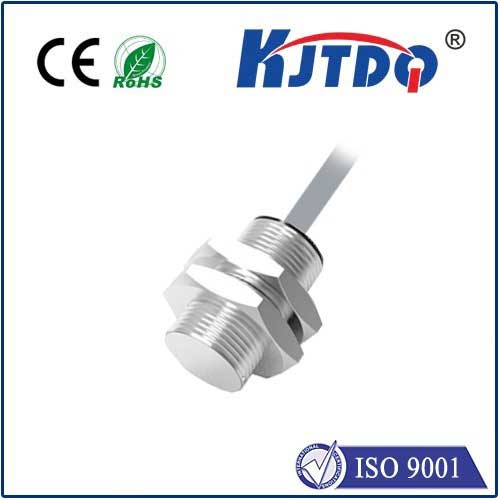
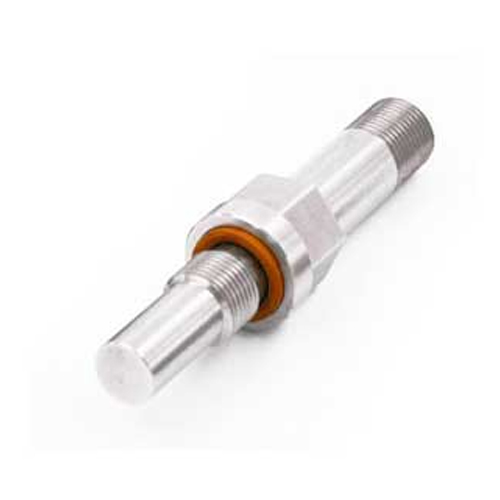
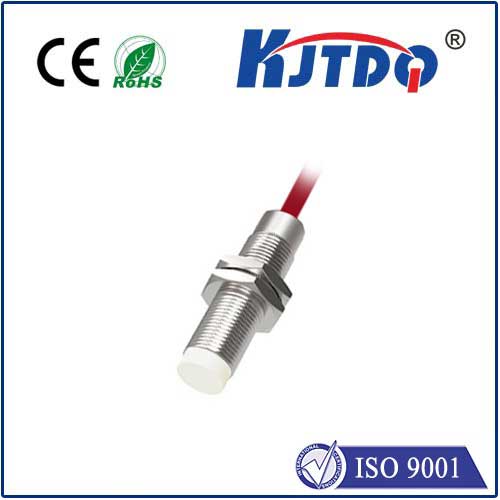
The defining feature of the DW-AD-603-M10E-620 is its exceptional capability to function in environments with elevated ambient pressure. Unlike standard inductive proximity sensors that may experience signal drift or physical damage under such conditions, this sensor is constructed with a robust, hermetically sealed housing. This sealing is critical, as it prevents pressure differentials from affecting the internal electronics or the sensing field integrity. The M10E threaded barrel design further enhances this resilience, providing a secure mechanical installation that can withstand significant vibration and mechanical stress, common in hydraulic systems, die-casting machines, and heavy-duty press applications.
At its core, the sensor utilizes a high-quality inductive sensing principle to detect the presence of metallic targets. However, its engineering goes beyond the basics. The circuitry is optimized for stability, ensuring that the switching point remains consistent regardless of fluctuations in supply voltage or ambient temperature variations. This translates to fewer false triggers and more reliable machine cycles. The 620 suffix often denotes a particular output configuration or sensing range, making it crucial for engineers to specify the exact model to match their application's electrical and spatial requirements. Typical outputs include NPN or PNP transistor configurations, seamlessly integrating with programmable logic controllers (PLCs) and modern control systems.
Installation and maintenance are streamlined for efficiency. The compact form factor of the DW-AD-603-M10E-620 allows for easy integration into space-constrained machine designs. Its LED status indicator provides immediate visual confirmation of operation and switching state, aiding in rapid troubleshooting and reducing diagnostic time on the factory floor. Furthermore, the sensor's construction materials are selected for longevity, resisting corrosion from oils, coolants, and other industrial fluids, thereby extending service intervals and reducing total cost of ownership.
Real-world applications vividly demonstrate its value. In injection molding, the sensor reliably detects mold position under high clamping pressure, ensuring precise cycle control. Within hydraulic power units, it monitors piston position or valve actuation, contributing to system efficiency and leak prevention. In automated high-pressure testing rigs, it provides the critical feedback needed to validate component integrity. In each scenario, the DW-AD-603-M10E-620 does more than just detect; it enhances process reliability, safeguards equipment, and supports overall operational excellence.
Selecting the right sensor is a strategic decision. When evaluating options for high-pressure zones, key specifications beyond the pressure rating must be considered: the sensing distance, target material, operating temperature range, and electrical connection type. The DW-AD-603-M10E-620 series offers variants to meet these diverse needs, allowing for precise customization. Partnering with a knowledgeable supplier ensures you receive not only the correct sensor but also expert support for integration and optimization.
Ultimately, the DW-AD-603-M10E-620 High Pressure Proximity Sensor represents more than just a component; it is an investment in predictable, uninterrupted production. By delivering consistent performance under duress, it eliminates a common point of failure in harsh industrial environments. For engineers and plant managers tasked with maximizing uptime and ensuring safety, adopting such specialized sensing technology is a clear step toward building more robust, efficient, and competitive manufacturing operations. Its proven track record in challenging settings makes it a trusted choice for those who cannot afford compromise.