check

check

check

check

check

check
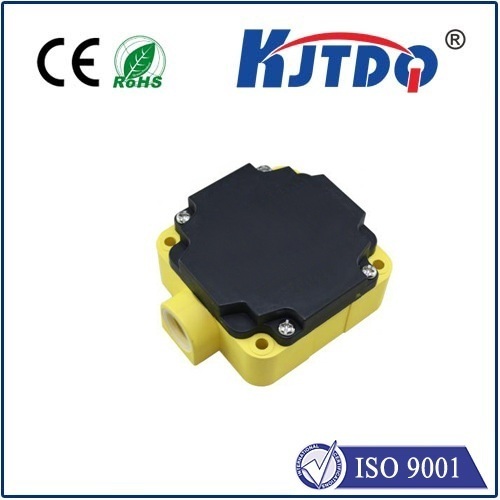
In the relentless world of industrial automation and process control, where machinery operates under extreme pressures and in unforgiving conditions, the reliability of every component is paramount. Sensor failure is not merely an inconvenience; it can lead to catastrophic downtime, safety hazards, and significant financial loss. This is where precision-engineered components like the KGG13L3KP High Pressure Proximity Sensor prove their indispensable value. Designed to thrive where others falter, this sensor represents a critical advancement in monitoring and control technology for high-pressure applications.
The core challenge in high-pressure environments—common in hydraulic systems, die-casting machines, injection molding, oil and gas pipelines, and heavy press operations—is the immense stress exerted on equipment. Standard inductive proximity sensors often lack the robust housing and internal design to withstand sustained high pressure without compromising signal integrity or suffering physical deformation. The KGG13L3KP is specifically engineered to overcome this barrier. Its defining feature is a hermetically sealed, stainless steel housing with a pressure-resistant face, typically rated to withstand pressures exceeding 500 bar (approximately 7250 psi) or more, depending on the specific model configuration. This robust construction ensures that the sensor body remains intact and fully functional, preventing media ingress and mechanical failure even when submerged in high-pressure hydraulic fluid or exposed to intense compressive forces.
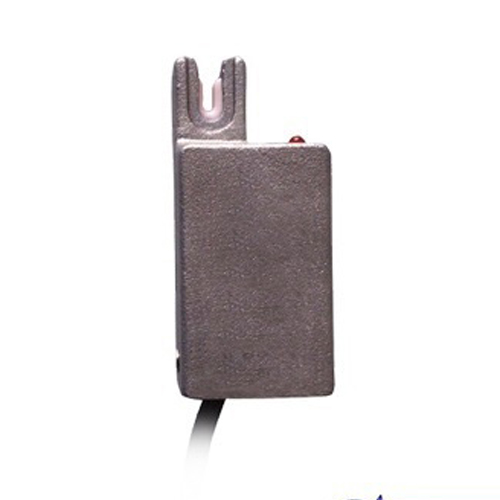
Beyond its formidable physical durability, the KGG13L3KP excels in performance. Utilizing a high-frequency oscillation principle, it detects the presence or absence of metallic targets—such as piston rods, valve positions, or machine parts—with exceptional accuracy and repeatability. The sensing distance remains stable regardless of ambient pressure fluctuations, a critical factor for maintaining precise control loops. Its immunity to magnetic fields, a common byproduct in powerful industrial machinery, further enhances its reliability, eliminating false triggers and ensuring consistent operation. The sensor typically features a short-circuit, overload, and reverse polarity protected DC PNP or NPN output, compatible with standard programmable logic controllers (PLCs), making integration into existing control systems straightforward.
The practical benefits of deploying the KGG13L3KP sensor are substantial. First and foremost is enhanced operational safety. By providing reliable, real-time feedback on the position of critical components in high-pressure systems, it enables automated shutdown sequences to prevent over-pressurization and potential equipment rupture. Secondly, it drives efficiency. Predictive maintenance becomes more accurate, as the sensor's consistent performance allows for trend monitoring of machine cycles, helping to schedule maintenance before a failure occurs. This directly reduces unplanned downtime and extends the lifespan of expensive capital equipment. Furthermore, its rugged design minimizes the need for frequent replacements, lowering total cost of ownership and reducing waste.
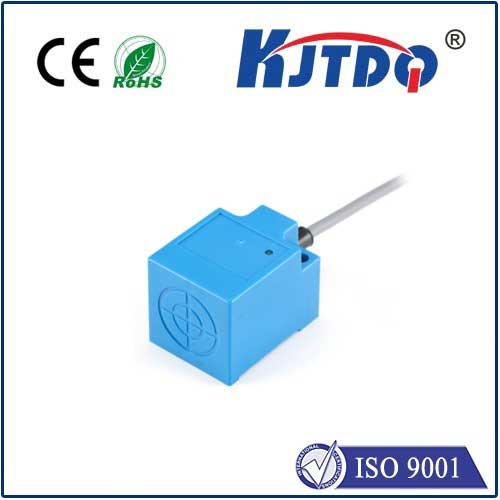
Installation and maintenance are designed with the technician in mind. Despite its heavy-duty build, the sensor often comes in compact form factors like M12 or M18 threaded barrels, allowing for installation in space-constrained locations. The use of high-quality, chemically resistant cabling or connector options ensures long-term signal stability. When selecting a KGG13L3KP sensor, key specifications to verify include the exact pressure rating, sensing range, output type, operating temperature range, and required electrical connection to ensure a perfect match for the application.
In conclusion, the KGG13L3KP High Pressure Proximity Sensor is far more than just a component; it is a strategic asset for any operation involving high-pressure dynamics. It transforms a potential point of vulnerability into a bastion of reliability. By guaranteeing accurate detection under extreme conditions, it safeguards personnel, protects machinery, and ensures the continuous, profitable flow of industrial processes. For engineers and plant managers seeking to eliminate pressure-related sensor failures and bolster their system's resilience, specifying the KGG13L3KP is a decision that delivers measurable returns in safety, uptime, and operational confidence.