check

check

check

check

check

check
In the world of industrial automation, where reliability is non-negotiable and downtime is the ultimate enemy, the choice of sensing technology can make or break an operation. For applications involving extreme pressures, harsh contaminants, and critical positioning tasks, a standard sensor simply won't suffice. This is where the BES 516-300-S322-E1-S4-D High Pressure Proximity Sensor steps in, engineered to deliver unwavering performance where others fail.
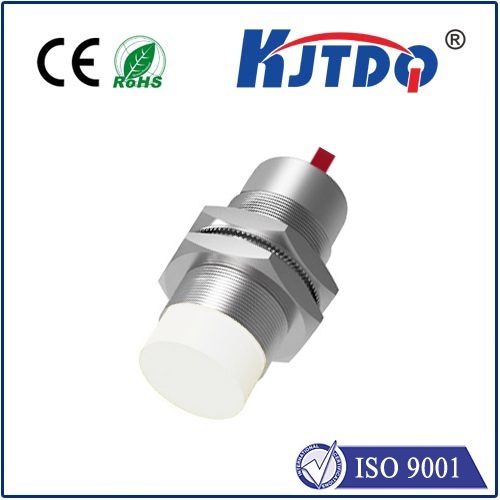
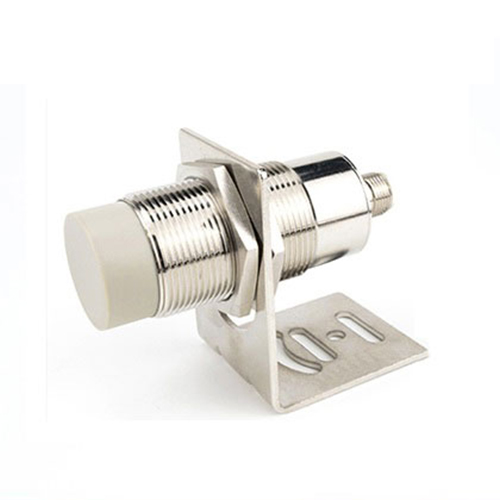
The core challenge in high-pressure environments—common in hydraulic systems, die-casting machines, plastic injection molding, and heavy press applications—is the immense physical stress exerted on equipment. Standard inductive proximity sensors can falter under such conditions, with risks ranging from housing deformation and seal failure to complete functional breakdown. The BES 516-300-S322-E1-S4-D is specifically designed to conquer these challenges. Its robust, stainless steel housing is not just for show; it's a meticulously crafted barrier that withstands continuous exposure to pressures up to 500 bar. This resilience ensures the internal electronics and sensing face remain perfectly protected, guaranteeing long-term stability and accuracy.
Beyond brute strength, this sensor excels in precision. The "S322" in its part number signifies a precise 2mm flush-mountable design. This allows for installation flush with the machine surface, a critical feature in space-constrained or high-risk areas where sensor protrusion could lead to damage. It reliably detects ferrous metal targets without physical contact, eliminating wear and tear and enabling high-speed operation. The sensing distance is consistent and repeatable, providing the reliable feedback necessary for precise control of cylinders, valves, or position verification.
The electrical configuration, denoted by "E1-S4-D," highlights its advanced connectivity and output options. The "E1" typically indicates a plug connector version, facilitating quick installation, replacement, and maintenance, which minimizes machine downtime. The "S4" often correlates with a 4-wire DC design featuring both a Normally Open (NO) and a Normally Closed (NC) output. This dual-output flexibility is a significant advantage for control engineers, allowing for more complex and failsafe circuit designs. The "D" commonly specifies a DC PNP switching logic, the prevalent standard compatible with most modern programmable logic controllers (PLCs) and control systems.
Operational reliability is further enhanced by its high protection ratings. Typically, sensors in this class boast an IP67 or higher rating, meaning they are completely dust-tight and can withstand temporary immersion in water. This makes the BES 516-300-S322-E1-S4-D impervious to coolants, lubricants, and washdown procedures, ensuring consistent performance in dirty, wet, or demanding workshop environments. Its temperature stability allows it to function correctly across a wide industrial range, from the chill of a cold start to the heat generated by continuous, heavy-duty cycles.
For plant managers and automation engineers, integrating this sensor translates into tangible benefits: reduced maintenance costs due to exceptional durability, fewer production stoppages thanks to supreme reliability, and enhanced safety through accurate, non-contact detection in hazardous high-pressure zones. It is more than a component; it is an investment in operational continuity. When specifying sensors for critical high-pressure applications, the BES 516-300-S322-E1-S4-D stands out as a proven, robust, and intelligent choice designed to meet the toughest industrial standards head-on.