check

check

check

check

check

check
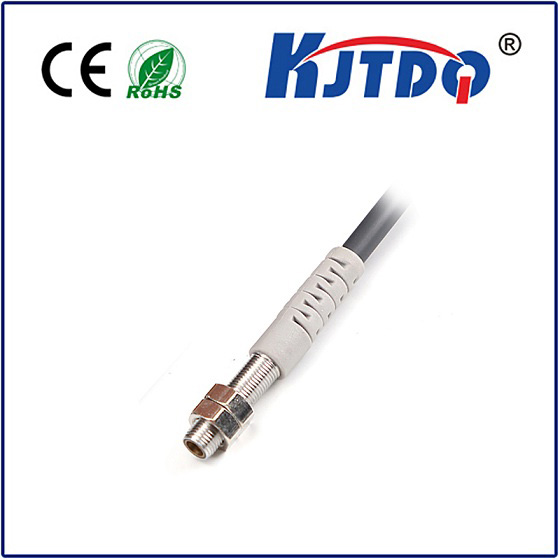
In the relentless world of industrial automation, where machinery operates under extreme pressures and within tight tolerances, the reliability of every component is non-negotiable. Sensor failure in a high-pressure hydraulic system or a critical machining center is not merely an inconvenience; it can lead to catastrophic downtime, costly repairs, and compromised safety. This is where specialized sensing technology, designed to thrive where standard sensors falter, becomes indispensable. The KNYT2-M14-NBH-53 High Pressure Proximity Sensor stands as a prime example of engineering tailored for resilience and precision in the most demanding applications.
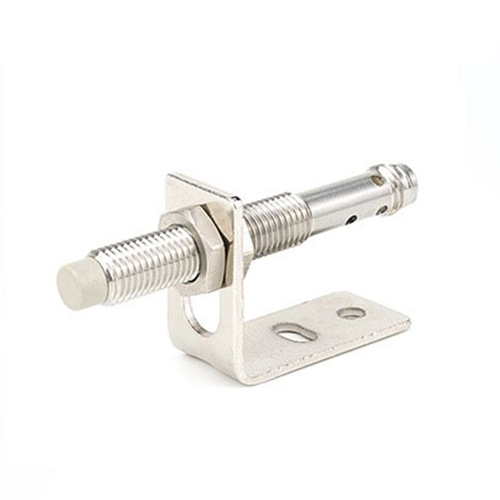
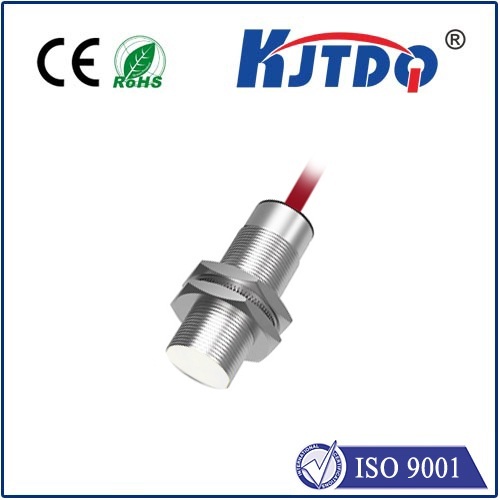
Traditional inductive proximity sensors often reach their limits when faced with environments involving high external pressure, intense mechanical stress, or exposure to aggressive media like cutting fluids and coolants. Their housings may deform, seals can fail, and internal electronics might succumb to the physical strain, leading to inaccurate readings or complete operational failure. The KNYT2-M14-NBH-53 is engineered from the ground up to overcome these exact challenges. Its robust M14 x 1.5 threaded stainless steel housing is not just for mounting; it's a fortress designed to withstand significant external pressure. This inherent ruggedness ensures the sensor's internal components remain protected and fully functional, maintaining consistent performance where it matters most.
The core functionality of this sensor is based on a high-precision inductive sensing principle. It reliably detects the presence of metallic targets, such as steel or iron, without any physical contact. The "NBH" designation often indicates a specific sensing range and output configuration, typically a stable 3-wire DC PNP or NPN switching signal compatible with standard programmable logic controllers (PLCs) and control systems. This plug-and-play compatibility simplifies integration into existing production lines, control panels, and machinery, minimizing installation time and complexity. Maintenance teams appreciate the straightforward setup, which allows for quick deployment and replacement, further reducing potential downtime.
The true value of the KNYT2-M14-NBH-53 is realized in its application areas. It is the sensor of choice for heavy-duty industries. In hydraulic and pneumatic systems, it monitors piston position in cylinders operating under hundreds of bars of pressure, providing crucial feedback for sequence control. Within machine tools and CNC machining centers, it serves as an end-position sensor for slides and tool changers, ensuring movements are precise and repeatable even when flooded with cooling lubricants. The automotive manufacturing sector utilizes these sensors in die-casting machines and high-pressure forming presses, where they deliver reliable signals despite exposure to heat, vibration, and shock. Furthermore, in offshore equipment and marine applications, their resistance to pressure and harsh environments makes them suitable for monitoring critical valves and actuators.
Beyond its immediate technical specifications, selecting the KNYT2-M14-NBH-53 translates into tangible operational benefits. The primary advantage is unparalleled reliability. By specifying a sensor built for high-pressure conditions, engineers eliminate a common point of failure, leading to increased machine availability and overall equipment effectiveness (OEE). This reliability directly safeguards production schedules and reduces the frequency of emergency maintenance calls. Secondly, its durability ensures a longer service life compared to standard sensors used in punishing conditions, offering a better total cost of ownership. While the initial investment might be slightly higher, the avoidance of repeated failures and production stoppages results in significant long-term savings.
When integrating this sensor, several practical considerations ensure optimal performance. Correct mounting is paramount; the sensor must be securely threaded into its mounting point to maintain its pressure rating and environmental seal. Engineers must verify the required sensing distance and ensure the target object's material and approach speed are within the sensor's specified parameters. Electrical connection should be made according to the data sheet, paying close attention to the voltage (commonly 10-30V DC) and the output type (PNP or NPN) to match the control system's input card. A final functional test under actual operating conditions confirms proper installation and setup.
For plant managers, maintenance supervisors, and automation engineers, the decision to incorporate components like the KNYT2-M14-NBH-53 is a strategic move towards building more robust and fault-resistant systems. It represents a shift from reactive maintenance to proactive design, where equipment is specified not just for function, but for endurance. In an era where efficiency and uptime are key performance indicators, leveraging specialized technology is no longer a luxury but a necessity. This high-pressure proximity sensor provides a dependable, high-performance sensing solution that keeps critical processes running smoothly, safely, and efficiently, day in and day out.