check

check

check

check

check

check
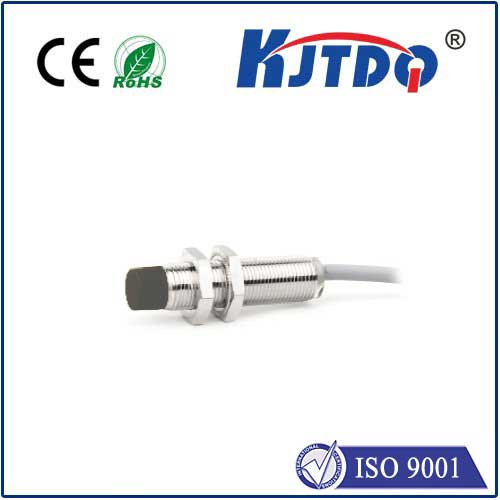
In the demanding world of industrial automation and process control, the margin for error is razor-thin. Equipment failure or inaccurate readings can lead to catastrophic downtime, safety hazards, and significant financial loss. This is where precision sensing technology becomes the unsung hero of the factory floor. Among the critical components ensuring seamless operation is the HR182-15-601.58V High Pressure Proximity Sensor, a device engineered for resilience and accuracy in the most challenging environments.
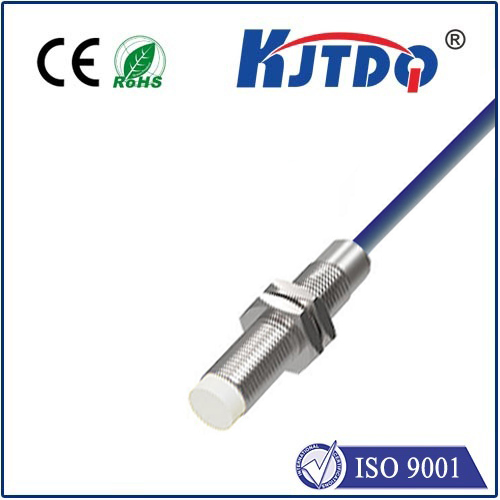
Understanding the core function of this sensor begins with its classification. A proximity sensor is a non-contact device that detects the presence or absence of an object within its sensing range. The "High Pressure" designation of the HR182-15-601.58V is not about the pressure it senses, but rather its exceptional ability to operate reliably when subjected to extreme external hydraulic or pneumatic pressures. This makes it indispensable in applications like die-casting machines, injection molding, heavy-duty presses, and offshore drilling equipment, where sensors are bathed in high-pressure fluids or must withstand immense physical forces within sealed chambers.
The model number HR182-15-601.58V itself tells a story of its specifications. Breaking it down, 'HR182' likely denotes the series or form factor, a robust, typically cylindrical housing designed for industrial durability. The '15' often references the sensing distance in millimeters, a critical parameter for installation and operational planning. '601' could indicate the thread size or housing dimension, such as an M18 or M30 standard thread, ensuring easy integration into existing industrial setups. Finally, '58V' specifies the operating voltage, a crucial 58V DC supply that powers its sensing circuitry. This specific voltage is less common than 12V or 24V systems, indicating a design tailored for specialized industrial power networks or offering particular performance characteristics like longer cable runs or higher noise immunity.
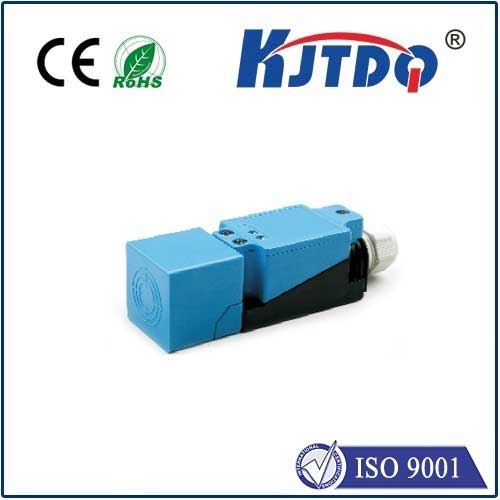
The technological heart of such a sensor usually involves an inductive or capacitive sensing principle. For metallic target detection common in high-pressure zones, an inductive approach is standard. The sensor generates an electromagnetic field. When a metal object enters this field, eddy currents are induced in the target, causing a change in the sensor's internal oscillation amplitude. This change is detected and converted into a clean, switch-like output signal—either PNP (sourcing) or NPN (sinking)—to interface with Programmable Logic Controllers (PLCs). The construction of the HR182-15-601.58V is what sets it apart. It features a hermetically sealed housing, often made of high-grade stainless steel like V4A (AISI 316), with a pressure-resistant sensing face. This sealing, rated by an IP (Ingress Protection) code of IP67, IP68, or IP69K, ensures that internal electronics are completely shielded from high-pressure washdowns, oils, coolants, and particulate matter.
The advantages of deploying this specific sensor are multifaceted. First and foremost is unmatched reliability. Its design prioritizes continuous operation under stress, minimizing unplanned downtime. Enhanced safety is another critical benefit; by providing accurate position feedback on heavy machinery components, it helps prevent dangerous operational errors. Furthermore, its long service life, even in corrosive or abrasive settings, translates to a lower total cost of ownership despite a potentially higher initial investment compared to standard sensors. The precision of its switching point ensures repeatable accuracy, which is vital for maintaining product quality in manufacturing processes.
When selecting and installing the HR182-15-601.58V, several best practices must be observed. Confirm the electrical compatibility (58V DC, current output) with your control system. Ensure the mounting location allows for the full 15mm sensing distance and is accessible for maintenance. The sensor must be securely mounted using its threaded body to withstand vibration. Pay close attention to the target material, size, and approach angle, as these factors influence sensing performance. For optimal function in high-pressure applications, verify that the pressure rating of the sensor exceeds the maximum system pressure it will encounter.
In conclusion, the HR182-15-601.58V High Pressure Proximity Sensor is not merely a component; it is a cornerstone of modern industrial resilience. Its specialized design for high-pressure environments addresses a critical niche, safeguarding processes where failure is not an option. For engineers and maintenance professionals seeking to bolster system integrity, reduce downtime, and ensure operational safety, understanding and utilizing this robust sensing solution is a strategic imperative. It represents a smart investment in the relentless pursuit of industrial efficiency and reliability.