check

check

check

check

check

check
In the intricate world of industrial automation, the reliability of a single component can dictate the efficiency of an entire production line. Among these critical components, photoelectric switches stand as silent sentinels, enabling non-contact detection with remarkable accuracy. The LK28-Z-F1/31/116 photoelectric switch emerges as a particularly robust and versatile solution within this category, designed to meet the rigorous demands of modern manufacturing, packaging, and material handling applications. This guide delves into the technical specifications, operational principles, and practical advantages of this specific sensor model, providing a comprehensive overview for engineers and procurement specialists.
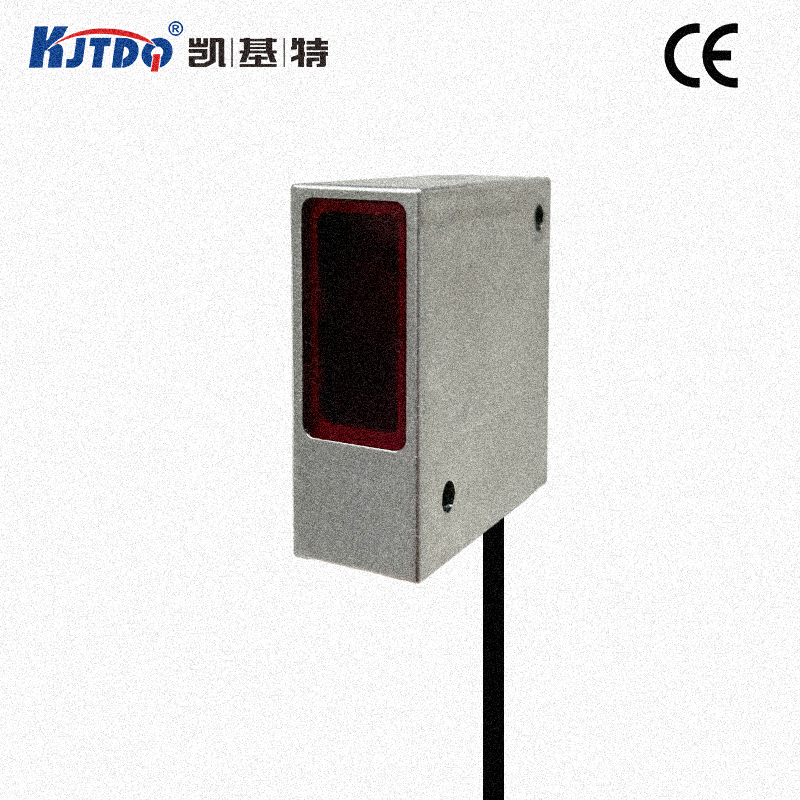
The LK28-Z-F1/31/116 is a diffuse reflective sensor with a background suppression function. This specific feature is its key differentiator. Unlike standard diffuse sensors that detect the reflection from the target object itself, background suppression models are intelligent. They utilize triangulation principles to measure the distance to the object. The sensor's internal receiver only accepts light reflected from a specific, pre-set range. This allows it to reliably detect the target object while effectively ignoring any background surfaces behind it, even if those surfaces are closer, more reflective, or of a similar color. For the F1/31/116 variant, the "116" typically denotes a sensing range, often 100-300mm, though exact specifications should always be verified with the official datasheet. This capability is invaluable in applications where the target passes in front of a variable or highly reflective background, such as detecting transparent bottles on a conveyor belt or identifying the presence of an object inside a shiny metal bin.
Constructed for durability, the LK28-Z series housing is built to withstand challenging industrial environments. The device is typically rated with a high IP67 protection grade, making it dust-tight and capable of withstanding temporary immersion in water. This resilience ensures consistent operation in areas with washdown requirements or significant airborne particulates. The housing material is often a robust thermoplastic or metal, providing resistance to impacts and vibrations commonly found in machinery. Electrical connectivity is streamlined through a pre-wired cable or a quick-disconnect M12 connector, facilitating easy installation and maintenance. The output is usually a solid-state NPN or PNP transistor, providing a swift and reliable switching signal compatible with standard programmable logic controllers (PLCs) and other control systems.
The practical applications for the LK28-Z-F1/31/116 are extensive. In packaging machinery, it excels at detecting the presence or absence of products in cartons, ensuring each box is filled before sealing. On assembly lines, it can verify if components are correctly placed or if a robotic gripper has successfully picked up a part. Within the automotive industry, it is used for precise positioning of parts during welding or assembly processes. Its background suppression feature makes it ideal for detecting objects on transparent conveyor belts, monitoring stack height in palletizing systems where the background might be another pallet, and controlling fill levels in containers where the liquid or material surface must be detected against the container wall. The switch's adjustable sensing range allows fine-tuning for specific object sizes and placement, maximizing application flexibility.
When integrating the LK28-Z-F1/31/116, several best practices ensure optimal performance. First, correct alignment is crucial; the sensor must be positioned so the target object passes within its defined sensing window. Second, understanding the target object's properties—such as color, material, and surface finish—is important, as these affect reflectivity. While background suppression mitigates many issues, highly absorbent (black) or specular (mirror-like) surfaces may require testing. Third, environmental factors like ambient light, dust, and temperature should be considered. Although the sensor is designed to compensate for ambient light, direct sunlight or powerful artificial light sources pointed directly at the lens should be avoided. Regular lens cleaning is a simple but essential maintenance task to prevent false triggers caused by dirt or debris accumulation.
Selecting the right sensor is a calculated decision impacting productivity and cost. The LK28-Z-F1/31/116 photoelectric switch offers a compelling combination of precision, reliability, and environmental robustness. Its background suppression technology solves a common challenge in industrial sensing, reducing installation complexity and increasing system reliability. For engineers seeking a dependable solution for object detection in complex visual environments, this model represents a proven and effective choice. By matching its specific capabilities to the application's requirements, businesses can achieve higher levels of automation accuracy, reduce downtime, and improve overall operational efficiency.