check

check

check

check

check

check
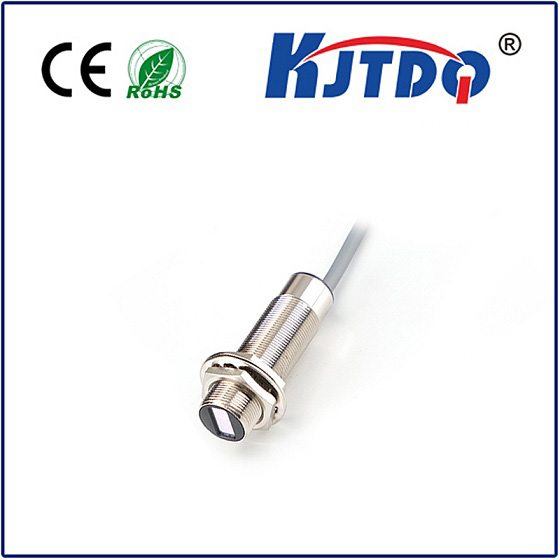
In the intricate world of industrial automation, the reliability of a single component can dictate the efficiency of an entire production line. Among these critical components, the photoelectric switch stands as a silent sentinel, ensuring seamless operations. The RL28-55/49/82b/115 photoelectric switch emerges as a paragon in this category, engineered to deliver unparalleled precision and durability in demanding environments. This comprehensive guide delves into its features, applications, and the technological excellence that sets it apart.
At its core, the RL28-55/49/82b/115 is a through-beam photoelectric sensor. This model designation is not merely a serial number but a code representing its robust specifications and design philosophy. The housing, typically constructed from high-grade stainless steel or rugged polymer composites, offers exceptional resistance to mechanical impact, dust, and moisture, often meeting IP67 protection standards. This makes it an ideal candidate for harsh settings such as automotive manufacturing, packaging machinery, and material handling systems where consistent performance is non-negotiable.
The operational principle is elegantly simple yet profoundly effective. It consists of a separate transmitter and receiver unit. The transmitter emits a focused beam of light, usually from a high-performance LED, towards the receiver. When an object interrupts this beam, the receiver detects the change in light intensity and triggers a switching signal. The "82b" in its model code often refers to specific output configurations, which may include a stable, bounce-free relay or a fast-response transistor output, compatible with various PLCs and control systems. The "115" frequently denotes the operating voltage range, such as 24-240V AC/DC, providing remarkable flexibility for global electrical standards.
What truly distinguishes the RL28-55/49/82b/115 is its precision in sensing. With a sensing range that can extend up to several meters with high accuracy, it can detect objects regardless of their surface color, material, or reflectivity—a common challenge for diffuse reflection sensors. This through-beam design ensures a high signal-to-noise ratio, minimizing false triggers from ambient light or environmental contaminants. Its response time is measured in milliseconds, enabling the detection of high-speed objects on conveyor belts, crucial for sorting and counting applications.
Installation and alignment are streamlined for efficiency. Many units feature built-in alignment indicators, such as LED status lights that signal optimal beam reception. The compact yet robust design of the RL28-55/49/82b/115 allows for easy integration into existing machinery without extensive modifications. Maintenance requirements are minimal, thanks to its solid-state design with no moving parts prone to wear, translating to lower lifetime costs and reduced downtime.
Practical applications are vast and varied. In logistics, it ensures precise parcel dimensioning and sorting. In the food and beverage industry, it counts bottles or verifies cap placement on production lines. Within automotive assembly, it confirms the presence of components like pistons or gears before critical machining steps. Its reliability in detecting transparent objects, like glass or clear plastics, further expands its utility in pharmaceutical and electronics manufacturing.
Choosing the RL28-55/49/82b/115 is a decision for long-term operational stability. It represents a convergence of German-inspired engineering rigor—implied by its alphanumeric coding—and practical adaptability. When selecting a photoelectric switch, factors like sensing distance, environmental resistance, output type, and supply voltage must align with specific operational needs. This model, with its clearly defined specifications, offers a reliable solution that reduces integration complexity.
For system integrators and plant engineers, incorporating the RL28-55/49/82b/115 photoelectric switch translates to enhanced system accuracy and productivity. It is more than a sensor; it is a foundational component for building resilient, intelligent automation systems. By ensuring precise object detection, it safeguards processes, optimizes material flow, and contributes significantly to lean manufacturing goals. In an era where automation precision directly correlates with competitive advantage, deploying proven components like this photoelectric switch is a strategic imperative for any industry committed to excellence and innovation.