check

check

check

check

check

check
In the dynamic landscape of industrial automation, precision, reliability, and durability are non-negotiable. The Q12SN6FP photoelectric switch stands as a testament to engineering excellence, designed to meet the rigorous demands of modern manufacturing and material handling environments. This comprehensive guide delves into the core features, operational principles, and diverse applications of this pivotal sensing component, offering valuable insights for engineers and procurement specialists.
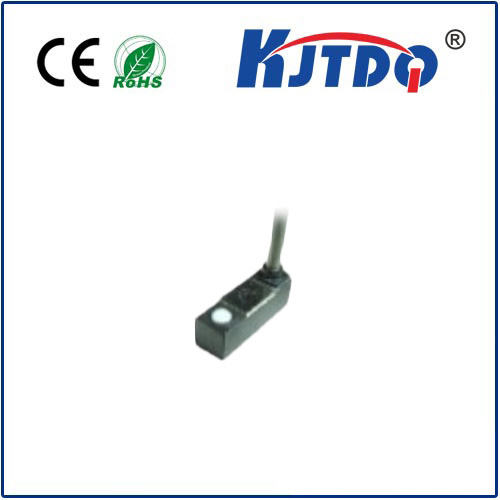
At its heart, the Q12SN6FP is a diffuse reflective photoelectric sensor. This means it houses both the light emitter (typically an LED) and the receiver in a single, compact housing. The sensor operates by projecting a beam of light onto a target object. The light is then diffusely reflected off the object's surface and received back by the sensor's phototransistor. When the intensity of the reflected light surpasses a pre-set threshold, the sensor's output state changes, signaling the presence or absence of the object. This self-contained, through-beam-like operation simplifies installation, as it requires only a single mounting point and no separate reflector, making it ideal for applications with space constraints or complex geometries.
The designation "Q12SN6FP" reveals key specifications about its build and performance. The robust housing is engineered from high-grade materials, offering significant resistance to environmental challenges such as dust, moisture, and mechanical impact, often corresponding to an IP67 protection rating. This ensures consistent operation in harsh conditions, from automotive assembly lines to food packaging plants. The "FP" suffix frequently indicates a focus on enhanced sensing stability and resistance to background interference, a critical factor in environments with varying ambient light or highly reflective backgrounds.
One of the primary advantages of the Q12SN6FP is its versatility. Its adjustable sensing range, often up to several hundred millimeters, allows for flexible deployment across numerous tasks. Common industrial applications include object detection on conveyor belts, precise counting of products in high-speed bottling lines, monitoring bin levels to prevent overfill or run-out, and ensuring correct positioning in robotic pick-and-place systems. Its ability to detect a wide variety of materials—including plastic, glass, metal, and wood—further broadens its utility.
When integrating the Q12SN6FP into a control system, attention to electrical specifications is paramount. These sensors are commonly available in both NPN (sourcing) and PNP (sinking) output configurations, ensuring compatibility with a wide array of Programmable Logic Controllers (PLCs) and other control units. The output is typically in a solid-state switch format, providing fast response times essential for high-cycle operations. Proper wiring, following the manufacturer's datasheet for voltage requirements (commonly 10-30V DC), and correct connection to the load are fundamental steps for optimal performance and longevity.
For maintenance and troubleshooting, a stable output is key. Many models feature a visible LED indicator that signals both power status and output activation, providing immediate visual feedback. Issues such as inconsistent detection can often be traced to improper alignment, a dirty lens, or an unsuitable target material (e.g., a very dark or absorbent surface that reflects minimal light). Regular cleaning of the optical surface and verifying the sensing distance against the object's characteristics are standard best practices.
In comparison to other sensing technologies like inductive or capacitive proximity sensors, the Q12SN6FP photoelectric switch offers the distinct benefit of long-range, non-contact detection of non-metallic objects. This makes it indispensable in industries where the target material is not ferrous. Its evolution continues alongside Industry 4.0, with future iterations likely to incorporate smarter features like IO-Link communication for digital parameter setting and diagnostic data reporting directly to the control network.
Selecting the right sensor directly impacts operational efficiency and system uptime. The Q12SN6FP, with its proven diffuse reflective design, robust construction, and adaptable performance, provides a reliable solution for countless detection challenges. By understanding its operational parameters and application best practices, engineering teams can leverage this technology to build more resilient, accurate, and productive automated systems, ensuring smooth and uninterrupted production flow.