check

check

check

check

check

check
In the rapidly evolving landscape of industrial automation, precision, reliability, and durability are non-negotiable. The E3ZG-T81 photoelectric switch emerges as a cornerstone component, engineered to meet the rigorous demands of modern manufacturing, packaging, material handling, and assembly lines. This advanced sensor represents a significant leap in detection technology, offering unparalleled performance in diverse and challenging environments.
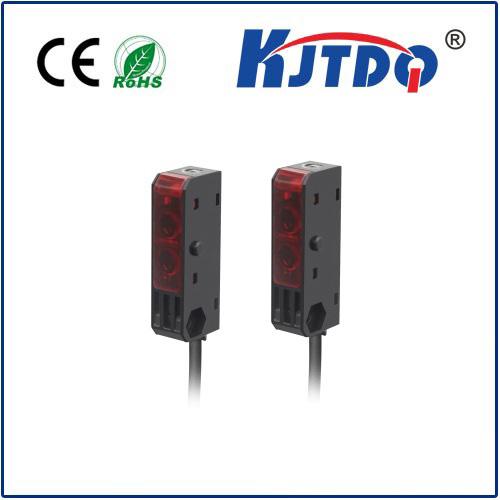
Unlike conventional mechanical limit switches, the E3ZG-T81 utilizes a modulated infrared LED light beam to detect the presence, absence, or distance of an object without physical contact. This fundamental principle eliminates mechanical wear and tear, ensuring a dramatically longer operational lifespan and reducing maintenance downtime. The "T81" variant typically signifies a specific housing style, often a cylindrical, threaded barrel design, which provides robust environmental protection, typically rated at IP67. This means it is completely dust-tight and can withstand temporary immersion in water, making it ideal for washdown areas in food and beverage or pharmaceutical applications.
The core strength of the E3ZG-T81 lies in its sophisticated sensing capabilities. It is commonly available in three primary operating modes: through-beam, retro-reflective, and diffuse-reflective. Through-beam models offer the longest sensing distances and highest immunity to environmental interference, as they consist of separate emitter and receiver units. Retro-reflective types use a reflector, allowing for easier installation with a single device, while diffuse-reflective sensors detect objects by bouncing light directly off the target itself, perfect for detecting objects at close range or of varying colors and surfaces. Many models feature advanced background suppression technology, allowing them to ignore objects beyond a set distance, a critical function for precise positioning.
Installation and integration are streamlined due to its standardized M12 or M8 quick-disconnect connector, facilitating easy wiring and replacement. The housing is constructed from high-grade stainless steel or nickel-plated brass, providing exceptional resistance to corrosion, impacts, and vibration. Furthermore, many versions come equipped with a bright LED status indicator, offering clear visual confirmation of power and output state, which simplifies setup and troubleshooting.
The application scope for the E3ZG-T81 is vast. In automotive manufacturing, it ensures robotic arms accurately pick and place components. On conveyor systems, it counts bottles, detects jam-ups, or verifies package positioning. In packaging machinery, it confirms the presence of a product before sealing or labeling. Its robust design also makes it suitable for outdoor use or in environments with significant temperature fluctuations.
Choosing the E3ZG-T81 translates to investing in system stability. Its high switching frequency allows it to keep pace with high-speed production lines. The stable output, whether NPN or PNP transistor-based, interfaces seamlessly with Programmable Logic Controllers (PLCs) and other control systems. This reliability directly contributes to increased Overall Equipment Effectiveness (OEE) by minimizing false triggers and unplanned stoppages.
When selecting a photoelectric sensor, engineers prioritize factors like sensing distance, response time, light source, and environmental robustness. The E3ZG-T81 series is meticulously designed to excel across these parameters. It is not merely a sensor; it is a critical enabler of efficiency and quality control. By providing accurate, contactless detection, it forms the sensory foundation upon which intelligent, automated processes are built, ensuring smooth, continuous, and cost-effective operations.
For facility managers and automation engineers seeking to enhance their system's reliability, the E3ZG-T81 photoelectric switch stands as a proven and trusted solution. Its combination of rugged construction, versatile sensing modes, and consistent performance under pressure makes it an indispensable tool in the quest for leaner, more productive, and smarter industrial automation.