check

check

check

check

check

check
In the intricate world of industrial automation, where precision and reliability are non-negotiable, the photoelectric switch stands as a silent sentinel. Among the myriad of options available, the BB10-R-F1/25/35/102/115e photoelectric switch series emerges as a benchmark for performance and durability. This comprehensive guide delves into the core features, applications, and technical nuances of this advanced sensing solution, providing engineers and system integrators with the insights needed to optimize their operations.
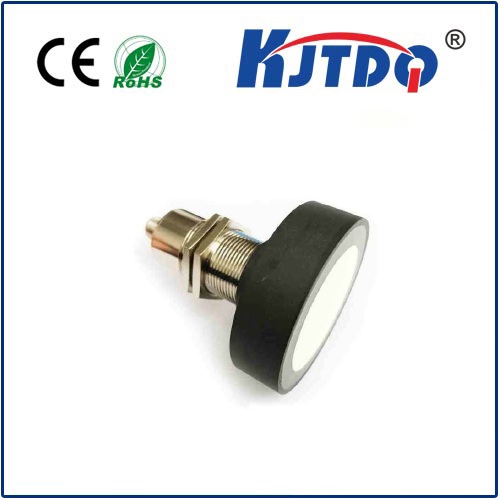
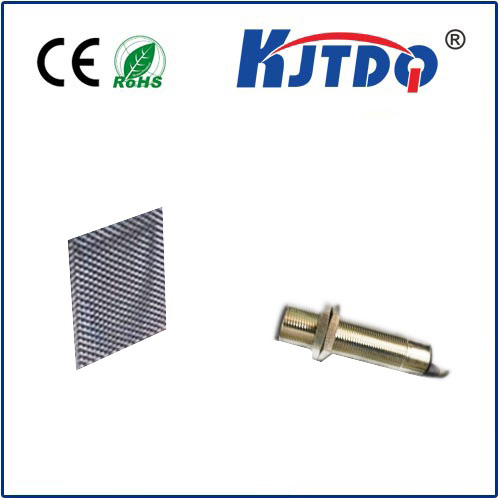
At its heart, the BB10-R-F1/25/35/102/115e is a sophisticated through-beam photoelectric sensor. This model designation is not arbitrary; it encodes critical specifications. The "BB10" typically refers to the robust housing and form factor. The "R" often indicates a retro-reflective sensing mode, where the sensor emits a light beam to a dedicated reflector; the beam is reflected back to the receiver within the same unit. This design simplifies installation by requiring wiring only on one side. The suffixes like F1, 25, 35, 102, and 115e denote specific variants concerning sensing range, output configuration, connection type, and supply voltage.
The fundamental principle is elegantly simple yet incredibly effective. The sensor's transmitter projects a modulated infrared or visible red light beam. In a clear state, this beam is continuously reflected by a companion reflector back to the integrated receiver. When an object interrupts this beam, the receiver detects the loss of signal and triggers a switching action—either opening or closing a circuit. This provides a clear, binary signal for presence detection.
What sets the BB10-R series apart is its engineering for harsh environments. The housing is typically constructed from high-grade, nickel-plated brass or ruggedized plastic, offering exceptional resistance to corrosion, impacts, and industrial chemicals. Many variants feature an IP67 or higher ingress protection rating, making them impervious to dust and capable of withstanding temporary immersion in water. This resilience ensures uninterrupted operation in demanding settings such as automotive manufacturing, packaging lines, material handling, and woodworking facilities.
The technical specifications are tailored for versatility. Common sensing ranges for these models can extend from a few centimeters up to several meters, accommodating diverse application scales. The output is usually a solid-state transistor (PNP or NPN) or a relay contact, providing compatibility with a wide array of programmable logic controllers (PLCs), counters, and other control systems. Operating voltages often span from 10-30V DC or 24-240V AC, offering flexibility in integration with existing power infrastructures.
A key advantage of the retro-reflective design, as seen in the BB10-R series, is its operational stability. Unlike diffuse sensors, which can be affected by the color or reflectivity of the target object, the retro-reflective model relies on a consistent, high-quality reflector. This results in a stable sensing field and highly reliable detection, even for objects with varying surface properties. Many models incorporate advanced features like background suppression or polarization filters to ignore false triggers from shiny surfaces, a common challenge in industrial environments.
Installation and alignment are straightforward. The units often come with adjustable mounting brackets, allowing for fine-tuning of the beam angle. Built-in LED indicators provide clear visual feedback for power status and output activation, significantly simplifying setup and troubleshooting. This user-friendly design minimizes downtime during installation and maintenance.
In practical application, the BB10-R-F1/25/35/102/115e sensors are workhorses. They are deployed to count products on a high-speed conveyor, detect the position of a robotic arm, ensure the correct placement of lids on containers, or act as safety interlock guards on machinery doors. Their speed and accuracy are crucial for maintaining high throughput and quality control.
When selecting the appropriate variant from this series, several factors must be considered. The required sensing distance dictates the specific model number. The nature of the control system determines the needed output type (e.g., PNP for PLC sinking input). Environmental conditions, such as exposure to washdowns or extreme temperatures, will guide the choice of housing material and protection rating. Consulting the detailed datasheet for the exact suffix code is essential for perfect application matching.
In conclusion, the BB10-R-F1/25/35/102/115e photoelectric switch series represents a fusion of robust construction, reliable retro-reflective technology, and application-focused design. It provides a dependable solution for object detection across a spectrum of industrial challenges. By understanding its specifications and capabilities, professionals can leverage this tool to enhance system efficiency, improve safety, and drive automation processes forward with confidence.