check

check

check

check

check

check
In the world of industrial automation and machinery, precision and reliability are non-negotiable. The E3F-DS10C3 photoelectric switch stands as a cornerstone component, engineered to deliver consistent performance in diverse and demanding environments. This comprehensive guide delves into the core features, operational principles, and critical applications of this versatile sensor, providing essential insights for engineers, technicians, and procurement specialists.
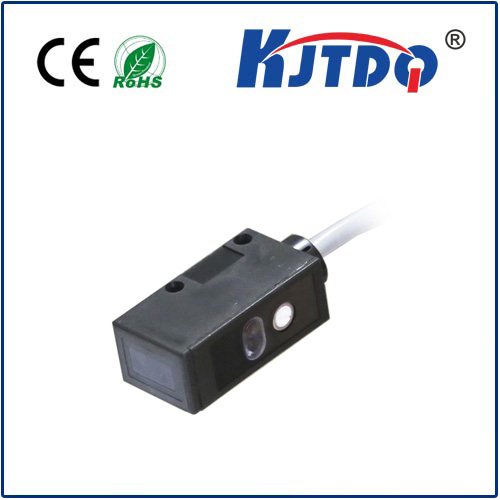
At its heart, the E3F-DS10C3 is a diffuse reflective photoelectric sensor. It operates on a straightforward yet highly effective principle: an internal infrared LED emits a beam of light. When this beam strikes an object within its sensing range, light is diffusely reflected back to the sensor's receiver. The built-in circuitry detects this returning light and triggers an output signal change. This self-contained, through-beam-like operation in a single housing simplifies installation, eliminating the need for a separate reflector or receiver unit across from the emitter.
The designation "E3F-DS10C3" reveals its key specifications. It typically offers a standard sensing distance, often around 10 centimeters, which is ideal for close-range detection tasks. The "C3" suffix frequently relates to its output configuration, commonly indicating a 3-wire DC type (NPN or PNP) with a normally open (NO) or normally closed (NC) contact. This design provides excellent electrical noise immunity and seamless integration with programmable logic controllers (PLCs), relays, and other standard control systems. The housing is robust, often rated at IP67, meaning it is dust-tight and protected against temporary immersion in water, ensuring longevity in harsh factory settings.
What truly sets the E3F-DS10C3 apart is its application versatility. It is a workhorse in assembly lines, where it reliably detects the presence or absence of components, products on conveyors, or verifies correct positioning. In packaging machinery, it counts items, controls filling levels, and ensures proper box flap closure. It plays a vital role in material handling, detecting jams, monitoring stack heights, and initiating sorting sequences. Its ability to sense a wide variety of materials—from metals and plastics to wood and opaque liquids—makes it indispensable. Furthermore, its compact size allows for installation in space-constrained locations.
Selecting and deploying the E3F-DS10C3 effectively requires attention to several factors. First, consider the target object's properties: color, surface texture, and material. While effective on many surfaces, highly reflective or dark, absorbent materials may require adjustment or a different sensor type. The operating environment is crucial; although rugged, extreme temperatures, heavy vibration, or direct exposure to strong ambient light (like sunlight) can affect performance and may necessitate special models or protective shielding. Proper alignment and mounting are simple but essential for optimal operation. Regular maintenance, primarily keeping the lens clean from dust, oil, or debris, is a small task that guarantees long-term, fault-free service.
Compared to other sensing technologies like inductive proximity sensors (which only detect metals) or capacitive sensors, the photoelectric switch offers distinct advantages. It provides a longer sensing range for its size and can detect virtually any solid or liquid object. While ultrasonic sensors compete in range and material indifference, photoelectric switches like the E3F-DS10C3 generally offer faster response times and higher precision for smaller objects, making them the preferred choice for high-speed automation.
In conclusion, the E3F-DS10C3 photoelectric switch embodies the reliability required for modern industrial systems. Its robust construction, straightforward operation, and flexible application make it a fundamental component for ensuring efficiency, safety, and quality control. By understanding its capabilities and optimal use cases, professionals can leverage this sensor to build more responsive, accurate, and dependable automated processes, forming the reliable sensory foundation upon which advanced manufacturing and logistics depend.