check

check

check

check

check

check
In the intricate world of industrial automation, where precision and reliability are non-negotiable, the photoelectric switch stands as a silent sentinel. Among the myriad of options available, the E3F-DS10P3 photoelectric sensor has carved out a significant reputation. This comprehensive guide delves into the specifics of this device, exploring its functionality, key features, and the critical applications where it excels, providing valuable insights for engineers, system integrators, and maintenance professionals.
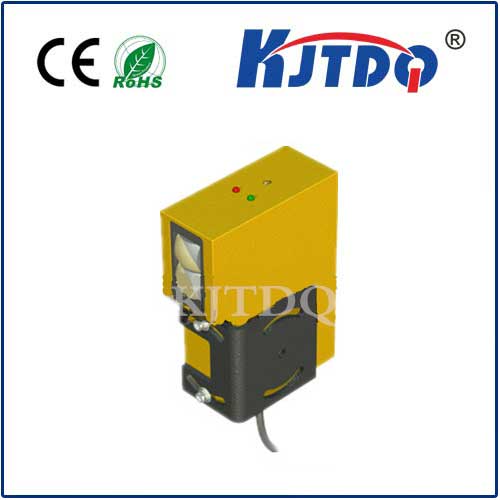
At its core, the E3F-DS10P3 is a diffuse reflective photoelectric sensor. This operational principle is both elegant and effective. The device houses both a light emitter and a receiver within a single unit. It continuously emits a beam of modulated light, typically infrared or visible red. When this beam strikes an object within its sensing range, a portion of the light is diffused and reflected back to the receiver. The sensor's internal circuitry detects this returning light and triggers an output signal switch. This self-contained, reflection-based method makes it exceptionally versatile for detecting objects without the need for a separate reflector, simplifying installation and setup.
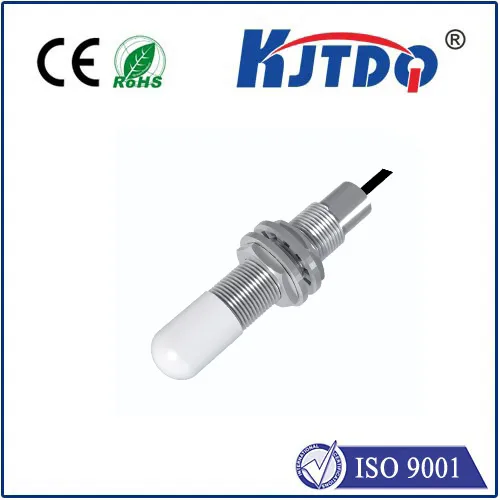
The designation "E3F-DS10P3" is not arbitrary; it encodes the sensor's vital specifications. The "DS" indicates its diffuse sensing mode. A crucial parameter is its sensing distance, which for this model is typically 10 centimeters. This fixed, short-range detection is ideal for precise positioning tasks. The "P3" often refers to a specific housing style and connection type, commonly a compact cylindrical barrel shape with a pre-wired cable or connector, designed for robust industrial environments. These sensors usually feature a PNP output configuration (sourcing), which is widely compatible with programmable logic controllers (PLCs) and standard industrial control systems. The output is often in the form of a solid-state switch, providing fast response times and long operational life free from mechanical wear.
What truly sets the E3F-DS10P3 apart are its engineered features tailored for demanding applications. Its construction is designed to withstand the rigors of the factory floor, often boasting an IP67 protection rating. This signifies complete protection against dust ingress and the ability to withstand temporary immersion in water, making it suitable for washdown areas or dusty environments. Many models incorporate a visible red sensing beam, allowing for easy alignment and commissioning—a practical feature that saves valuable time during installation and troubleshooting. Furthermore, these sensors are known for their stability, with built-in circuitry to compensate for background light interference and minor contamination on the lens, ensuring consistent performance.
The practical applications of the E3F-DS10P3 photoelectric switch are vast and integral to modern manufacturing. A primary use is in object detection on conveyor lines. It can reliably detect the presence, absence, or passage of products, packages, or components, providing the essential signals for counting, sorting, or initiating the next process step. In assembly and packaging machinery, it is frequently used for precise positioning, ensuring a component is correctly located before a robotic arm engages or a sealing operation begins. It also finds a role in liquid level detection within translucent containers, where it can sense the presence or absence of liquid by detecting the change in light reflection at the bottle's surface. Its robust design also makes it suitable for use in material handling equipment and automated guided vehicles (AGVs) for obstacle detection or alignment.
Selecting and implementing the E3F-DS10P3 requires careful consideration. First, confirm the sensing distance of 10 cm is appropriate for your application. The target object's properties are critical; it performs best with opaque, non-shiny objects that effectively diffuse light. Highly reflective or transparent materials may cause unreliable detection and require a different sensor type, such as retro-reflective or through-beam. Proper mounting is essential to avoid false triggers from the background or adjacent machinery. Ensuring the correct voltage supply (commonly 10-30V DC) and connecting the PNP output to the right input module on your controller are fundamental electrical steps. Regular maintenance, primarily keeping the lens clean, will preserve long-term sensing accuracy.
In conclusion, the E3F-DS10P3 photoelectric switch represents a perfect blend of simplicity, durability, and precision. Its diffuse reflective sensing principle offers a versatile solution for a wide array of short-range detection challenges in industrial settings. By understanding its operating specs, robust features, and ideal applications, automation professionals can effectively leverage this sensor to enhance system reliability, improve efficiency, and reduce downtime. As a fundamental component in the sensor ecosystem, devices like the E3F-DS10P3 continue to be the reliable eyes of automation, enabling smarter and more responsive manufacturing processes.