check

check

check

check

check

check
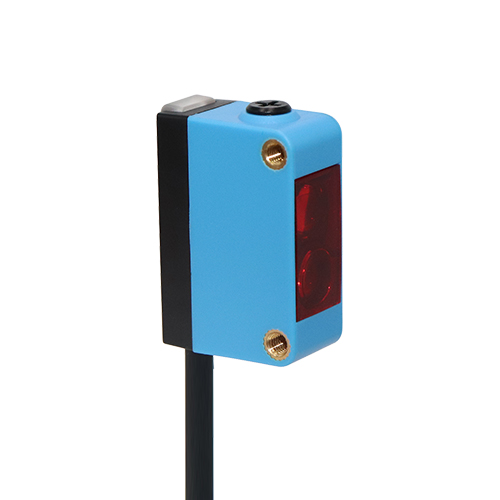
In the complex world of industrial automation, the reliability of a single component can dictate the efficiency of an entire production line. Among these critical components, photoelectric switches stand as silent sentinels, ensuring seamless operations. The KT11-50/25/98a/103 photoelectric switch emerges as a standout model, engineered to meet the rigorous demands of modern industrial environments. This device is not merely a sensor; it is a sophisticated piece of technology designed for precision, durability, and unwavering performance.
The core functionality of the KT11-50/25/98a/103 lies in its advanced through-beam sensing principle. It operates with a separate transmitter and receiver unit. The transmitter emits a focused beam of light, typically infrared or laser, which is then captured by the receiver positioned opposite. An object is detected when it interrupts this beam. This method allows for exceptionally long sensing ranges, with the KT11-50/25/98a/103 capable of reliable detection over distances that can extend up to several meters, depending on the specific model configuration. This makes it ideal for applications requiring detection across wide conveyor belts, large entryways, or in packaging lines where objects need to be counted from a distance.
Durability is a non-negotiable feature in industrial settings. The KT11-50/25/98a/103 is housed in a robust, typically metallic casing rated for high Ingress Protection (IP) levels, such as IP67. This rating signifies complete protection against dust ingress and the ability to withstand temporary immersion in water. It is built to resist vibrations, mechanical shocks, and the presence of oils or coolants commonly found in manufacturing plants. Whether installed in a dusty warehouse, a humid food processing area, or an outdoor logistics hub, this photoelectric switch maintains consistent operation, minimizing downtime and maintenance costs.
One of the key technical advantages of this model is its precise and adjustable sensing capability. Many variants feature a potentiometer or teach-in function for easy adjustment of sensitivity or time delays. This allows engineers to fine-tune the switch to ignore background interference or to detect only objects of a specific size. The output is typically a clean, stable digital signal (PNP or NPN) that interfaces directly with Programmable Logic Controllers (PLCs), robotic arms, or alarm systems. The response time is measured in milliseconds, ensuring that even high-speed processes on assembly lines are monitored without missing a beat.
Practical applications for the KT11-50/25/98a/103 are vast and varied. In material handling, it is used for precise pallet detection, box counting on high-speed conveyors, and edge guiding for web materials. In the automotive industry, it ensures robotic welders are positioned correctly and verifies the presence of components on a moving line. Within packaging machinery, it controls the filling level by detecting the position of bottles or cans, and triggers the sealing or labeling process. Its long-range capability also makes it perfect for security applications, such as detecting unauthorized entry into restricted zones or monitoring the perimeter of a storage yard.
Selecting and installing the KT11-50/25/98a/103 requires attention to detail. It is crucial to match the sensor's specifications—such as operating voltage (commonly 10-30V DC), output type, and sensing range—with the requirements of the control system. Proper alignment of the transmitter and receiver is paramount for through-beam models; even a slight misalignment can cause failure. Mounting brackets should be secure to prevent movement from vibrations. Regular maintenance, though minimal, involves keeping the lenses clean from dirt or grime to ensure optimal light transmission.
When compared to other sensing technologies like inductive or capacitive proximity sensors, the KT11-50/25/98a/103 photoelectric switch offers distinct benefits. It can detect virtually any material—metal, plastic, wood, glass, or liquid—as long as it interrupts the light beam. This versatility is unmatched by inductive sensors, which only detect metals. Its non-contact nature means there is no wear and tear from physical interaction, leading to a longer operational lifespan. For long-range, precise detection of diverse objects in challenging environments, it remains the superior choice.
In conclusion, the KT11-50/25/98a/103 photoelectric switch represents a blend of robust engineering and precise optical technology. It is a fundamental component that enhances automation safety, accuracy, and productivity. For system integrators, plant managers, and automation engineers, understanding and utilizing this reliable sensor translates into smoother operations, reduced errors, and a stronger bottom line. Its proven performance in countless industrial applications solidifies its role as a cornerstone of modern automated systems.