check

check

check

check

check

check
In the world of industrial automation, precision and reliability are not just desirable; they are absolute necessities. The BR100-DDT photoelectric switch stands as a testament to this principle, offering a robust and versatile solution for countless detection and positioning applications. This device represents a significant leap in sensing technology, designed to perform consistently in demanding environments where other sensors might falter.
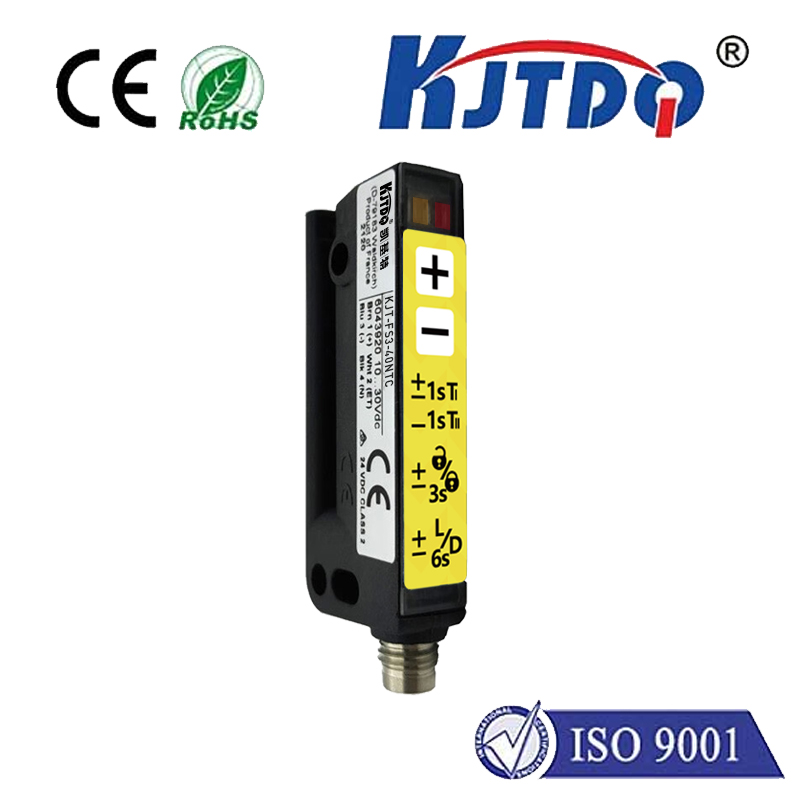
At its core, the BR100-DDT is a diffuse reflective photoelectric sensor. Unlike through-beam or retro-reflective models, it houses both the light emitter and the receiver in a single, compact housing. It operates by emitting a beam of light, typically from an LED, and then detecting the light that is diffusely reflected back from the target object. This design eliminates the need for a separate reflector or receiver unit, simplifying installation and reducing overall system complexity and cost. The "DDT" designation often refers to specific enhanced features such as digital display or advanced diagnostic capabilities, providing clear operational status and simplifying setup and troubleshooting.
The true strength of the BR100-DDT lies in its application versatility. It is exceptionally effective for detecting objects at short to medium ranges. Common use cases include presence detection on conveyor belts, ensuring products are correctly positioned for packaging or assembly. It can count items as they pass a specific point, monitor fill levels in containers by detecting the presence or absence of material at a set height, and control automated doors by sensing approaching personnel or vehicles. Its ability to detect a wide variety of materials—including plastic, metal, wood, and glass—makes it a universal tool on the factory floor.
Engineered for industrial durability, the BR100-DDT is built to withstand harsh conditions. Many models feature rugged housings with high IP (Ingress Protection) ratings, such as IP67, making them resistant to dust ingress and capable of withstanding temporary immersion in water. This ensures reliable operation in environments with significant particulate matter, moisture, or frequent washdowns, such as food and beverage processing or pharmaceutical manufacturing. The electronic components are designed to resist common industrial electrical noise and vibration, guaranteeing stable signal output and minimizing false triggers.
Installation and configuration of the BR100-DDT are remarkably user-friendly. Modern versions often come equipped with intuitive features like a built-in sensitivity adjustment potentiometer and a visible LED indicator for alignment and status. The digital display, if present, provides real-time feedback on signal strength and detection status, allowing for precise tuning. This means technicians can quickly set the optimal sensing distance and sensitivity for the specific target, reducing downtime during setup or maintenance. The compact size of the sensor allows for easy integration into space-constrained machinery.
When compared to other sensing technologies like inductive or capacitive proximity sensors, the BR100-DDT photoelectric switch offers distinct advantages. It is not limited to detecting metallic objects; it can sense virtually any material. It also typically provides a longer sensing range than standard proximity sensors. While through-beam photoelectric sensors offer the longest range and highest reliability for beam-break applications, the BR100-DDT's single-unit design offers a perfect balance of performance, ease of installation, and cost-effectiveness for reflective sensing tasks.
Selecting the right photoelectric switch is crucial for system efficiency. The BR100-DDT is an ideal choice when you need a self-contained sensor for detecting non-metallic objects, require a compact form factor, or operate in environments where installing a separate receiver is impractical. Key specifications to review include sensing distance, response time, light source type (often red or infrared LED), output type (PNP/NPN, NO/NC), and supply voltage compatibility with your control system.
In conclusion, the BR100-DDT photoelectric switch is more than just a component; it is a cornerstone of modern automated systems. Its blend of detection reliability, environmental resilience, and user-centric design addresses the core challenges faced in industrial settings. By ensuring accurate object detection, it enhances production line efficiency, reduces waste from errors, and contributes to overall operational safety. For engineers and system integrators seeking a dependable and adaptable sensing solution, the BR100-DDT photoelectric switch remains a premier and trusted choice, delivering consistent performance that keeps processes running smoothly.