check

check

check

check

check

check
In the realm of industrial automation, achieving reliable and precise object detection is paramount for efficiency, safety, and productivity. Among the myriad of sensing technologies available, the E3Z-B61 photoelectric switch stands out as a benchmark for performance and versatility. This comprehensive guide delves into the core features, operational principles, and diverse applications of this exceptional sensor, providing valuable insights for engineers, system integrators, and maintenance professionals.
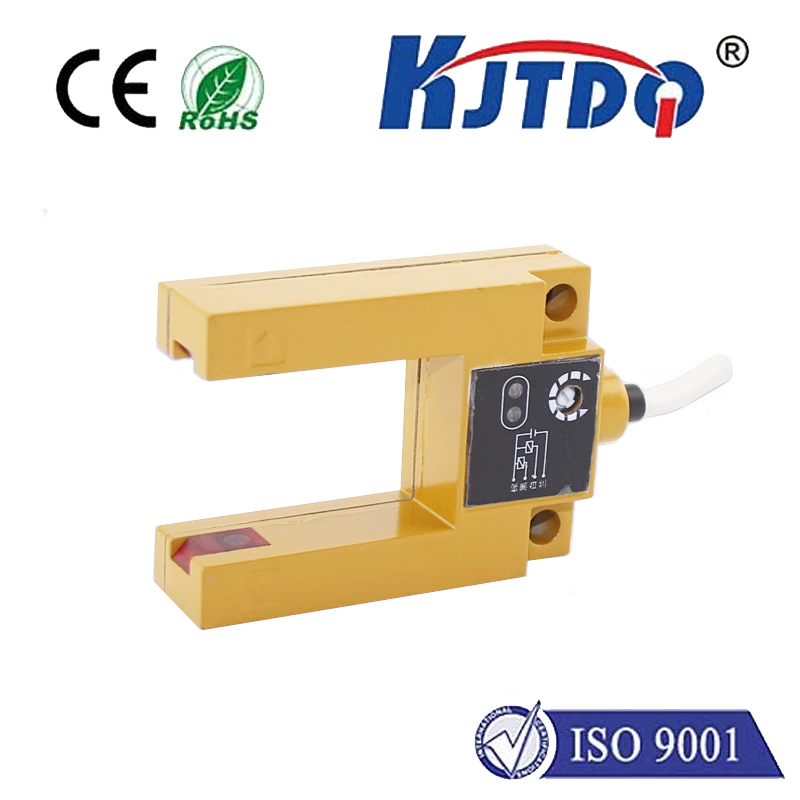
The E3Z-B61 is a through-beam type photoelectric sensor, a design renowned for its long sensing distance and high stability. Unlike reflective or diffuse models, the through-beam configuration consists of two separate units: a transmitter and a receiver. The transmitter emits a focused beam of light—typically infrared or red visible light—which is then captured by the receiver positioned directly opposite. An object is detected when it physically interrupts this light beam. This fundamental principle grants the E3Z-B61 significant advantages, including immunity to the color, reflectivity, or surface texture of the target object. Whether detecting transparent glass bottles, shiny metallic parts, or matte-finished products, the sensor delivers consistent and unwavering performance.
One of the most compelling attributes of the E3Z-B61 is its impressive sensing range. Capable of stable detection over distances up to several meters, it is ideally suited for applications requiring monitoring across conveyors, entry/exit points, or large machinery. The sensor is engineered with a robust housing, often rated at IP67, making it resistant to dust ingress and capable of withstanding temporary immersion in water. This durability ensures reliable operation in harsh industrial environments, from food and beverage processing plants, where washdowns are frequent, to dusty manufacturing floors and outdoor logistical hubs.
Installation and alignment are streamlined processes with the E3Z-B61. Many models feature a built-in sensitivity adjustment or stable operation indicator, often an LED that changes state when the beam is properly received. This visual feedback allows for quick and precise setup, minimizing downtime during installation or maintenance. Furthermore, the sensor typically operates on a standard DC power supply (e.g., 12-24V DC) and provides both NPN and PNP output configurations, offering seamless compatibility with a vast array of programmable logic controllers (PLCs), counters, and other control systems prevalent in global markets.
The practical applications for the E3Z-B61 photoelectric switch are extensive and cross-industrial. In packaging lines, it accurately counts boxes, bottles, or cans on high-speed conveyors. In automotive assembly, it verifies the presence of components or confirms the positioning of robotic arms. Within material handling systems, it serves as a safety interlock on automated guided vehicles (AGVs) or detects the height of stacked pallets. It is also instrumental in security systems for detecting unauthorized entry through gates or doors. Its ability to function reliably in environments with ambient light interference, thanks to modulated light signals, further broadens its usability.
When selecting a photoelectric sensor like the E3Z-B61 for a specific task, several factors must be considered. The required sensing distance, the size and nature of the target object, the environmental conditions (temperature, humidity, contaminants), and the necessary response speed are all critical parameters. The through-beam design of the E3Z-B61 makes it a superior choice for long-range, highly reliable detection where false triggers must be eliminated. For applications where mounting both a transmitter and receiver is impractical, retro-reflective or diffuse-reflective models from the same series might be explored.
In conclusion, the E3Z-B61 photoelectric switch embodies a perfect synergy of reliability, precision, and ruggedness. Its through-beam sensing method provides a fundamental and highly dependable solution for a multitude of object detection challenges in automation. By understanding its operational strengths and ideal use cases, professionals can leverage this sensor to enhance system accuracy, reduce operational errors, and ultimately drive greater efficiency in their automated processes. As industries continue to evolve towards smarter manufacturing, components like the E3Z-B61 remain indispensable building blocks for robust and intelligent systems.