check

check

check

check
check
check
check
check

check

check
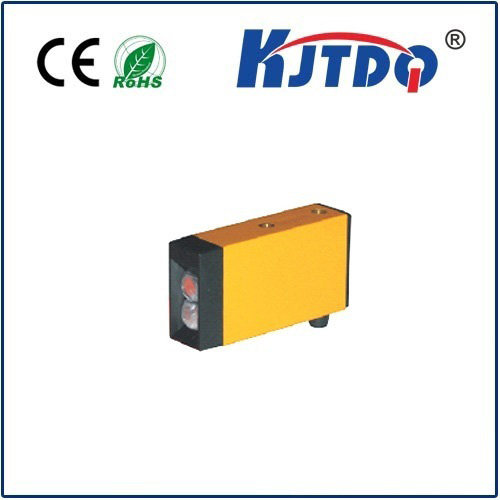
In the intricate world of industrial automation, the reliability of a single component can dictate the efficiency of an entire production line. Among the myriad of sensors available, the RL28-55/49/74 photoelectric switch stands out as a cornerstone for engineers seeking unwavering precision and durability. This device is not merely another sensor; it represents a sophisticated fusion of optical engineering and robust design, engineered to perform under the most demanding conditions.
The core functionality of the RL28-55/49/74 lies in its advanced photoelectric sensing principle. It operates by emitting a focused beam of light—typically from an LED—towards a receiver. The detection occurs when this beam is either interrupted by an object (in through-beam mode) or reflected back to the sensor (in retro-reflective or diffuse reflective modes). The "55/49/74" in its designation often refers to key dimensional or performance specifications, such as housing size, sensing range, or electrical characteristics, which are critical for proper integration. This specific model is designed to offer a long sensing distance, exceptional resistance to environmental interference from ambient light or dust, and a consistent response time that ensures no event goes unnoticed on a fast-moving conveyor.
What truly sets the RL28-55/49/74 apart is its construction. Housed in a rugged, typically cylindrical metal or high-grade polymer body, it is built to withstand the harsh realities of industrial environments. It is commonly rated with high Ingress Protection (IP) codes, making it resistant to water, oil, and particulate matter. This resilience translates directly to reduced downtime and maintenance costs. Furthermore, its wiring and configuration are streamlined for ease of installation. Many variants come with built-in indicators for alignment and operational status, allowing technicians to quickly commission and troubleshoot the system without extensive diagnostic tools.
The applications for this photoelectric switch are vast and varied. In packaging machinery, it ensures products are correctly positioned for sealing or labeling. In material handling, it counts boxes, detects jams, or verifies the presence of items on a pallet. Within the automotive assembly sector, it plays a pivotal role in verifying component placement and robotic guidance. Its versatility is further enhanced by available output types, including NPN, PNP, or relay contacts, allowing seamless connection to Programmable Logic Controllers (PLCs) and other control systems from various manufacturers.
Selecting the right sensor is paramount. When considering the RL28-55/49/74, key factors include the required sensing distance, the size and material of the target objects, the environmental conditions (temperature, humidity, contaminants), and the required output signal. Consulting detailed technical datasheets is essential to match the sensor's specifications, such as its light source type, response frequency, and voltage range, with the application's demands. Proper mounting, alignment, and periodic lens cleaning are simple yet crucial practices that guarantee long-term, fault-free operation.
Ultimately, the RL28-55/49/74 photoelectric switch is more than a component; it is a reliable sentinel in the automated world. Its precision, durability, and adaptability make it an indispensable tool for enhancing productivity, ensuring safety, and maintaining quality control. For system integrators and plant managers aiming to optimize their operations, investing in such proven detection technology is a strategic decision that pays dividends in reliability and operational smoothness.